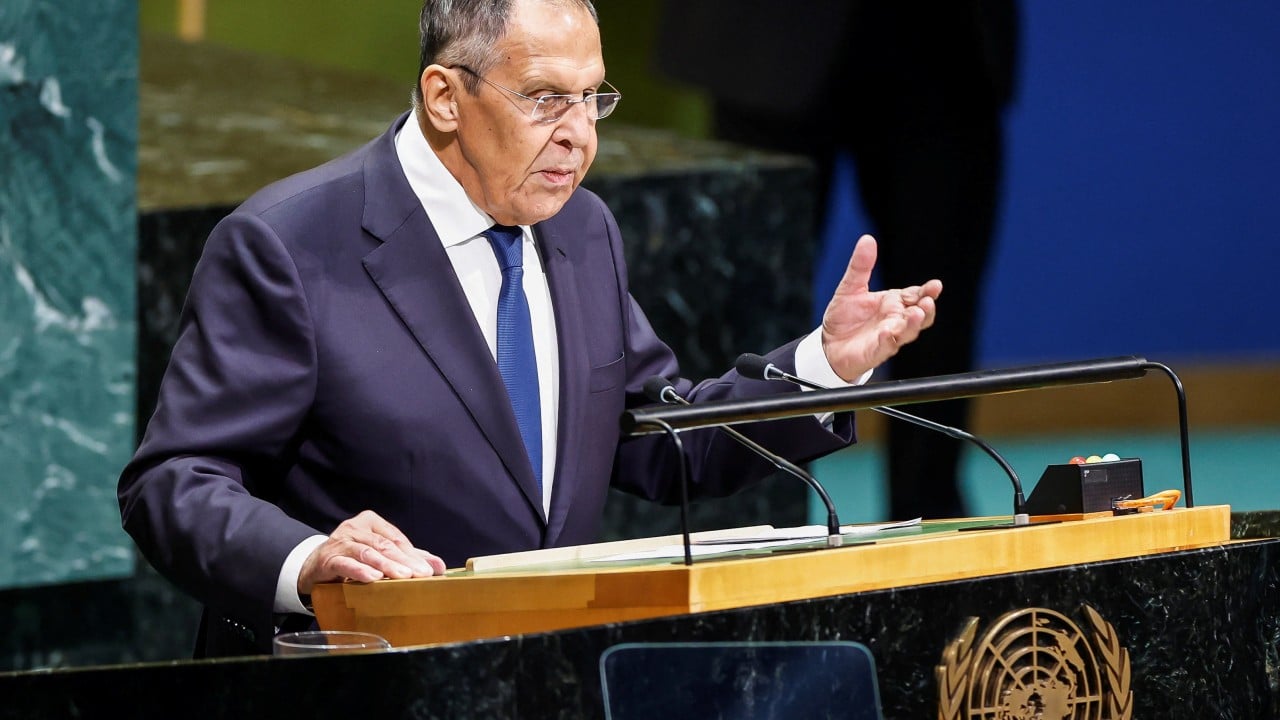
Tokyo flatly rejected Moscow’s accusation that Japan is sliding down a path of militarisation, firing back after Russian Foreign Minister Sergei Lavrov used a United Nations General Assembly platform to block Japan’s long-running bid for a permanent seat on the Security Council. Chief Cabinet Secretary Minoru Kihara called Lavrov’s charge factually incorrect, arguing that Japan’s security upgrades remain defensive and bound by law.
Look past the diplomatic throat-clearing and a harder truth comes into view. Both governments are fighting a proxy war over vocabulary while quietly rewriting the rules of Asian deterrence. Moscow wants the label "militarisation" to stick because it turns every Japanese missile battery, drone contract, and export reform into a historical grievance. Tokyo wants the word buried because admitting it is building an offensive-capable force would hand rivals a permanent veto over its diplomatic ascent.
Why the UN Seat Became a Proxy Battlefield
For decades, Japan’s campaign for a permanent United Nations Security Council seat has looked like a polite diplomatic marathon. Tokyo pays vast sums into the UN system, sends peacekeepers, and campaigns alongside the G4 coalition of Brazil, Germany, and India. Yet the veto holders in New York have treated Council expansion like a closed club where admission requires surrendering leverage.
Russia’s opposition is not new, though its framing has sharpened. Lavrov backed India and Brazil while explicitly rejecting permanent seats for Japan and Germany. In Russian diplomatic shorthand, pairing Tokyo with Berlin is deliberate. It puts Japan back in a 1940s box, reminding audiences of wartime alliances while ignoring eighty years of constitutional restraint.
Even the dusty "enemy state" clauses in the UN Charter—provisions dating to World War II that once suggested Allied states could take military action against former enemies without Council authorization—still hang in the background. General Assembly resolutions in 1995 and 2005 declared those clauses obsolete, and neither Russia nor China formally blocked the move to delete them. Still, critics in Beijing and Moscow pull them out whenever Tokyo’s security posture shifts, turning old legal fossils into fresh political ammunition.
Japan’s denial of militarisation is therefore less a philosophical defense of pacifism and more a survival tactic. If Tokyo concedes that its current buildup equals militarisation, it hands Russia and China an easy moral veto against any seat at the Security Council table.
What Tokyo Is Actually Building
Denials do not change procurement lines. Over the past few years, Japan has dismantled post-war taboos at a speed that would have stunned defense planners a decade ago.
Start with the money. Tokyo’s defense spending climbed from roughly 1.1 percent of GDP in 2023 to 1.4 percent in 2025, rising from $48.1 billion to $62.2 billion in current dollars according to Stockholm International Peace Research Institute figures. Plans to push multi-year defense outlays toward 60 trillion yen over five years aim to align Japan’s spending closer to the 2 percent of GDP benchmark familiar in NATO capitals.
Hardware tells an even clearer story than budget percentages. Japan has shifted from purely point-defense interceptors toward counterstrike capabilities, long-range missiles, integrated air and missile defense, unmanned aerial systems, and expanded cyber and space operations. Deploying long-range missiles to Kyushu in 2026 brought parts of mainland China inside engagement range. That is a major leap from the old doctrine that restricted the Self-Defense Forces to waiting until Japanese soil was hit before firing back.
Arms exports have moved along a parallel track. A near-total ban softened in 2014, loosened further in 2023 and 2024, and cracked wide open in April 2026 when Prime Minister Sanae Takaichi’s government lifted export controls on non-lethal equipment and cleared lethal transfers to 17 partner nations with defense equipment agreements. Meanwhile, domestic defense firms—long squeezed by thin margins that pushed several major contractors out of the sector—now have a framework allowing profit margins up to 10 percent when they hit cost, schedule, and performance targets.
That is not a museum army. It is an industrial and operational rebuild.
The Semantics Trap in Defense Debate
Why does Tokyo bristle so fiercely at the word militarisation? Because the term conflates two very different things: acquiring modern deterrent hardware, and adopting an expansionist ideology that seeks territory or domination.
In everyday strategic usage, militarisation describes a country pouring resources into armed forces to project power or intimidate neighbors. Critics point to Japan’s rising budgets, long-range strike systems, and looser arms export rules as textbook evidence. Yet look at how Japan’s system operates on the ground.
Article 9 of Japan’s 1947 constitution still renounces war as a sovereign right. It has never been amended. Even as Prime Minister Takaichi’s cabinet has pushed constitutional debate and moved to update Japan’s three core security documents in 2026, public polling shows strong resistance to rewriting Article 9’s war-renouncing clause, even when a majority favors explicitly naming the Self-Defense Forces in the text.
Civilian control remains tight. Parliament still debates budgets line by line. Public skepticism toward foreign entanglement runs deep, shaped by demographic strain, fiscal debt, and a political culture that treats overseas combat roles with extreme caution.
Calling Japan militarised ignores those guardrails. Calling Japan’s buildup a harmless administrative tweak ignores the missiles. Both labels fail the reality test.
What Moscow Gains by Raising the Alarm
Russia’s pushback at the UN is not driven by sudden concern for East Asian peace. Moscow has its own security perimeter to defend, strained relationships across Western capitals, and every incentive to block Western-aligned democracies from gaining permanent veto power in New York.
By framing Tokyo’s upgrades as militarisation, Russia tries to accomplish three practical goals at once:
- Freeze Security Council reform. Keeping the permanent five intact preserves Moscow’s veto leverage over global crises.
- Drive a wedge between Tokyo and the Global South. Pairing accusations of militarisation with endorsements of India and Brazil lets Moscow pose as a champion of developing nations while painting Japan as a legacy power.
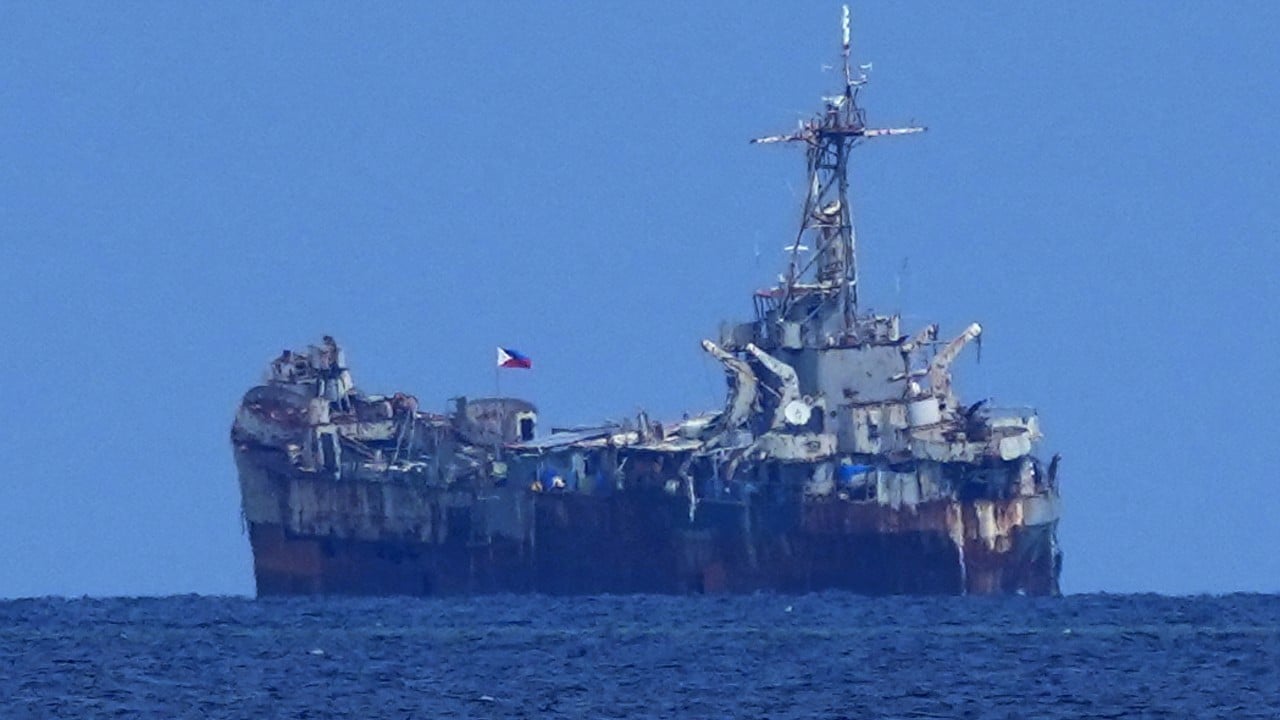
- Pressure Tokyo’s northern flank. Moscow has stepped up military activity near Japan, including around the disputed Northern Territories, known in Russia as the Kuril Islands. Verbal blows at the UN reinforce physical pressure at sea.
There is also a domestic audience in Moscow. Accusing Japan of reviving wartime habits plays cleanly to state media narratives that cast Western alliances as encirclement.
The Overlooked Driver Inside Tokyo
External pressure from Russia, China, and North Korea gets most of the headlines, yet the sharpest catalyst inside Tokyo has been doubt about American staying power.
For decades, Japan’s security bargain rested on a simple trade: Tokyo capped its military spending and kept capabilities narrow, while Washington provided extended nuclear and conventional deterrence. That bargain began fraying as China’s navy and missile forces expanded, North Korea tested ballistic systems and nuclear capabilities, and Russia and China deepened military coordination.
Washington’s own strategic shifts added urgency. Security assessments in the mid-2020s framed the Indo-Pacific more narrowly around economic competition and demanded heavier burden-sharing from allies. In Tokyo, planners read that message clearly. Relying on Washington to absorb the first wave of a crisis is no longer treated as a permanent guarantee.
Hence the push for counterstrike systems, expanded intelligence coordination through a new National Intelligence Bureau and National Intelligence Council, deeper bilateral planning with U.S. forces in Tokyo, and security partnerships like the UK-Japan Reciprocal Access Agreement and the Global Combat Air Programme with Italy and Britain.
Japan is not trying to conquer neighbors. It is trying to make sure it does not have to beg for help if sea lanes lock up or missiles fly toward Okinawa or Kyushu.
The Gray Zone Tokyo Cannot Escape
Even if Tokyo wins every semantic argument against Moscow, a harder strategic dilemma remains. Deterrence and escalation look identical from the other side of a radar screen.
A long-range missile battery in Kyushu meant to deter coercion over Taiwan or the Senkaku Islands looks like an offensive threat to planners in Beijing and Moscow. Loosening arms export rules helps Japanese defense contractors survive and deepens ties with partners like Britain, yet it also puts Japanese-made systems into active theaters where political blowback can boomerang onto Tokyo.
Inside Japan, fiscal math is another quiet constraint. An aging population, shrinking workforce, and heavy public debt limit how fast spending can climb before social programs feel the squeeze. Building advanced platforms is one thing; manning ships, maintaining hypersonic interceptors, and sustaining readiness over twenty years is another.
Tokyo’s denial of militarisation is likely to hold in diplomatic statements because the alternative is politically toxic at home and diplomatically fatal at the United Nations. Yet the underlying shift is locked in. Japan has crossed the threshold from passive protectorate to armed stabilizer, and no amount of lexical gymnastics in New York will put the old post-war consensus back together.
Russia Backs India, Brazil For Permanent UN Seats
This video covers Foreign Minister Sergei Lavrov’s UN remarks backing India and Brazil for permanent Security Council seats while opposing Japan and Germany, putting Moscow’s diplomatic posture directly in context.