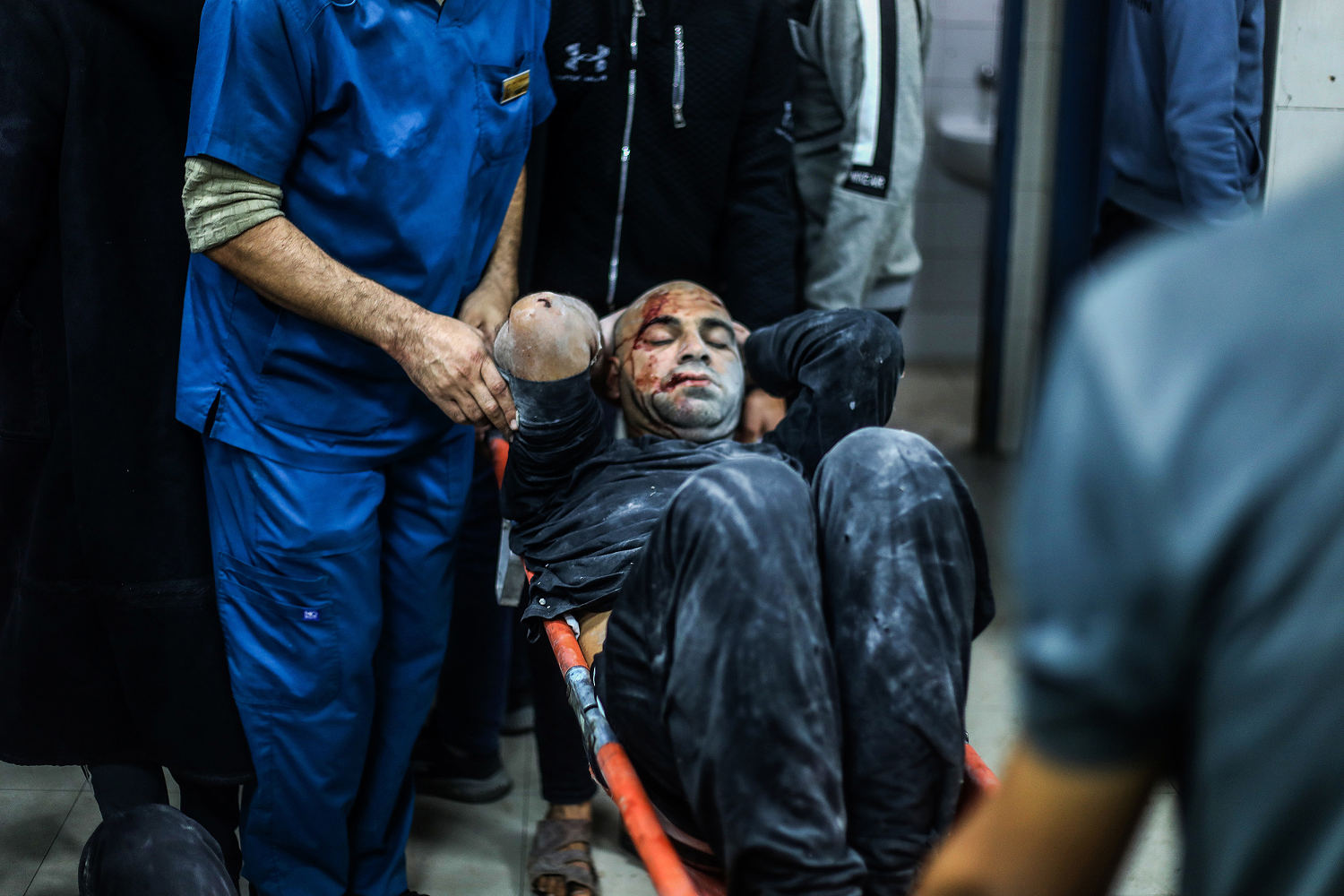
A teenager is fighting for his life in a Sydney hospital after a suspected train surfing incident on the Sydney Harbour Bridge, an act that exposes deep, unresolved vulnerabilities across New South Wales' aging commuter rail network. Police confirmed the youth suffered critical injuries along the rail corridor connecting the city's central business district to the North Shore, a stretch of track elevated high above the harbor where emergency extraction is notoriously difficult and margins for error do not exist.
Most coverage stops at the police blotter. Reporters transcribe the press release, remind readers that riding outside a moving carriage is illegal, and move on to the next traffic accident. That surface-level reporting misses the real story. After three decades covering transit infrastructure and urban safety, one pattern repeats itself with grim predictability: when young people repeatedly breach high-security transport corridors, it is rarely just a lapse in teenage judgment. It is a symptom of design flaws, digital incentives, and institutional inertia.
The Anatomy of a Modern Rail Breach
To understand how someone gets onto the exterior of a moving Sydney train—particularly along a flagship crossing like the Sydney Harbour Bridge—you have to look at the hardware. Sydney's suburban fleet is a mix of older double-deck units and newer Waratah sets. While newer trains feature smoother exteriors and automated door interlocks, the network still relies on station platforms, trackside fencing, and coupling mechanisms designed primarily for efficiency, not anti-climb security.
Train surfing on the Harbour Bridge presents a unique set of physical hazards compared to flat suburban lines. The bridge's rail deck sits on the eastern side, flanked by steel latticework, overhead high-voltage catenary wires carrying 1,500 volts DC, and narrow maintenance walkways. A rider clinging to the rear cab or the gap between carriages faces three distinct threats:
- Aerodynamic shear and lateral sway: Trains crossing the bridge accelerate out of Milsons Point or Wynyard into open wind corridors over the water. Sudden gusts alter the center of gravity for anyone standing on a narrow bumper or gripping a windscreen wiper.
- Overhead electrical arcing: You do not need to touch a 1,500-volt overhead wire to be killed by it. Under humid harbor conditions, electricity can arc across an air gap to a human body, causing catastrophic internal burns and immediate cardiac arrest before the victim even falls.
- Clearance bottlenecks: The transition from the open bridge deck into the underground tunnels at Wynyard or the concrete portals near Milsons Point leaves inches of clearance between the train roof and solid stone or steel.
Emergency responders face an equally brutal environment when things go wrong. Unlike a roadside accident where an ambulance pulls right up to the curb, reaching an injured person on the Harbour Bridge rail corridor requires shutting down power across multiple sectors, halting commuter traffic in both directions, and moving paramedics along ballast-strewn tracks with limited lighting. Every minute spent isolating electrical currents delays trauma care.
Why Traditional Deterrence Fails
Transit authorities rely on a predictable playbook whenever a high-profile incident occurs. They issue stern warnings. They remind the public of maximum fines. They promise increased patrols by the Police Transport Command.
It rarely works.
Fines mean nothing to an adolescent chasing social status, and uniformed officers cannot stand at the end of every platform across a network spanning hundreds of kilometers of track. Consider a hypothetical scenario that plays out regularly on suburban lines: a station has four CCTV cameras monitoring the ticket gates and central concourse, leaving the far ends of the platform—where the rear driver's cab stops—in a visual blind spot. A group of teenagers waits until the station staff member steps inside an office, steps onto the coupling between carriages just as the doors close, and disappears into the tunnel before anyone at the monitoring desk notices a pixel move.
The deterrence model assumes riders are weighing legal consequences against convenience. Train surfers are doing the exact opposite. The illegality and extreme danger are the entire point of the exercise.
The Algorithmic Engine Behind the Stunts
Twenty years ago, train surfing was a localized subculture. Kids did it for the adrenaline rush and the bragging rights among a handful of friends at school the next morning. Today, the reward mechanism has been industrialized by short-form video platforms.
An adrenaline rush fades in ten minutes. A viral clip lives forever.
When a teenager films a point-of-view video hanging off the back of a train crossing one of the world's most recognizable bridges, the visual payoff is undeniable. The Sydney Opera House sits in the background. The harbor glitters below. The camera captures the wind roaring past the microphone. Algorithms built to maximize watch time and shock value push that footage to thousands of feeds within hours, rewarding the creator with comments, shares, and fleeting notoriety.
Platforms claim their moderation systems remove dangerous stunts. In practice, enforcement is reactive and easily bypassed. Users strip out obvious hashtags, upload clips to private group chats before dumping them onto public burner accounts, or mirror the video to evade automated hash-matching. By the time a moderator deletes the post, the clip has already been screen-recorded and reposted across three different apps.
Rail operators are effectively fighting a modern digital distribution network with twentieth-century chain-link fences and warning posters.
The Hidden Operational Toll on Rail Workers
Public conversation around these incidents usually centers on the victim and their family, and rightly so. Yet there is another group left carrying the psychological wreckage: the train drivers, signallers, and station staff who work the lines.
Drivers operating on the North Shore line have zero control over someone clinging to the rear of their train. They cannot see the back blind spot from the front cab. Often, the first indication that something has gone terribly wrong comes from a driver travelling in the opposite direction spotting a figure on the tracks, or a sudden drop in brake pipe pressure triggered by debris or a body striking the undercarriage.
Once an incident occurs, the driver is locked into a traumatic sequence of protocols. They must bring a heavy passenger train to a controlled stop, communicate with the signaller while under intense shock, and wait—sometimes for hours—while emergency crews work beneath or behind their carriage. Many veteran drivers never return to the cab after witnessing a severe trackside injury or fatality.
The financial and operational ripple effects hit the entire city. Shutting down the Harbour Bridge rail line during peak or shoulder hours strands tens of thousands of commuters, forces emergency bus replacements onto already congested bridge lanes, and costs the state economy millions of dollars in lost productivity. One reckless climb triggers a cascading failure across the entire Sydney transport grid.
Engineering Out the Opportunity
If fines do not deter and social media platforms refuse to police their feeds proactively, the burden falls back on physical design and real-time detection. You cannot legislate away teenage impulsivity, which means you have to engineer out the opportunity to act on it.
Several transit systems globally have confronted similar waves of exterior riding and found that hardware changes outperform public awareness campaigns every time:
- Full-height platform screen doors: Already standard on newer metro lines, including Sydney's own Metro network, glass barriers physically prevent anyone from accessing the track edge or the gaps between carriages while a train is stationary. Retrofitting older heritage stations like Wynyard or Milsons Point is expensive and structurally complex, yet leaving open platform edges guarantees continued track access.
- Aerodynamic anti-climb shrouds: Older rolling stock often features exposed handholds, exterior ladders, flat rear bumpers, and accessible windscreen wipers. Modifying rear cabs with sloped, smooth composite fairings eliminates grip points, making it physically impossible to hold on once a train reaches cruising speed.
- Automated thermal and LiDAR perimeter detection: Standard CCTV requires a human operator to notice movement on a wall of monitors. Modern trackside sensors using LiDAR or thermal imaging can automatically detect human heat signatures entering restricted bridge portals or lingering at platform ends, triggering an immediate audible alarm in the signaller's box and alerting the driver before the train departs.
None of these upgrades are cheap. Retrofitting an entire suburban fleet or installing automated perimeter sensors along the Harbour Bridge approaches requires capital expenditure that transport ministries routinely delay in favor of new line expansions. Budget spreadsheets tend to treat safety retrofits as discretionary until a tragedy forces a ministerial inquiry.
The Gray Area of Public Accountability
There is an uncomfortable tension at the heart of every transit safety debate. How much money should taxpayers spend protecting people from their own deliberate, unlawful actions?
Critics argue that rail networks cannot be bubble-wrapped against every conceivable form of self-endangerment. If someone scales a two-meter security fence, ignores high-voltage warnings, and climbs onto the roof of a moving train, personal responsibility has to account for the lion's share of the blame. Diverting hundreds of millions of dollars into anti-climb hardware means less money for accessible elevators, station upgrades, or reliable weekend timetables for law-abiding passengers.
That argument holds logical weight right up until you look at the real-world cost of inaction. A single critical injury or fatality on the Harbour Bridge shuts down the city's transport spine, devastates families, traumatizes frontline workers, and ties up police, paramedics, and trauma surgeons for days. Preventing just a handful of these incidents pays for perimeter detection systems many times over.
Transport authorities also have a duty of care that extends beyond compliant passengers. Courts and coronial inquests consistently examine whether infrastructure operators took reasonable steps to mitigate foreseeable risks—especially when those risks involve minors. When train surfing incidents happen repeatedly on the same stretches of track, the danger is no longer an unforeseeable freak accident. It is a known operational hazard.
What Needs to Happen Before the Next Siren
Right now, investigators are piecing together how a teenager ended up critically injured on one of Australia's most heavily monitored pieces of infrastructure. Police will review station CCTV, interview witnesses, and examine the train's exterior for physical evidence.
Within a few days, the news cycle will move on. Commuters will return to their routines, scrolling through their phones on the morning ride across the harbor while another teenager scrolls through a feed looking for the next stunt that will get them noticed.
Real prevention requires breaking that cycle before the next emergency call goes out. Transport for NSW and Sydney Trains must audit platform-end blind spots across the North Shore and City Circle lines immediately, deploy automated intrusion sensors at bridge portals rather than relying on passive cameras, and accelerate the removal of exterior handholds on legacy rolling stock. Without physical barriers separating vulnerable riders from 1,500-volt wires and moving steel, the next tragedy on the Harbour Bridge is not a question of if, only when.