The United States Supreme Court has cleared a procedural path for President Donald Trump's controversial executive order restricting mail-in voting ahead of the midterm elections, setting off a frantic administrative race and deep legal uncertainty across the country. By ruling that 23 Democratic-led states and the District of Columbia sued prematurely, the conservative majority of the high court lifted a lower court injunction that had frozen the directive. Yet this intervention avoids the core constitutional question, leaving state election boards trapped between federal edicts and the harsh logistical realities of printing ballots, verifying lists, and meeting fast-approaching statutory deadlines.
For decades, the mechanics of American elections have operated under a decentralized framework governed primarily by state legislatures and local jurisdictions. The presidential directive signed in March turns that traditional balance on its head. It orders the executive branch to compile centralized citizenship and voter lists, tasking the U.S. Postal Service with a brand-new mandate: delivering mail-in ballots solely to individuals verified through these federal databases.
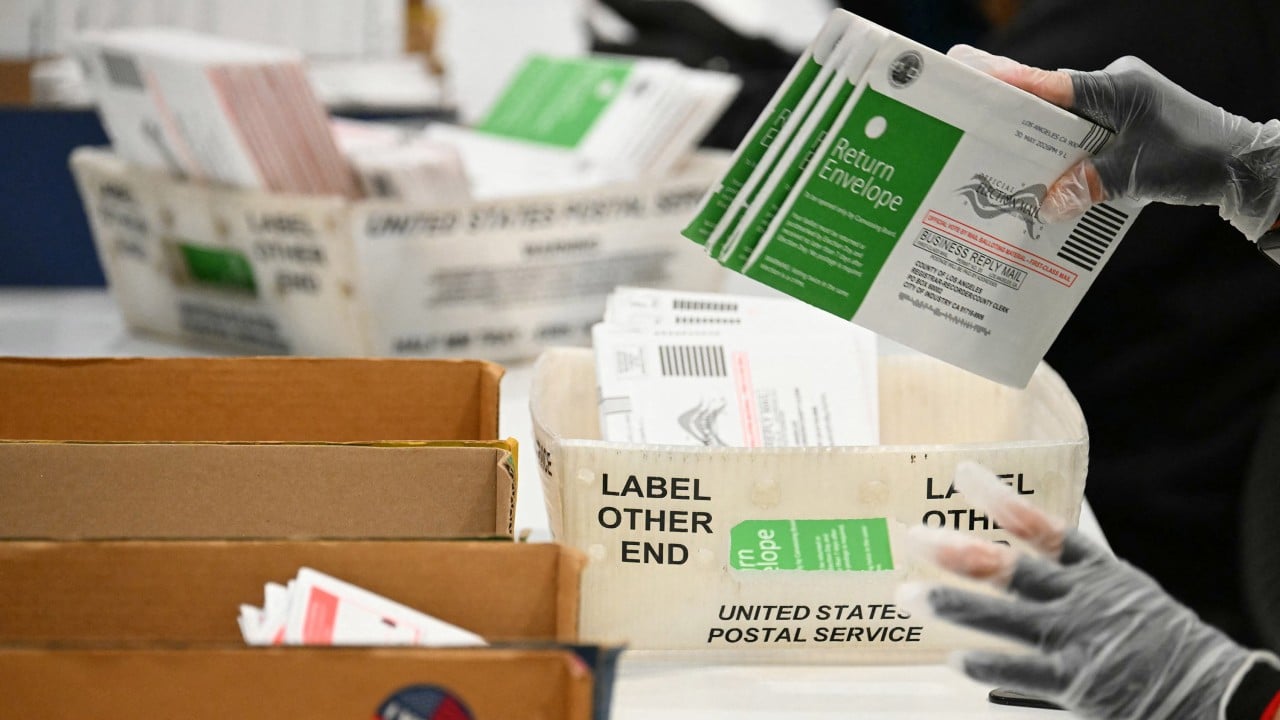
The legal battleground shifted dramatically when the U.S. Postal Service published a final rule detailing how it intends to enforce the policy. Envelopes must be redesigned with specific barcodes, and local election officials are directed to feed voter data into an online federal portal. Proponents argue these measures inject necessary security and uniformity into a system reliant on remote balloting. Critics, including state attorneys general and election administration experts, counter that the directive is an end-run around congressional authority designed to sow confusion and suppress turnout.
The Mechanics of Administrative Whiplash
Emergency legal dockets are rarely designed to resolve sprawling structural overhauls. When the Supreme Court issued its unsigned order, it did not validate the underlying legality of the executive order. Instead, the majority focused strictly on procedural timing, arguing that the petitioning states suffered no immediate, concrete injury because the policy had not yet been fully operationalized through a finalized agency rule.
This distinction matters deeply to practitioners on the ground. A rule published by the Postal Service is one thing; retrofitting every county clerk's office across thousands of distinct jurisdictions before autumn ballots hit mailboxes is another entirely. State election administrators now face a dizzying compliance matrix. To satisfy the federal requirements, local offices must adjust ballot envelope layouts, secure postal approval for those designs, and sync their active voter rolls with federal databases that critics and independent analysts note are prone to synchronization discrepancies.
Consider a hypothetical county election board in a rural district preparing for November. Under normal circumstances, this office spends late summer finalizing layout proofs, testing tabulation equipment, and scheduling printing runs weeks in advance. Under the new federal framework, that same office must halt routine preparations to redesign envelope geometries, integrate unfamiliar barcode tracking standards, and clear their distribution lists through a centralized federal portal. The financial cost of reprinting millions of ballot packets alone runs into the millions of dollars, a burden that falls disproportionately on local municipalities with fixed operational budgets.
The Disenfranchisement Dilemma
The human cost of this administrative sudden stop is rarely captured in legal briefs. Millions of American voters—particularly rural residents who depend on postal delivery for daily necessities and voters with mobility disabilities—rely on mail-in channels to cast their ballots securely. When administrative friction is artificially injected into the voting pipeline weeks before distribution windows open, errors multiply.
State election rolls are dynamic entities. Citizens register, move, update addresses, or change political affiliations daily, with some jurisdictions permitting registration right up to Election Day. Freezing these lists or forcing them through a rigid federal filter creates an environment ripe for catastrophic mismatches. If an eligible voter's name is omitted from a centralized federal list due to a database lag or a minor clerical error, obtaining a correction in the compressed window before an election becomes an uphill battle.
Justice Ketanji Brown Jackson captured the structural absurdity of this dynamic in her dissenting opinion, noting the compounding procedural nightmares forced upon plaintiffs attempting to safeguard ballot access. Lower courts had previously recognized these dangers. A federal judge in Massachusetts and a subsequent appeals court panel had blocked the policy, explicitly warning that sudden procedural shifts threaten the disenfranchisement of eligible voters while generating administrative chaos.
The Legislative and Judicial Horizon
The Supreme Court's intervention does not spell the end of the litigation. As legal scholars note, the core constitutional debate regarding whether the executive branch possesses the unilateral authority to alter state election administration procedures remains entirely undecided. The case now cascades back to lower courts, where new lawsuits targeting the finalized Postal Service regulations are virtually guaranteed.
At the same time, the calendar remains an unyielding constraint. The first mail ballots for military and overseas voters are legally mandated to leave printing facilities in early September. Meeting that deadline while implementing sweeping infrastructural changes defies practical execution. Even if the administration secures subsequent legal victories in lower appellate venues, the sheer inertia of municipal election machinery makes complete compliance an impossibility for many states.
The broader political fallout extends well beyond the mechanics of envelope design and postal routing. By transforming mail-in voting into an acute federal-state battleground, the current policy deepens existing polarization surrounding election administration. Trust in democratic institutions rests heavily on the predictability of the voting process. When the rules governing how a citizen casts a ballot are rewritten on an emergency docket mere weeks before voting begins, public confidence absorbs the shock.
The legal machinery will continue grinding through the autumn months, but the immediate reality on the ground is defined by confusion rather than clarity. State officials are left scrambling to interpret shifting mandates while racing against a clock that cannot be stopped.