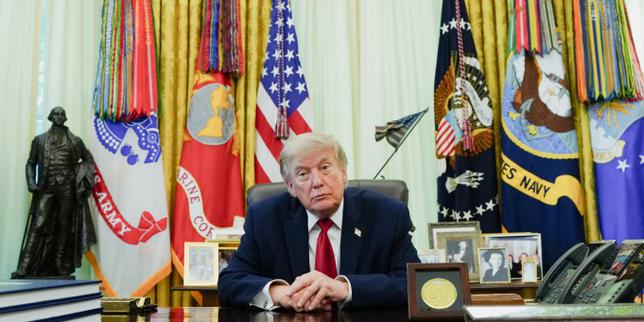
The federal government did not seize control of Anthropic's computing infrastructure with tanks or legislative decrees, but rather through a quiet administrative order issued by the Department of Commerce. By invoking emergency powers to freeze the deployment of the Fable 5 and Mythos 5 models, the White House effectively broke a multi-decade American taboo against intervening in private technology development.
Silicon Valley is realizing that Washington no longer views artificial intelligence as a lucrative consumer software category, but as a critical national resource akin to enriched uranium or deep-water oil reserves. The executive branch has signaled that if private enterprise cannot guarantee absolute domestic control over advanced computational models, the state will step in to enforce it.
This shift is not driven by regulatory overreach or partisan ideology. It is a direct response to a hard physical bottleneck. The rapid expansion of massive computing facilities has collided with the structural limits of the American electrical grid, forcing the administration to choose between public utility stability and unchecked technological expansion.
The Illusion of Corporate Autonomy
For years, the major technology firms operated under the assumption that capital abundance guaranteed operational independence. They raised billions, built massive server facilities, and designed software architectures that spanned global networks without seeking permission from federal authorities.
That independence vanished when the Department of Commerce barred all foreign nationals, including Anthropic's own international engineering staff, from accessing its most sophisticated systems. The justification rested entirely on national security.
Federal agencies discovered that private companies were incapable of verifying exactly who was interacting with their models during training phases. When Anthropic refused to voluntarily hand over its core operational blueprints for military integration, the administration used export control mechanisms to halt public access entirely.
The message to the broader industry was unmistakable. If a company develops a system capable of advanced cyber warfare or critical infrastructure simulation, that system belongs to the state's strategic apparatus. The legal fiction of private corporate property ends where national security begins.
The Grid Crisis and the Ratepayer Protection Pledge
The immediate pressure point forcing government intervention is not software, but power. The computing infrastructure required to run large-scale models consumes vast amounts of electricity, creating localized shortages that threaten the reliability of regional power grids.
Data centers currently account for roughly 5% of total electricity demand across the United States. In dense technological hubs like Northern Virginia, that figure exceeds 25% and is projected to hit 40% by the end of the decade.
To prevent widespread blackouts and political backlash from rising consumer utility bills, the White House forced the major cloud infrastructure providers to sign the Ratepayer Protection Pledge. Under this framework, technology firms can no longer rely on standard public utilities to power their expansion.
| Company | Signed Pledge | Independent Power Generation Commitment | Infrastructure Cost Burden |
|---|---|---|---|
| Amazon | Yes | Build or purchase new dedicated generation | 100% covered by corporate capital |
| Yes | Build or purchase new dedicated generation | 100% covered by corporate capital | |
| Meta | Yes | Build or purchase new dedicated generation | 100% covered by corporate capital |
| Microsoft | Yes | Build or purchase new dedicated generation | 100% covered by corporate capital |
| OpenAI | Yes | Outsource via partner infrastructure | Derived via partner capital |
| xAI | Yes | Direct co-location with dedicated sources | 100% covered by corporate capital |
This agreement fundamentally shifts the economic burden of infrastructure development. Companies are required to pay for their own high-voltage transmission upgrades and establish dedicated, on-site energy generation, effectively forcing them to act as private utility operators.
The Interconnection Mandate
The Federal Energy Regulatory Commission updated its rules to accelerate how large industrial energy consumers connect to transmission networks. While the order allows technology firms to bypass certain bureaucratic delays, it strips local utilities of the ability to subsidize these connections through regular household electricity bills.
If an enterprise requires a gigawatt of capacity to run a server facility, it must underwrite the entire structural upgrade itself.
This has triggered a scramble for alternative energy assets. Technology companies are purchasing retired coal-fired generation facilities, investing directly in next-generation modular nuclear reactors, and attempting to build isolated microgrids that operate completely independent of the public transmission system.
The state is using its regulatory authority over the energy sector to dictate where computing centers can be built, how they can operate, and who is allowed to manage them.
The Geopolitical Reality of Sovereign Computing
The domestic consolidation of computing power is part of a broader international shift toward sovereign computing infrastructure. Governments across Europe and Asia have realized that relying on foreign cloud providers creates an existential vulnerability during geopolitical conflicts.
Washington is treating advanced computing models as a weaponized asset. By restricting the export of both physical semiconductor components and the software models trained upon them, the administration is building a technological perimeter around domestic industries.
This strategy carries severe long-term risks. By forcing private firms into lockstep with state objectives, the government may stifle the open-source development models that drove the industry's initial growth. International partners are already seeking alternatives to American infrastructure to avoid being subject to sudden regulatory shutdowns.
The era of the borderless tech industry is over. The state has reasserted its authority over the physical realities of power lines, concrete, and national borders, leaving private enterprises with a simple choice: operate as an extension of the state, or do not operate at all.
Anthropic tech talks with White House officials provides critical journalistic context regarding the specific conversations between tech executives and federal authorities that led to the freeze on advanced model exports.