Residents near the Sixth Street Bridge in Los Angeles are pushing for a Municipal Code 41.18 anti-camping zone around the upcoming 12-acre Sixth Street PARC before the park even opens. They want legal teeth in place to keep tents, encampments, and spillover disorder away from the soccer fields, splash pad, performance amphitheater, and garden terraces.
At first glance, it looks like a familiar neighborhood clash over public space. Yet the real fight sits deeper than a petition or a council vote. This $82 million civic project is arriving at the exact moment Los Angeles is rewriting how it polices public space, funds street outreach, and manages its homelessness bureaucracy.
Spend enough years covering municipal politics in Southern California and you learn a simple rule. Capital budgets build concrete, grass, and irrigation lines. Operating budgets determine whether those spaces stay safe, lit, and usable twelve months after the ribbon-cutting ceremony. Right now, the Sixth Street PARC is caught between ambitious physical design and an overstretched civic machinery that has struggled to hold basic infrastructure together around the bridge.
Why Neighbors Are Drawing a Line Before Opening Day
Petitioners from surrounding blocks, bridging the Arts District and Boyle Heights, are not reacting to a single tent already pitched on fresh turf. Construction fencing still surrounds the site, and opening has slipped into 2027 after playground installation delays. Instead, residents are reacting to what they have watched happen right above and beside the parcel.
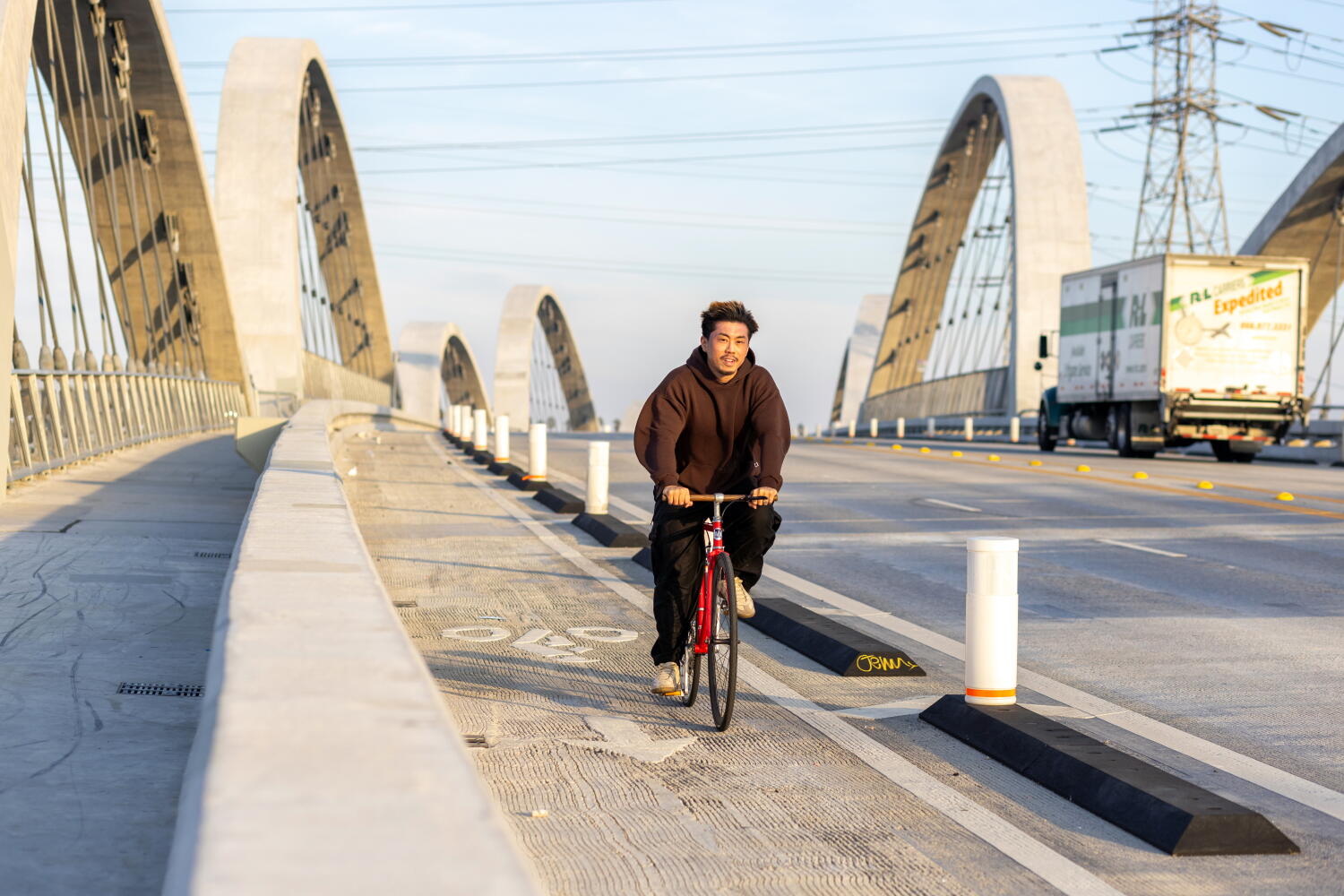
The Sixth Street Bridge cost nearly $600 million to rebuild. Even with that price tag, thieves stripped out copper wiring along sections of the span, knocking out lighting and exposing how hard it is to defend large, open public works against vandalism and illegal activity. Unsanctioned car meets and street takeovers have periodically turned surrounding roadways into flashpoints. Graffiti has already crept onto surfaces tied to the buildout.
To people who live next door, asking for a 41.18 designation ahead of launch is a preemptive shield. Municipal Code 41.18 allows the city to bar sitting, lying, sleeping, or storing property in specific designated zones—such as near sensitive sites or locations where council members adopt ordinance protections. Neighbors argue that waiting until an encampment takes root turns a manageable boundary into a protracted standoff. Once tents multiply under concrete arches or beside dense landscaping, clearing them requires months of outreach coordination, legal notices, and political friction.
That argument carries real weight among families who have waited years for green space along the river corridor. A splash pad and soccer field only serve working families if parents trust that broken glass, unlit corners, and chronic crisis behavior will not define the perimeter.
The Hidden Limits of a 41.18 Ordinance
Ordinances look decisive on paper. On the ground, they rarely solve the underlying mechanics of street homelessness.
A 41.18 zone does not manufacture shelter beds. It does not treat untreated psychosis or severe substance addiction on its own. When enforcement pushes unhoused individuals out of one parcel without immediate, low-barrier housing or interim beds, people simply relocate a few blocks away—into alleys, under overpasses, or onto sidewalks outside neighboring homes and businesses. Displacement shifts visibility. It does not erase human need or street-level risk.
There is also a practical enforcement bottleneck in Los Angeles. Sworn officers juggle citywide emergency calls, traffic collisions, and major incidents across vast divisions. Relying on patrol officers as the primary safeguard for a 12-acre park treats policing as a substitute for daily park management. Cameras can feed live video to monitoring centers, as planned for the park once it opens, yet a camera screen cannot replace eyes on the ground, clean restrooms, active programming, or fast maintenance when a light goes out.
Consider a hypothetical example to see how enforcement gaps play out in real life. Suppose the city passes a 41.18 restriction around the park perimeter, but copper wire theft dims half the path lighting by winter and park maintenance crews only visit twice a week. Without steady daily presence and rapid repairs, isolated rule-breaking testing the edges of a park can quickly test residents' confidence in the entire space.
A park protected only by a sign and a statute is only as strong as the daily routine behind it.
Critics of expanded 41.18 zones also point to civil liberties and legal scrutiny. Courts and civil rights advocates have repeatedly challenged how anti-camping rules are written, noticed, and enforced, especially when shelter capacity falls short. Every poorly executed sweep invites litigation, public backlash, and stalled momentum.
A Bureaucracy in Mid-Transition
The timing of the Sixth Street PARC makes the policy debate even trickier. Los Angeles is in the middle of a major structural shakeup over how homeless services are run and funded.
For years, the Los Angeles Homeless Services Authority (LAHSA) has been a lightning rod for criticism over contracting, auditing, and coordination failures. Under a transition timeline stretching from late 2026 through the end of 2027, control over key federal homelessness funding, data systems, and housing matching is shifting toward Los Angeles County, while city leadership debates its own role and governance posture. Meanwhile, the city's Civil Rights Department has warned of staffing and funding strains even as major public events loom on the horizon.
Why does a regional funding handoff matter to a neighborhood park under a bridge? Because park safety and humane outreach depend on seamless handoffs between city departments, county service teams, and outreach providers. When agencies are reorganizing contracts, migrating databases, or renegotiating turf, coordination on the street can lag. An outreach worker who cannot quickly verify bed availability or connect someone to care struggles to resolve an encampment peacefully before tensions escalate.
At the same time, city officials are trying to divide labor across multiple agencies. The Bureau of Engineering is finishing construction, the Department of Recreation and Parks is slated for routine maintenance, the Office of Community Beautification shares graffiti cleanup duties, and council leadership has floated a park advisory board to keep residents and stakeholders involved.
Splitting duties across four or five offices is standard practice in a city of nearly four million people. It also creates a familiar vulnerability. When five entities share responsibility, accountability can blur whenever something breaks.
What Actually Keeps a High-Profile Park Safe
If you have watched dozens of big-ticket urban parks open across major American cities, you know the pattern. Grand openings bring speeches, press releases, and pristine lawns. Six months later, the real test begins.
Lighting and sightlines come first. Dark recesses under bridges and behind dense hedges invite illicit activity and make ordinary walkers uneasy. Keeping every fixture powered—and hardening wiring or using tamper-resistant designs where theft has proven persistent—is basic infrastructure hygiene, not a luxury.
Active programming is the second pillar. Empty parks at dusk or mid-morning attract problems because nobody else is using the space. Scheduled youth sports, community events, arts programming, and regular foot traffic change the social rhythm of a park overnight. People who gather for a league game or a neighborhood market naturally claim the space through presence.
Rapid maintenance is the third. Graffiti left untouched for three weeks signals neglect and invites more paint. Overflowing trash bins and broken fixtures tell residents that city hall has moved on to the next project. Fast cleanup within 24 to 48 hours sends the opposite message: someone is watching, and standards matter.
Dedicated park security and outreach coordination round out the picture. A clear operating agreement—spelled out in writing before the gates open—must define who patrols during peak and off-peak hours, how security staff interact with unhoused residents, and how outreach teams get called in early before a single tent becomes a cluster.
| Policy Lever | What It Can Achieve | Where It Falls Short |
|---|---|---|
| 41.18 Anti-Camping Zone | Gives officials clear legal authority to restrict camping or storage in defined zones | Does not create shelter beds or resolve underlying addiction or mental health crises |
| Security Cameras & Lighting | Deters some misconduct, aids investigations, and improves visibility for visitors | Cannot stop determined vandals alone without physical response and routine upkeep |
| Routine Maintenance & Programming | Builds daily community use, keeps grounds clean, and signals active stewardship | Requires steady operating funds long after construction money is spent |
| Coordinated Outreach & Housing | Connects unhoused people to services and reduces repeat encampment cycles | Struggles during agency transitions or when shelter and housing slots are tight |
The Bigger Question for Los Angeles
The debate around the Sixth Street PARC exposes a deeper tension in how Los Angeles thinks about public investment. Taxpayers are willing to approve hundreds of millions of dollars for iconic bridges and neighborhood parks. Yet the city often treats day-to-day operations—lighting repairs, graffiti removal, park staffing, and coordinated street outreach—as an afterthought until complaints pile up.
Residents pushing for a 41.18 zone are asking a straightforward question: if the city cannot keep copper wire inside a rebuilt bridge or keep every nearby streetlight glowing, how will it protect a brand-new park filled with children's play equipment?
Answering that question requires more than passing an ordinance. It demands a binding operating plan that pairs clear rules with real maintenance budgets, reliable lighting, active community programming, and workable pathways into shelter and care. Before the construction fences come down for good, city leaders and neighbors have a narrow window to lock in those operational guarantees—or risk opening a prized civic space into a preventable battleground.