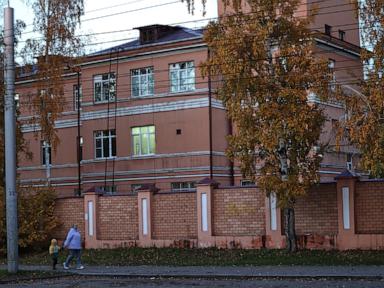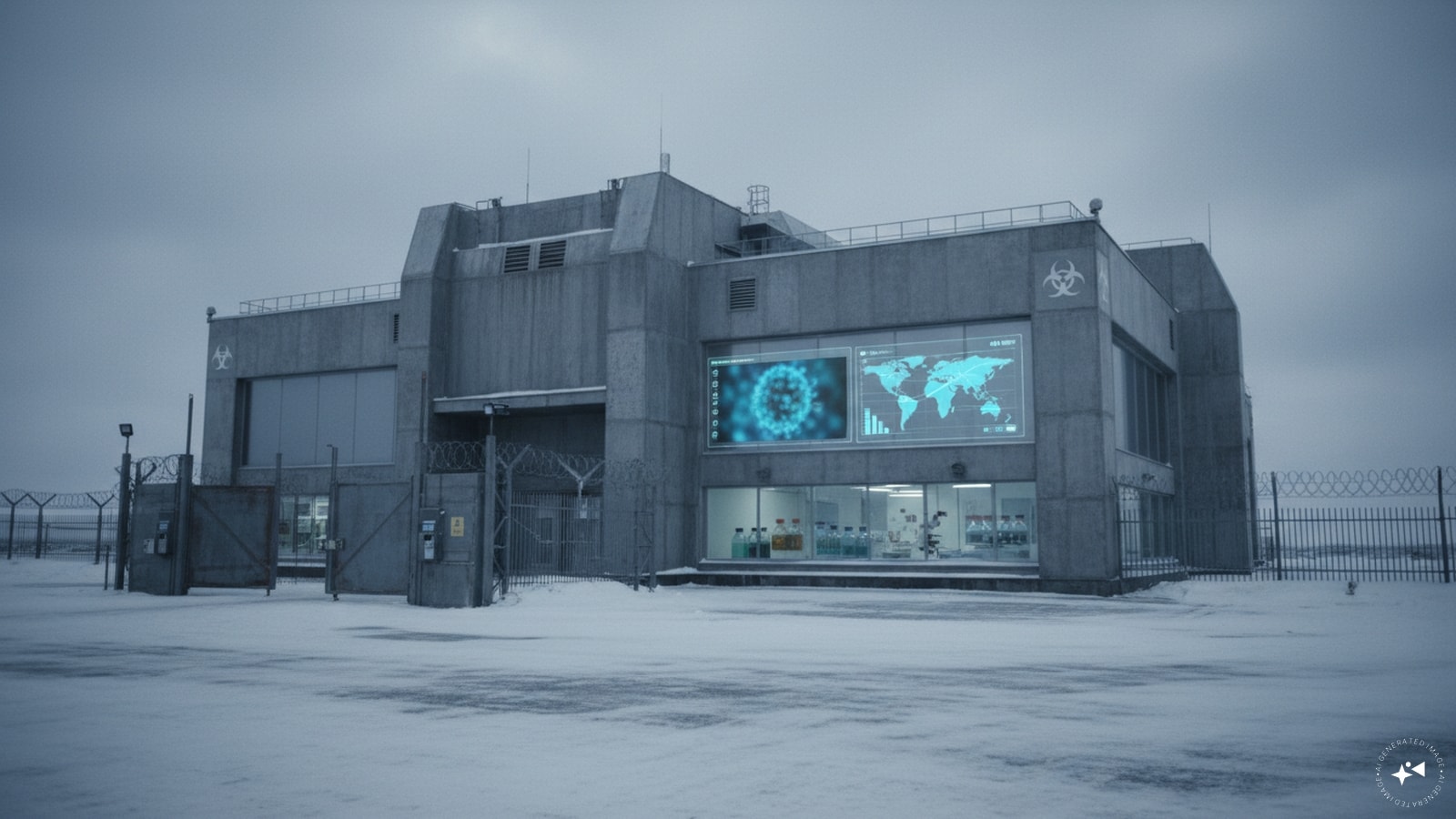
When a twenty-eight-year-old laboratory technician named Darya Shipilova died abruptly at a regional hospital in Shelekhov, Siberia, her passing triggered an immediate international tremor. Shipilova was not an ordinary citizen caught up in a routine seasonal illness. She worked inside the Irkutsk Anti-Plague Research Institute of Siberia and Far East, an elite, high-containment facility dedicated to studying some of humanity’s most lethal biological adversaries, including Yersinia pestis—the bacterium responsible for the plague.
Within hours of her death on October 2, 2026, local rumblings on encrypted messaging channels suggested a terrifying vector: pneumonic plague contracted via a containment breach or occupational accident. Regional officials panicked, briefly posting and then scrubbing warnings online, while hospitals in Irkutsk instituted abrupt quarantine protocols. Yet, the official narrative from Moscow’s consumer health watchdog, Rospotrebnadzor, offered a starkly different diagnosis. They claimed Shipilova succumbed merely to an unverified "pneumonia of unknown etiology", flatly denying any laboratory accident or trace of plague.
This information blackout has forced the World Health Organization to step into a familiar, uncomfortable role. They are attempting to pry open an opaque biological bureaucracy that has spent decades perfecting the art of containment through silence.
The Anatomy of an Information Void
The core tension in Irkutsk is not just about a single tragic death. It is about a structural crisis of trust. When public health agencies are forced to rely on denials issued by state media rather than transparent data sharing, every respiratory illness becomes a geopolitical hazard.
The World Health Organization publicly stated that it does not yet have the full picture required to conduct an independent risk assessment. Dr. Tedros Adhanom Ghebreyesus made it clear that timely, comprehensive disclosures are mandatory under international health regulations when high-consequence pathogens are suspected. Instead of raw data, genetic sequencing outputs, or independent observer access, international monitors received flat ministerial assurances that medical monitoring of the dead worker’s contacts had ended and yielded nothing more than routine seasonal bugs.
For veteran biosecurity analysts who have watched these patterns for decades, this defensive posture is deeply concerning. The playbook is old. Deny the accident, restrict local movement, sanitize the digital footprint, and wait for the news cycle to decay. But in an era where biological research facilities are proliferating globally, treating a potential containment failure as a domestic public relations issue rather than an international security event is a dangerous gamble.
Why Pneumonic Plague Terrorizes Epidemiologists
To understand why international monitors are tracking Irkutsk so closely, one must look at the nature of the pathogen housed within its walls. Plague is generally divided into three clinical presentations: bubonic, septicemic, and pneumonic.
Bubonic plague, transmitted primarily through flea bites, remains localized in lymph nodes and is readily treatable with modern antibiotics if caught early. It makes headlines when discovered in wild rodent populations, but it does not spread efficiently from person to person.
Pneumonic plague is an entirely different beast. When the bacteria colonize the lungs, the disease transforms into a rapidly progressing, highly lethal respiratory infection. It can spread directly between humans via respiratory droplets. Without immediate, aggressive antibiotic intervention within the first twenty-four hours of symptom onset, pneumonic plague carries a near-certain mortality rate.
If a researcher working with concentrated strains experiences a pulmonary infection, the risk profile changes instantly. Even a localized exposure inside a facility can generate secondary and tertiary chains of transmission before public health systems realize what they are chasing. This is why independent experts remain deeply skeptical of official claims that the response does not fit the epidemiological profile of plague. When a high-containment lab worker dies of severe, acute pneumonia, standard operating procedure demands absolute transparency, not institutional stonewalling.
The Geopolitics of Containment
The Irkutsk facility is part of a legacy network born out of Soviet-era biodefense infrastructure. While these institutes ostensibly shifted their focus to surveillance, control, and vaccine development following the Cold War, the institutional culture remains secretive.
Western intelligence agencies, including the U.S. State Department and the Centers for Disease Control and Prevention, monitor these facilities because the line between defensive research and offensive capability has always been dangerously thin. When local journalists from outlets like People of Baikal report that dozens of contacts were isolated, and that staff were forced to sleep on institute floors during a sudden lockdown, it paints a picture of a system reacting in panic, far removed from the calm competence projected by central authorities in Moscow.
Furthermore, independent biosecurity researchers point out a broader systemic vulnerability. As advanced biotechnology and genetic editing tools become cheaper and more widely distributed, the number of laboratories handling dangerous agents is expanding worldwide. Incidents like the one in Siberia are statistical inevitabilities if safety culture fails to keep pace with operational expansion.
The Cost of Ambiguity
The immediate crisis in Irkutsk may recede if no secondary cases emerge. Rospotrebnadzor’s assertion that contact tracing identified only routine COVID-19 and rhinovirus infections may turn out to be entirely accurate. But trust cannot be retrofitted after an outbreak goes global.
By managing public health through the prism of state security and narrative control, Russian authorities have transformed an occupational tragedy into an international flashpoint. When transparency is treated as a tactical vulnerability, the rest of the world is left blind in the dark, forced to guess whether an isolated death in Siberia is a closed chapter or the quiet beginning of something much worse.