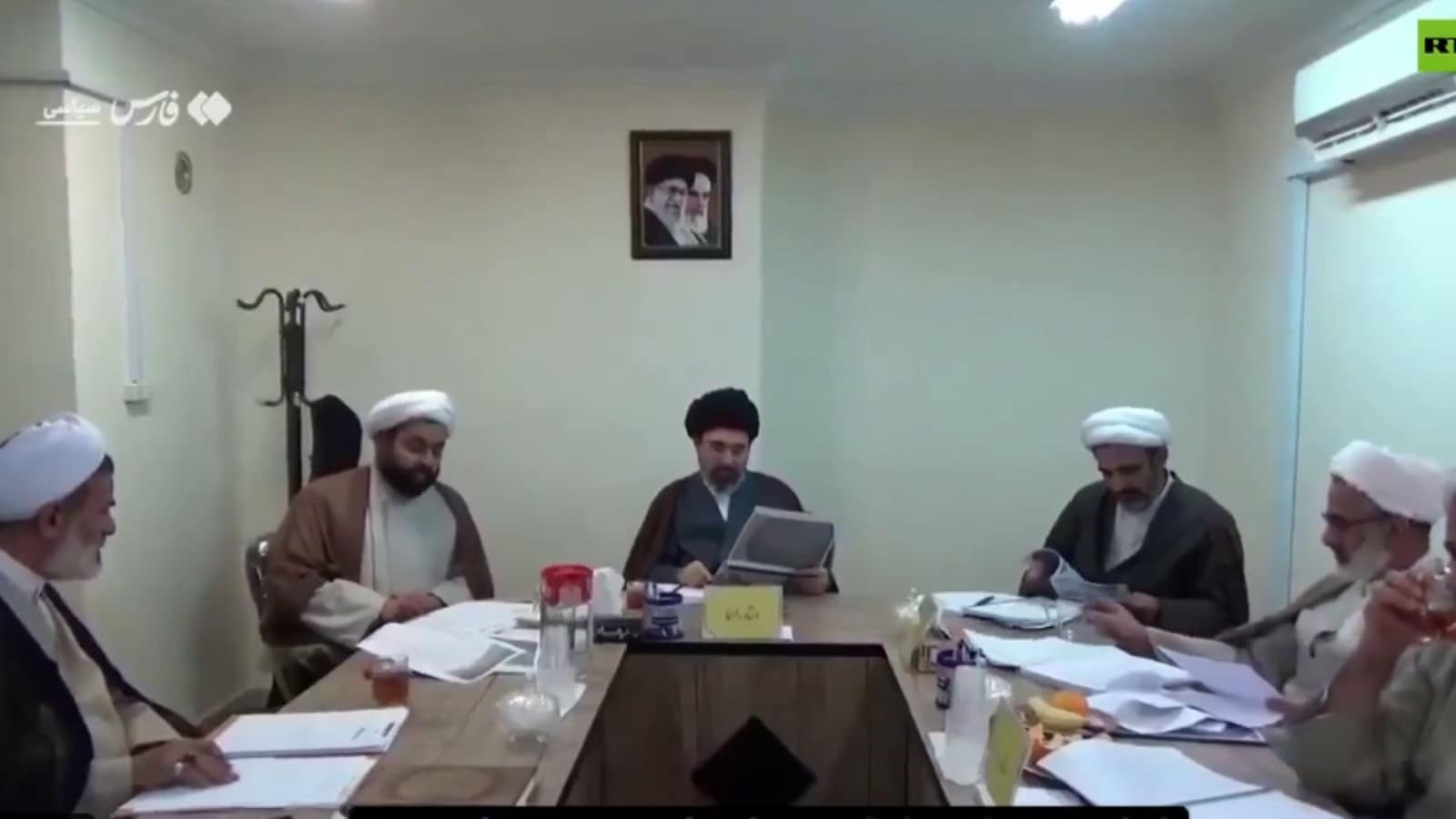
The quiet release of an undated, short-form video clip by state-aligned media in Iran featuring Supreme Leader Mojtaba Khamenei's voice did little to quell persistent rumors surrounding his physical condition. Following the high-stakes US-Israeli strikes on February 28 that eliminated his predecessor and father, Ayatollah Ali Khamenei, the newly elevated leader has remained entirely invisible to the physical public. This calculated drip of archival or unverified footage points to a profound institutional vulnerability inside the clerical regime.
When a secretive government relies on fragments of audio and ambiguous visual proof to project authority, it reveals more about internal anxiety than outward strength. Rumors persist across intelligence circles that Mojtaba sustained serious injuries during the initial wave of airstrikes. State media counter-attacks with curated clips of academic study sessions or staged high-level meetings, yet refuse to permit independent verification.
The Anatomy of an Information Vacuum
Information control is the lifeblood of authoritarian succession. When Ayatollah Ali Khamenei was killed, the transition to his son was rushed through opaque channels to prevent factional fracturing within the Islamic Revolutionary Guard Corps and the clerical establishment. Yet, a transition on paper means little if the principal actor cannot command a physical presence.
Physical absence breeds conspiracy. Foreign intelligence agencies and regional adversaries claim Mojtaba suffered severe shrapnel wounds, rendering him physically compromised or disfigured. Iranian officials, including President Masoud Pezeshkian, have scrambled to refute these assertions, arguing that a man capable of sitting through multi-hour administrative sessions cannot be in critical condition.
- The Counter-Narrative: State organs release brief, context-free audio recordings to prove vitality.
- The Intelligence Reality: Without live, unscripted, open-air appearances, skepticism remains entirely rational.
- The Security Calculus: Remaining underground minimizes exposure to foreign targeting while maximizing mystery.
Survival Politics in a Shattered Command Structure
The strategic rationale for Mojtaba's continued seclusion goes beyond personal health. Modern warfare in the Middle East has evolved into an exercise in high-precision decapitation strikes. Exposing the supreme leader to open-air rallies or conventional public itineraries invites unacceptable risk.
By maintaining a ghost-like status, the regime achieves two goals. It protects the supreme leader from physical elimination while preserving an aura of untouchable omnipresence. However, this strategy carries severe domestic costs. A leader who cannot address his population face-to-face struggles to inspire organic loyalty during economic distress and military friction.
The security apparatus depends on a rigid chain of command. When communication channels are restricted to slow networks of intermediaries to evade electronic surveillance, operational friction multiplies. Decisions that once required a brief audience now crawl through layers of bureaucratic caution.
The Long-Term Cost of Opaque Rule
History demonstrates that dynasties forged in crisis rarely achieve stability through absolute isolation. Mojtaba Khamenei inherited an apparatus bruised by direct military conflict, sanctions, and deep internal dissent. Every month he remains sequestered behind closed doors compounds the disconnect between the governing elite and a frustrated populace.
The recent audio leaks and short video packages are designed to plug the dam, but they are leaking faster than state media can bail them out. As long as the supreme leader remains a digital phantom rather than a visible statesman, the machinery of state will continue to run on guesswork and fear.
The transition has taken place, but the rule has not truly begun.