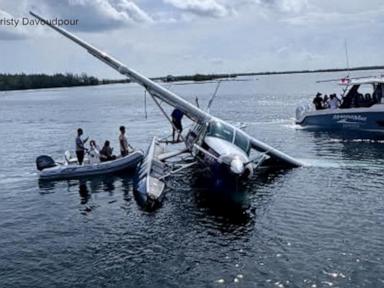
Every aviation accident begins with a sequence of micro-failures, a fragile chain of physics, human error, and regulatory blind spots that suddenly snaps under pressure. When an 11-person Kenmore Air de Havilland DHC-3 Otter crashed and caught fire in Shallow Bay near Sucia Island off the coast of Washington state, the headlines celebrated a miracle. All ten passengers and the pilot survived. Bystanders and recreational boaters transformed into frontline trauma medics within minutes, hauling bleeding survivors from the sinking, burning wreckage before official emergency services could arrive.
Public relief was instantaneous, followed quickly by the usual sigh of collective amnesia that accompanies any disaster where casualties are miraculously avoided. But looking at a seaplane crash solely through the lens of a lucky survival story is a journalistic failure. The Pacific Northwest commercial floatplane network operates on a margin of error that should terrify anyone buying a ticket for a scenic commuter flight. Behind the viral rescue footage lies an aging fleet, complex marine-aviation crossover hazards, and systemic oversight challenges that will inevitably produce a tragedy if left unaddressed. For a more detailed analysis into this area, we suggest: this related article.
The Anatomy of a Floatplane Emergency
To understand why a routine commuter flight from Seattle's Lake Union to Roche Harbor turns into a fiery aquatic rescue, one must look closely at the mechanical realities of vintage utility aircraft. The DHC-3 Otter is a legendary workhorse, an iconic design from the mid-twentieth century engineered to haul heavy loads into remote, unpaved wilderness. Yet, asking decades-old airframes to maintain modern commercial safety profiles in high-frequency regional corridors creates a hidden structural vulnerability.
When a floatplane impacts water, the deceleration dynamics are notoriously violent. Water does not compress. Striking a surface body at landing speeds feels structurally akin to hitting solid concrete if the aircraft enters the water nose-low or experiences asymmetric drag from its pontoons. In the Sucia Island incident, the aircraft rapidly caught fire after impact. Fire on water represents one of aviation's most terrifying operational nightmares. Fuel spreads instantly across the surface surrounding the sinking cabin, trapping panicked passengers between the risk of drowning in a submerged fuselage and burning alive on the surface. For broader background on the matter, comprehensive analysis can also be found on TIME.
Official accident reports from the National Transportation Safety Board take months, sometimes years, to dissect the exact ignition source and mechanical triggers. Early witness and expert accounts point toward a complex matrix of shifting environmental factors, including regional wind shear, localized visibility drops, and the inherent stability challenges of heavy utility configurations. Yet, focusing exclusively on the specific mechanical autopsy of Flight 140 misses the broader structural decay rotting the foundation of commercial seaplane transit.
The Regulatory Grey Area
Commercial aviation is protected by layers of redundancy, rigorous structural monitoring, and mandatory safety management systems. Major airlines operate under intense federal scrutiny that leaves virtually zero room for improvised operational decisions. Regional floatplane operators, however, frequently navigate an ambiguous regulatory intersection between marine vessel operations and Federal Aviation Administration flight guidelines.
Pilots flying water-based aircraft face micro-meteorological variables that land-locked commercial pilots rarely encounter. Low-altitude marine layer fog, sudden katabatic winds funneled through island chains, and glassy water conditions—which completely eliminate depth perception during landing—place extraordinary demands on individual pilot judgment. When safety relies heavily on subjective, split-second decisions made by a single captain rather than automated systems and co-pilot cross-checks, the system is fundamentally vulnerable to human fatigue and cognitive overload.
Consider the operational pressure placed on regional carriers during peak seasonal tourism windows. Demand surges, turnaround times shrink, and pilots are pushed to maintain tight schedules across unpredictable coastal routes. While regulatory bodies mandate rest periods and maintenance intervals, the sheer physical toll of flying vintage mechanical systems through corrosive saltwater environments creates an invisible maintenance debt. Saltwater is relentlessly destructive to aluminum airframes, control cables, and electrical bussing. Even with rigorous washing schedules, micro-corrosion hides inside sealed structural spars where standard pre-flight inspections cannot peer.
The Citizen Response Illusion
The true takeaway from the Sucia Island crash is not that safety systems functioned as intended. It is that civilian bystanders bailed out an overextended emergency infrastructure. Reports from the scene confirmed that recreational boaters reached the wreckage long before professional marine rescue units could navigate to the remote bay. Crucially, among those impromptu rescuers were an off-duty medic and a trauma nurse who happened to be on the water.
If those specific private vessels had not been within immediate line-of-sight, or if medical professionals had not been casually boating in the vicinity, the narrative of this accident would read very differently. Relying on random civilian proximity as a primary safety net for commercial aviation is an institutional abdication of responsibility. When commercial operators launch flights carrying over a dozen souls into remote marine environments, the passengers' survival should depend on engineered safety protocols, rapid-deployment corporate assets, and professional rescue redundancies—not the luck of being near a boat full of off-duty nurses.
Hardening the Fleet Against Future Disasters
Fixing the vulnerabilities exposed by maritime aviation incidents requires abandoning the romanticized view of bush-flying culture. Commercial passenger transit cannot operate on nostalgic aesthetics.
First, passenger cabin egress must be radically re-engineered for water landings. Traditional aircraft seating arrangements become death traps when a fuselage inverts underwater or fills with burning fuel. Mandatory deployment of quick-release harness systems, universally accessible and clearly marked emergency air supplies for every passenger, and shatter-resistant egress windows should be baseline requirements for any aircraft carrying paying customers over aquatic environments.
Second, safety management systems within regional floatplane companies require external, unannounced audits that look past basic paperwork compliance. Regulators need to evaluate how operators handle marginal weather pressure. If a pilot feels subtle corporate or scheduling pressure to launch into deteriorating coastal visibility because passengers need to reach a resort on time, the corporate culture itself becomes an active flight hazard.
The passengers who walked away from the wreckage in Shallow Bay owe their lives to split-second heroism and a massive stroke of geographic fortune. But fortune is not a strategy, and luck has a strict expiration date in aviation. Unless federal regulators and commercial operators confront the aging infrastructure, the regulatory blind spots, and the myth of civilian-reliant rescue operations, the next headline will not report a miracle. It will report an avoidable catastrophe.