President Donald Trump froze sweeping new Russia sanctions passed by Congress on October 16, 2026, invoking a national interest waiver days before the penalties were scheduled to take effect. Executive Order 14436 shelved up to 500 percent tariffs on Russian imports and 100 percent secondary tariffs on nations buying Russian oil and gas or helping Moscow evade restrictions.
The surface story sounds like routine executive-branch friction over foreign policy. It isn't.
Washington's pause on the Lindsey O. Graham Sanctioning Russia and Iran Act of 2026 exposes a deeper collision between congressional muscle, physical fuel shortages sparked by the Iran war, and fragile diplomatic negotiations over Ukraine. Lawmakers passed the measure with overwhelming bipartisan majorities after months of negotiation, expecting a historic snapback of economic pressure on Moscow. Instead, the White House turned a statutory waiver clause into an open-ended holding pattern while envoys worked behind closed doors to revive peace talks.
Why Congress Built a Trapdoor Into the Graham Act
Lawmakers rarely hand a skeptical president an escape hatch unless they misjudge how quickly the ground can shift beneath them. When Congress moved the Graham Act to final passage in late summer and early autumn of 2026, the bill carried heavy momentum: an 86-11 vote in the Senate and 262-159 in the House. Supporters pitched it as Congress's sharpest assertion of authority over Russia sanctions since 2017.
Yet Section 115 of the law gave the president authority to waive key Russia-related sanctions and duties by submitting a national interest certification and explanatory report to Congress. That clause was written as a standard safety valve for unforeseen market shocks or diplomatic openings. In Washington's legislative playbook, presidents usually treat national interest waivers as narrow exceptions that require heavy political justification.
Trump flipped the script on October 16—just two days before the October 18 implementation deadline. By signing Executive Order 14436, he allowed the statutory framework to sit on the books while suspending its sharpest teeth. The waiver carries no fixed expiration date, leaving the penalties dormant rather than repealed.
That distinction matters for every compliance officer, trader, and diplomat watching the file. A repealed law takes another act of Congress to revive. A waived provision can snap back into force if the president or Secretary of State revokes the waiver.
The Diesel Deal Behind the Curtain
Follow the fuel barrels, not just the diplomatic cables.
Days before issuing the sanctions waiver, Trump announced an arrangement to bring Russian diesel into global and U.S. markets to ease tightness in middle distillates. Energy markets were already jittery from supply disruptions tied to the conflict involving Iran and ongoing strikes hitting energy infrastructure in the Russia-Ukraine war. Administration officials argued that bringing more diesel onto the market—while pressing both sides to hold back from refinery strikes—could cool pump and freight costs for American farmers, truckers, and households ahead of the November midterms.
Critics in both parties saw a different calculation. A bipartisan group of 22 lawmakers pressed the White House to enforce the Graham Act and scrap the diesel arrangement ahead of a fifth winter of fighting in Ukraine. In the House, Representative Gregory Meeks introduced legislation aimed at blocking the diesel deal and revoking the Treasury license clearing the way for those shipments.
Even on pure energy math, the relief promised by the deal has faced tough scrutiny. Analysts and energy data pointed out that 300,000 metric tons of diesel represents a modest slice of global trade—roughly ten days of U.S. consumption—and weeks after the announcement, physical delivery into U.S. ports still ran into stiff political and legal pushback.
A sanctions waiver does not just spare Moscow from new penalties; it reshapes the bargaining room for every buyer and seller of refined fuel.
State-level officials jumped into the standoff as well, warning port operators and terminals in New Jersey about legal exposure if they handled Russian diesel. What looked on paper like a straightforward market-stabilization move quickly turned into a legal and political tug-of-war between federal executive licenses, state warnings, and congressional anger.
What Actually Stayed in Force
Headlines often treat a sanctions waiver as a wholesale reset button. That misreads how overlapping U.S. sanctions authorities actually work.
Executive Order 14436 waived duties and restrictions under specific provisions of the Graham Act, including the proposed 500 percent ad valorem duty on Russian goods and secondary tariff triggers targeting countries tied to major Russian crude oil or natural gas purchases or sanctions evasion. It also paused new restrictions under the Act covering certain financial institutions, energy transactions, and commercial ties.
It did not erase the rest of the sanctions architecture.
| Policy Layer | Status After Oct. 16 Waiver | Practical Effect |
|---|---|---|
| Graham Act New Tariffs (500% Russia / 100% Third-Country) | Waived under EO 14436 | Dormant ahead of implementation; no new tariff collection under these sections |
| Graham Act Sovereign Debt Ban | Took effect upon Sept. 18 enactment | Bars U.S. persons from purchasing Russian sovereign debt |
| Prior Executive Orders & OFAC Sanctions | Unchanged by EO 14436 | Existing asset freezes, blockings, and financial limits remain active |
| Iran Provisions of the Graham Act | Unaffected by the Russia waiver | Statutory Iran measures remain separate from the Russia pause |
| European & Multilateral Sanctions | Outside U.S. executive control | EU restrictions continue independently of Washington's waiver |
That fine print matters for anyone doing business near sanctioned sectors. Prior executive orders—such as Executive Order 14024—and existing Office of Foreign Assets Control (OFAC) prohibitions did not vanish overnight. Nor did the Graham Act's prohibition on U.S. persons buying Russian sovereign debt, which took effect when the bill became law on September 18.
Just as important, Washington cannot waive away rules set in Brussels. European Union sanctions operate under their own legal framework, meaning a U.S. pause does not automatically clear European banks, insurers, or shippers to re-enter restricted Russian trades.
Leverage, Diplomacy, and the Shadow Fleet
Why hold a loaded gun without pulling the trigger? In sanctions statecraft, keeping pressure in reserve can be a bargaining chip—or a sign that economic leverage is colliding with political reality.
By mid-November 2026, U.S.-mediated talks involving Russian, Ukrainian, and American delegates resumed in Abu Dhabi—the first such trilateral talks in nine months—following Kremlin meetings with U.S. envoys Steve Witkoff and Jared Kushner. Supporters of a flexible White House posture argue that preserving executive discretion gives negotiators room to test whether Moscow will bend on security terms, humanitarian issues like prisoner exchanges and abducted children, or limits on infrastructure strikes.
Skeptics see the sequence in reverse. From Kyiv's vantage point and among hawkish lawmakers in Washington, waiving congressionally mandated penalties before they even took effect handed Moscow relief without extracting a verified breakthrough. Ukrainian President Volodymyr Zelenskyy cast the waiver as a reward for Vladimir Putin, warning that easing pressure risks inviting further concessions rather than ending aggression.
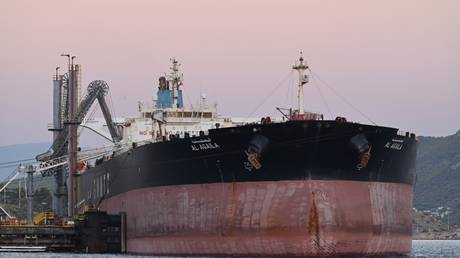
Meanwhile, the underlying mechanics of sanctions evasion have grown harder to police with blunt instruments. Russia's shadow fleet—estimated at roughly 1,100 to 1,400 vessels operating through shell companies, shifting registries, mid-sea transfers, and transponder spoofing—already routes crude and refined products to buyers such as China, India, and Turkey outside traditional Western maritime controls. Threatening steep secondary tariffs on major energy buyers carries its own blowback: higher import costs at home, retaliatory friction with major trading partners, and sharper oil price spikes if trade flows fracture abruptly.
A hypothetical example shows how tricky that trade-off becomes in practice. Suppose a major Asian refinery buys Russian crude and exports refined fuel into global markets. Slapping a blanket 100 percent tariff on its goods might punish Russian oil revenue—or it might push that buyer deeper into opaque shipping networks while driving up refined product prices for everyone else.
That tension helps explain why even hawkish coalitions wrestle with secondary tariffs when energy markets are already stretched.
What Comes Next in Washington
Midterm shifts have turned the calendar into a high-stakes clock. With Democrats winning control of both chambers of Congress in the November 2026 elections and the new Congress set to convene on January 3, 2027, the White House holds a window of executive latitude before facing a divided legislative branch.
Administration officials have pointed to review windows and monitoring duties assigned to agencies including the U.S. Trade Representative alongside State, Treasury, and Energy. Once January arrives, lawmakers who backed the Graham Act will have fresh leverage to demand answers on the national interest report, press for stricter enforcement of existing OFAC rules, and challenge any move that treats temporary relief as permanent normalization.
For companies and policymakers alike, the smart move is to treat the waiver as conditional and reversible, audit supply chains against all surviving statutory and OFAC restrictions, and watch whether diplomacy in Abu Dhabi produces tangible restraint—or simply buys time before the next clash on Capitol Hill.