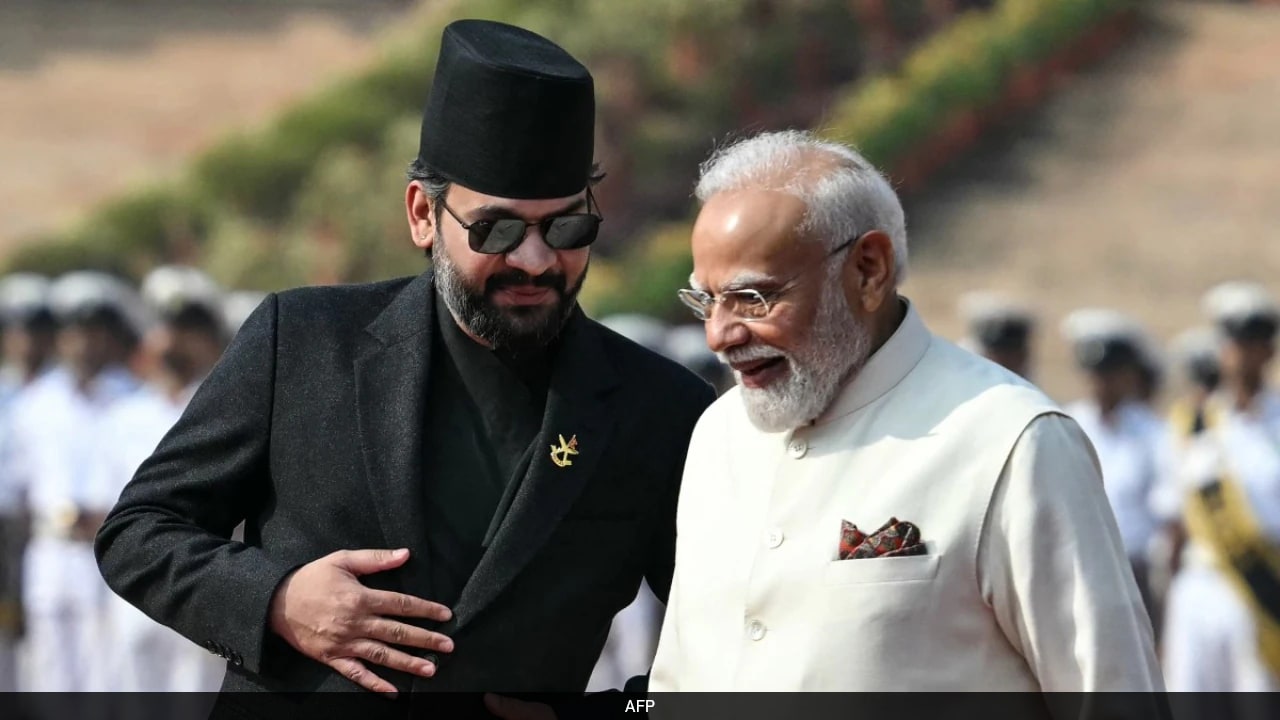
Indian Prime Minister Narendra Modi and Kathmandu Metropolitan City Mayor Balen Shah just signed off on a massive bilateral push featuring a Rs 15,000-crore financial package and eight cross-border agreements. While surface-level reports celebrate the immediate capital injection and diplomatic handshakes, the real story lies in the shifting power dynamics of South Asian geopolitics. By bypassing traditional federal bottlenecks to engage directly with Kathmandu’s populist, anti-establishment mayor, New Delhi is hedging its bets on Nepal’s political future while attempting to counter Chinese infrastructure dominance in the Himalayas.
Money talks in diplomacy. Yet in the labyrinthine corridors of Kathmandu’s Singha Durbar, money rarely moves without tripping over a dozen bureaucratic wires, nationalist sensitivities, and competing foreign agendas.
For decades, India’s neighborhood policy toward Nepal relied on predictable levers: backing established legacy parties, funding massive hydroelectric dams that stalled for years, and assuming historical cultural ties would automatically translate into strategic loyalty. That playbook stopped working the moment Balendra Shah—a structural engineer turned underground rapper—swept the Kathmandu mayoral race in 2022 as an independent outsider. Shah didn't owe anything to the old guard of the Nepali Congress, the CPN-UML, or the Maoist Centre. More importantly, he didn't owe anything to New Delhi.
When a populist disruptor who openly critiques foreign interference sits down with the leader of South Asia's largest economy and walks away with a Rs 15,000-crore commitment and eight distinct pacts, veteran observers sit up and pay attention. This isn't just another routine bilateral visit. It is a calculated reset of how India projects soft and hard power across its northern border.
The Anatomy of the Rs 15,000-Crore Package
Headline numbers in diplomatic communiqués are notoriously slippery. Politicians love big round figures because they play well on evening news broadcasts, even when the actual disbursement schedules stretch across a decade. To understand what the Rs 15,000-crore package actually means on the ground, you have to separate the immediate grants from the concessional lines of credit.
A substantial portion of this financial outlay is earmarked for urban infrastructure, waste management modernization, and transit corridors directly impacting the Kathmandu Valley and its surrounding feeder zones. Historically, Indian Lines of Credit (LoCs) to Nepal have suffered from abysmal utilization rates—often hovering below 30 percent—due to strict procurement rules requiring a high percentage of Indian contractors and materials, alongside Nepal’s own sluggish land acquisition processes.
The new framework attempts to fix this chronic bottleneck. By tying funds directly to municipal-level execution capabilities and fast-tracked joint project monitoring committees, both sides are trying to bypass the administrative paralysis that has plagued mega-projects like the Pancheshwar Multipurpose Project for nearly thirty years.
Where the Capital Actually Flows
- Urban Transit and Ring Road Expansion: A heavy slice of the funding targets decongestion in the Kathmandu Valley, specifically addressing the long-delayed second phase of the Ring Road expansion and integrated rapid bus transit systems.
- Solid Waste and Water Treatment: Kathmandu’s chronic garbage crisis—a signature issue that propelled Shah to office—receives dedicated technical and financial backing, including modern waste-to-energy plants and Bagmati River cleanup infrastructure.
- Digital Public Infrastructure: Exporting India’s Unified Payments Interface (UPI) and digital identity frameworks into municipal governance, aiming to digitize tax collection, permit approvals, and public service delivery in Kathmandu.
- Cross-Border Energy and Grid Connectivity: While municipal governance anchored the optics, the underlying financial architecture reinforces high-capacity transmission lines designed to evacuate Nepali hydropower into the Indian grid during peak summer months.
Decoding the Eight Pacts Beyond Diplomatic Jargon
Bilateral agreements usually read like cure-all prescriptions written in impenetrable legalese. Strip away the diplomatic pleasantries, and the eight pacts signed during this high-profile engagement reveal a very specific strategic architecture. New Delhi isn't just writing checks; it is embedding its technological, regulatory, and logistical standards deep into Nepal’s administrative nervous system.
The centerpiece among the eight agreements is the Municipal Digital Integration Pact. For years, India has successfully pitched its digital stack—Aadhaar-style identity verification and UPI payment rails—as an alternative to Western and Chinese tech ecosystems. By partnering directly with Kathmandu Metropolitan City, India gains a high-visibility urban testbed. If a street vendor in Thamel or a commuter in Patan uses an Indian-backed digital rail to pay municipal fees seamlessly, New Delhi achieves a level of daily grassroots presence that no multi-billion-dollar dam could ever match.
Another critical agreement focuses on Technical Capacity Building and Urban Planning. Balen Shah’s background as a structural engineer makes him uniquely allergic to vague political promises; he prefers blueprints, feasibility studies, and strict timelines. This pact pairs the Kathmandu Metropolitan City engineering divisions with premier Indian urban planning institutes and municipal corporations like those in Surat and Indore—cities renowned for transforming their waste management and urban cleanliness. Instead of top-down lectures from diplomats in Delhi, this creates a peer-to-peer technocratic pipeline.
The remaining agreements cover heritage conservation in the Kathmandu Valley, disaster resilience and seismic retrofitting, renewable energy micro-grids, cross-border cultural tourism circuits, and streamlined customs clearances for essential urban construction materials. Notice what is missing from this list: contentious territorial disputes and heavy defense treaties. Both Modi and Shah deliberately sidestepped the political landmines of Kalapani and Lipulekh, opting instead for a hyper-pragmatic focus on service delivery and economic utility.
Why New Delhi Bypassed Kathmandu's Old Guard
To appreciate the sheer audacity of this engagement, one has to understand the rigid protocol of South Asian diplomacy. Prime Ministers meet Prime Ministers. Foreign Ministers meet Foreign Ministers. When the leader of a regional superpower elevates a city mayor to the status of a primary strategic interlocutor, it sends an unmistakable tremor through the host country's political establishment.
Nepal’s federal coalition politics have been trapped in a state of perpetual musical chairs for over a decade. Governments collapse every twelve to eighteen months as veteran leaders trade the premiership back and forth. For India, investing long-term diplomatic capital in a specific coalition in Singha Durbar has become a diminishing-returns game. A project approved by one administration is routinely stalled or renegotiated by the next simply out of spite or shifting factional loyalties.
Balen Shah represents a different kind of political currency. With a fixed five-year mandate and massive approval ratings among Nepal’s youth—a demographic that makes up the bulk of the electorate—Shah is largely insulated from the daily horse-trading of parliamentary politics. Furthermore, his rise signaled a profound generational shift in Nepali politics, one that later manifested in the surge of newer, reform-oriented political forces challenging the traditional triumvirate.
By engaging Shah directly, Narendra Modi is executing a classic diplomatic hedge. New Delhi is signaling to Nepal’s traditional political elites that India is no longer willing to have its bilateral projects held hostage by coalition instability. At the same time, Modi is building early goodwill with a figure widely viewed as a potential future national leader. It is an investment in political futures, bought at municipal prices.
The Beijing Factor Shadowing the Himalayas
You cannot analyze any major financial commitment in Nepal without looking north toward Tibet. For the past decade, China has aggressively expanded its footprint in Nepal under the banner of the Belt and Road Initiative (BRI). From the Pokhara International Airport—built with Chinese loans that are now drawing intense scrutiny over debt sustainability—to high-profile railway feasibility studies, Beijing has worked tirelessly to erode India’s traditional sphere of influence.
However, China’s honeymoon phase in Kathmandu has hit a rough patch. Nepali policymakers and the general public have grown increasingly wary of opaque Chinese loan terms, stalled BRI commitments, and heavy-handed diplomatic interventions by Beijing’s envoys in Kathmandu’s internal party politics. The Pokhara airport, in particular, has become a cautionary tale about high-interest infrastructure debt that fails to generate the projected commercial returns.
India’s Rs 15,000-crore package is deliberately structured as a sharp contrast to the Chinese model. By emphasizing grant components, concessional financing, digital public goods, and immediate civic improvements like waste management and public transit, New Delhi is positioning itself as a partner focused on livability rather than debt-heavy mega-projects.
Yet Beijing will not sit idle. Chinese state-owned enterprises already hold massive contracts across Nepal’s hydropower and road sectors, including sections of the very same Kathmandu Ring Road that India is now helping to modernize. The ground in the Kathmandu Valley is effectively becoming a patchwork of competing geopolitical sponsors, where a commuter might drive on a Chinese-built road segment, cross an Indian-funded flyover, and pay their toll using an Indian digital payment rail while carrying a Chinese-manufactured smartphone.
The Brutal Reality of Execution in Kathmandu
Signing eight pacts in front of flashing cameras is the easy part. Making them work in the chaotic administrative reality of Nepal is an entirely different beast. Anyone who has covered South Asian infrastructure over the last twenty years knows that bilateral agreements often go to Kathmandu to die a slow death by committee.
The first major hurdle is jurisdictional friction. Under Nepal’s 2015 constitution, power is divided among federal, provincial, and local governments, but the exact boundaries of authority remain fiercely contested. While Balen Shah controls the Kathmandu Metropolitan City, critical agencies like the Department of Roads, the Nepal Electricity Authority, and the Ministry of Federal Affairs operate under the central government. If the federal ministries in Singha Durbar feel sidelined by Shah’s direct diplomacy with New Delhi, they possess a thousand subtle ways to delay environmental clearances, withhold matching funds, or stall land acquisition permits.
The second obstacle is domestic nationalist blowback. Balen Shah built his brand on fierce, uncompromising Nepali nationalism. Early in his tenure, he famously banned the screening of an Indian film across Kathmandu over a dialogue dispute regarding Sita’s birthplace, earning cheers from hardline nationalists and raised eyebrows in New Delhi. By embracing a massive Indian financial package and Indian digital infrastructure, Shah opens himself up to fierce criticism from his own base and rival political factions.
Opponents are already sharpening their knives, ready to accuse the mayor of compromising municipal autonomy or allowing foreign data surveillance through digital public infrastructure pacts. Shah will have to walk a tightrope, proving to his fiercely independent voters that taking Indian capital and technical expertise serves Kathmandu’s interests without subordinating its sovereignty.
Finally, there is India’s own bureaucratic drag. New Delhi’s Ministry of External Affairs often moves with strategic agility, but its implementing agencies—such as the EXIM Bank and public sector undertakings—can be notoriously rigid. When Indian contractors underbid on projects and then demand cost escalations, or when local Nepali subcontractors clash with Indian project managers over labor laws and material sourcing, timelines slip by years. Without relentless, high-level political oversight from both Modi’s office and Shah’s war room, the Rs 15,000-crore package risks becoming another statistical footnote in a future bilateral review meeting.
What History Tells Us About Big Himalayan Promises
History offers plenty of sobering lessons for anyone tempted to take diplomatic windfalls at face value. In 2014, when Narendra Modi made his historic first visit to Nepal—the first by an Indian Prime Minister in 17 years—he announced a $1 billion concessional line of credit to roaring applause in Nepal’s parliament. Over a decade later, significant portions of that original credit line remained unspent, tangled in disputes over project selection, bureaucratic clearances, and shifting political winds.
Similarly, following the devastating 2015 Gorkha earthquake, international donors—led by India and China—pledged over $4 billion for reconstruction. While housing reconstruction eventually made notable progress, large-scale heritage and infrastructure rebuilding lagged behind schedule for years due to procurement bottlenecks and administrative turnover.
What makes the Modi-Shah engagement different this time around is the sheer pragmatism of the two personalities involved. Neither man operates like a traditional, consensus-bound South Asian politician. Modi governs with a centralized, execution-obsessed style that prioritizes visible, fast-tracked deliverables. Shah operates like an activist-engineer, using social media to bypass traditional media filters and publicly shaming bureaucrats and contractors who fail to meet deadlines.
If both leaders apply that same ruthless focus on execution to these eight pacts, Kathmandu could see tangible transformations in its urban transit, waste management, and digital governance within a remarkably short window. If they allow the agreements to sink into the familiar quagmire of inter-ministerial committees and nationalist point-scoring, the Rs 15,000-crore headline will evaporate just like so many grand promises before it.
For the residents of Kathmandu—who spend hours choked in traffic dust, navigating broken sidewalks, and watching mountains of uncollected garbage pile up during monsoon strikes—geopolitical grand strategy means nothing. They will judge this historic handshake not by the elegance of the eight pacts, nor by how cleverly New Delhi outmaneuvered Beijing, but by whether the buses run on time and the garbage trucks actually show up tomorrow morning.


