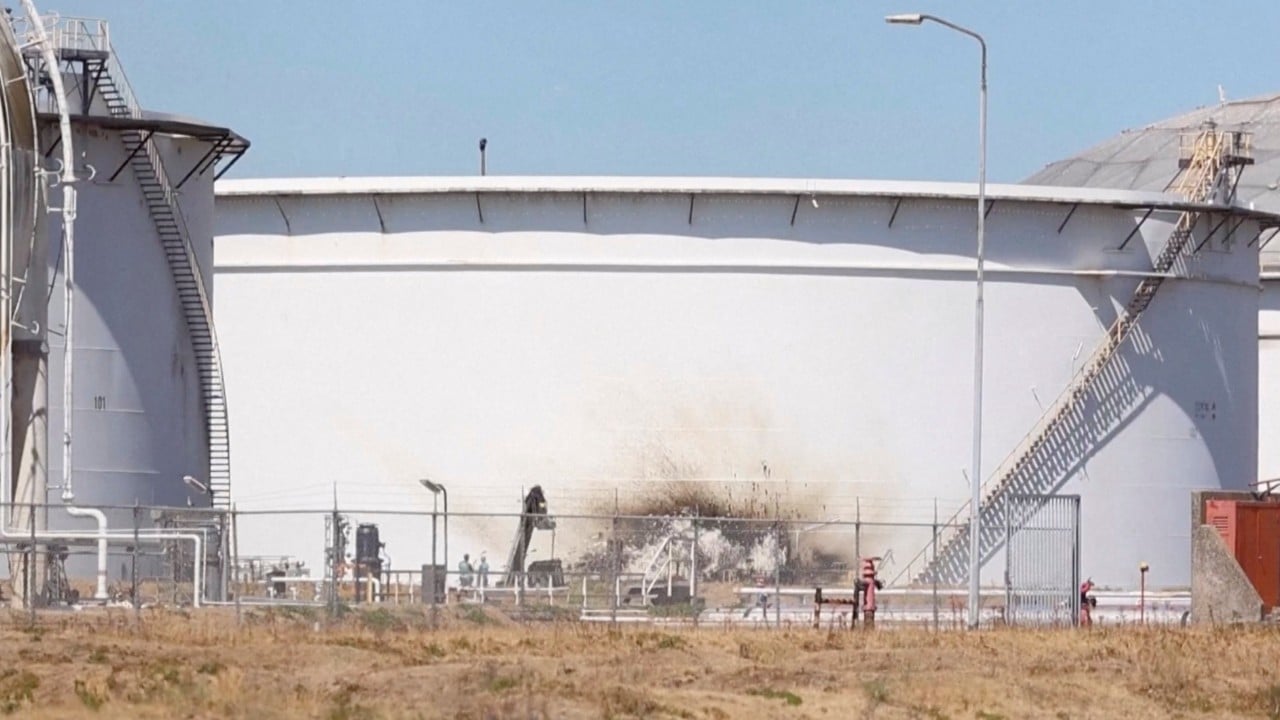
An explosion at a petroleum storage and refinery facility operated by Gunvor Energy within the Port of Rotterdam left one person dead and six others wounded. The blast, which struck during late-morning maintenance work on a storage tank along the Moezelweg in the Europoort industrial area, immediately sent shockwaves through northwestern Europe's primary energy hub. While local police and safety authorities established a crime scene to sift through the wreckage, initial statements confirmed that the deadly incident appeared to be a tragic workplace accident rather than an act of deliberate sabotage. Yet, pinning the disaster solely on standard operational failure ignores a more unsettling reality. Europe’s premier maritime gateway handles millions of tons of crude, fuel, and liquefied natural gas, acting as an indispensable economic engine where even a minor mechanical lapse carries catastrophic human and systemic costs.
The Anatomy of a Port Disaster
To understand how a routine morning maintenance check turns lethal, one must look closely at the physical realities of heavy petrochemical infrastructure. The Port of Rotterdam is not a single factory floor; it is a sprawling, interconnected industrial ecosystem spanning tens of kilometers. Refineries, cracking towers, high-pressure pipelines, and massive atmospheric storage tanks sit packed tightly against one another, linked by a dense web of logistics and power grids.
When maintenance crews step onto a petroleum storage site, they operate within an unforgiving margin of error. Hydrocarbon vapors linger even after tanks are purged. A single spark from a hand tool, a localized static discharge, or an undetected valve failure can transform a peaceful industrial zone into a fireball within milliseconds.
At Gunvor Energy's facility, Dutch broadcasting and local reporting indicated that maintenance teams were actively working on a section of pipes when the blast occurred. While corporate spokespersons and emergency coordinators were quick to emphasize full cooperation with investigators, the exact sequence of technical triggers remains under rigorous examination.
Cascading Failures and Grid Vulnerabilities
Adding to the tension on the ground, the explosion coincided with a major, unexplained power failure elsewhere in the port zone that saw an electrical transformer catch fire. Although port authorities and local emergency services rushed to clarify that the electrical grid failure was entirely separate from the Gunvor refinery blast, the simultaneous crises exposed the inherent fragility of concentrated industrial clusters.
Power outages across massive refining hubs force sudden, emergency shutdowns of secondary units. Refineries like those operated by neighboring majors such as ExxonMobil—which faced its own operational hiccups and power disruptions on the same day—rely on absolute stability. When power flickers or fails, automated safety flares roar to life, burning off excess gases to prevent over-pressurization.
For workers on the ground, these concurrent disruptions create an environment of extreme sensory overload and physical danger. Sirens wail across multiple sectors. Emergency response teams must split their focus between fire suppression, medical triage for the wounded, and securing high-risk infrastructure to prevent secondary explosions.
The Broader Economic Ripple Effect
As Europe's largest port, Rotterdam functions as the continent's macroeconomic circulatory system. Energy commodities flow through its docks to power factories, heat homes, and fuel transport networks across Germany, the Netherlands, and beyond.
When an incident shuts down operations or triggers safety pauses at critical installations like the Gate LNG terminal or regional storage farms, the ripple effects are felt instantly on continental energy exchanges. Natural gas flows and fuel futures frequently twitch at the mere rumor of supply disruptions out of Rotterdam.
While major operators like Shell reported that their primary operations remained largely unaffected by the Gunvor blast, the incident serves as an uncomfortably sharp reminder of Europe's underlying vulnerabilities. As storage targets for the winter heating season loom—with Dutch gas inventories previously hovering around critical thresholds—any disruption to regional refining capacity threatens market stability.
Safety Culture Versus the Pressure to Perform
Behind every industrial tragedy lies an institutional tension between safety protocols and production momentum. Refineries and fuel depots operate on continuous, 24/7 cycles where downtime translates directly to immense financial losses. Maintenance windows are tightly compressed, often squeezing complex, hazardous labor into narrow schedules.
Investigators will spend weeks analyzing safety logs, shift handovers, and valve maintenance records at the Gunvor site. They will look at whether contractor oversight matched internal corporate standards and whether the pressure to maintain throughput compromised safety margins.
The human toll, however, cannot be recalculated or audited away. Six families are currently dealing with the trauma of wounded loved ones, and one family is mourning a worker who simply went to a morning shift and never came home. As the smoke clears over the Europoort, the ultimate test for the port community will not be how fast trading resumes, but whether meaningful changes emerge from the investigation to protect the people working in the danger zone