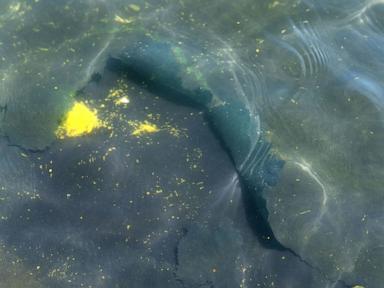
The swamp has returned to the National Mall, but it did not arrive via political intrigue. The neon-green slime and curling sheets of blue polymer currently choking the Lincoln Memorial Reflecting Pool are the direct results of a rushed fourteen-million-dollar vanity project that ignored basic laws of aquatic chemistry. While the administration points fingers at midnight saboteurs and television reporters, public records and chemical realities tell a much more embarrassing story. This is a self-inflicted architectural disaster born from a desire to re-engineer an iconic historic landmark for a national anniversary.
Federal workers spent the past week dumping hundreds of gallons of concentrated chemicals into the historic basin. The results were immediate. Instead of purifying the water, the treatment triggered a cascading failure that stripped the newly applied American flag blue lining straight off the concrete floor. The public is left looking at a multi-million-dollar chemical soup.
The Chemistry of a Manufactured Disaster
The trouble began with an aesthetic demand. The administration insisted that the historic pool, which naturally reflects the gray stone of the Washington Monument and the sky above, should feature a deep blue bottom. This required draining the six-hundred-and-ten-meter basin and coating it in a specialized tinted sealant. The color choice looked striking on paper. In reality, stagnant outdoor water exposed to intense summer sunlight acts as a massive incubator for biological growth.
Within days of refilling the basin, a massive bloom of green algae blanketed the surface. It was a predictable biological event. Sunlight and warm temperatures rapidly accelerated the growth of Scenedesmus, a resilient genus of green algae that thrives in shallow, unshaded water.
The response from the National Park Service was fast and frantic. Crews began pouring a twelve-percent concentrate of hydrogen peroxide into the water to kill the bloom. The solution failed. While hydrogen peroxide can act as an algaecide in precisely controlled environments, at high concentrations it serves another purpose entirely. It behaves as a highly effective industrial paint stripper.
The chemical broke down the bonding agents in the freshly applied blue coating. Huge sheets of the rubberized blue material detached from the concrete bed and floated to the surface, mingling with the dying organic matter. The hurried application of the chemical treatment also spiked the phosphate levels within the water. High phosphate levels act as a powerful fertilizer for the exact species of algae the crews were trying to eliminate.
The Money Trail Behind the Blue Water
Vanity projects require speed, and speed in federal contracting often requires cutting corners. The purification infrastructure intended to keep the pool clear was not subjected to the standard competitive bidding process. Instead, a one-point-seven-million-dollar contract for a specialized water-treatment system went directly to an entity with deep political connections but virtually no track record in managing large-scale federal water features.
The administrative justification for bypassing open competition was urgency. The approaching two-hundred-and-fiftieth anniversary of the Declaration of Independence on July Fourth created an artificial deadline that overrode normal bureaucratic safeguards. The results of this haste are now visible to every tourist visiting the nation's capital.
Independent technical assessments reveal that the installed filtration system was fundamentally inadequate for a basin holding over four million gallons of stagnant water. The pumps lacked the turnover rate necessary to prevent stagnation. Without constant, high-volume movement and sophisticated filtration, an outdoor pool of this scale cannot maintain clarity without constant chemical intervention.
The Problem with No-Bid Infrastructure
When oversight is stripped away, technical errors go unnoticed until it is too late. The firm selected to handle the filtration upgrade reportedly relied on a system that failed to account for the high volume of organic debris that blows into the open Mall from surrounding trees. Leaves, twigs, and dust quickly clogged the intakes.
The administration claimed that residual material left in the supply lines by previous maintenance crews caused the initial biological outbreak. This explanation ignores the basic engineering reality of the site. If the newly installed filtration loops were operating at the promised capacity, residual contaminants would have been cleared within forty-eight hours of operation. They were not.
The Mythology of the Radical Left Vandal
Faced with a highly visible infrastructure failure steps from the West Wing, the political apparatus pivoted from engineering to conspiracy. The official narrative shifted overnight to allege that political opposition groups had targeted the pool with specialized destructive chemicals. No evidence accompanied these claims.
The public defense became even more specific when the administration singled out a veteran television correspondent who had filmed a segment showing the degraded state of the pool. The reporter had reached into the water to demonstrate how easily the ruined blue lining was peeling away from the structure. This action was retroactively framed as an act of deliberate physical sabotage.
Documenting the Real Damage
Park police records show no evidence of midnight chemical attacks or coordinated infiltration of the site. The only verified alteration to the immediate vicinity was a phrase etched into a nearby patch of grass, a standard piece of political graffiti that had no physical bearing on the structural integrity of the underwater sealant.
The narrative of sabotage serves a clear purpose. It deflects from the technical incompetence of the renovation itself. Treating a national monument like a backyard swimming pool and using aggressive industrial chemicals to fix a predictable biological reaction is an engineering failure, not a criminal conspiracy.
The High Cost of Aesthetic Revisionism
The Lincoln Memorial Reflecting Pool was never meant to look like a tropical resort. Designed by architect Henry Bacon and completed in 1923, its primary purpose is stated clearly in its name. It is a mirror. The original dark concrete bottom was intentionally selected to maximize the reflective qualities of the shallow water, creating the stark, somber illusions that have framed American historical gatherings for over a century.
Altering that design to project a brighter color fundamentally changed how the water interacts with light. The new coating reduced the mirror effect, replacing a solemn historical vista with a bright tint that quickly degraded into a murky emerald hue.
The birds that frequent the National Mall are now facing the consequences of this aesthetic experiment. Wildlife handlers have expressed quiet alarm over the presence of ducks swimming through water laced with high concentrations of stripping agents. The long-term impact on the local ecosystem remains unquantified, but the immediate visual impact is undeniable.
Crews are now working around the clock to vacuum up the shredded remnants of the blue lining before the anniversary crowds arrive. The current plan involves using suction hoses to remove the debris, a process that is stripping away even more of the loose paint and leaving the bottom looking patchy and scarred. The dream of a pristine blue monument for the July Fourth holiday is dead. It has been replaced by the reality of an expensive, poorly executed repair job that will eventually require a complete overhaul to correct.