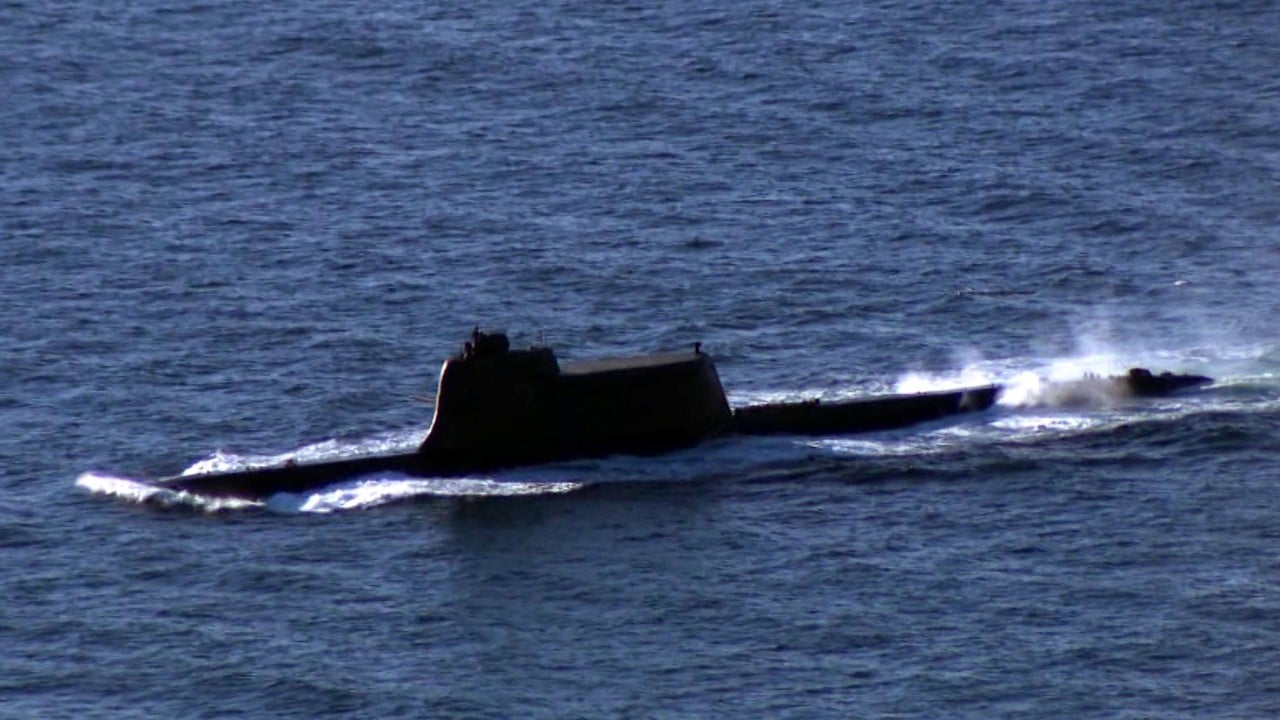
North Korea has publicly claimed to test a new torpedo incorporating artificial intelligence, framing the weapon as an advanced underwater strike system capable of autonomous navigation and evasive maneuvers. State media announcements of this nature serve twin purposes: projecting rapid military modernization to deter adversaries and testing the analytical assumptions of foreign intelligence agencies. Yet when defense engineers and naval analysts strip away the propaganda vocabulary, a far more complicated question emerges. Does Pyongyang possess the ruggedized hardware, reliable acoustic sensing, and training data required to run real-time AI in the brutal environment beneath the sea, or is "artificial intelligence" a convenient label slapped onto pre-programmed guidance logic?
I have spent decades tracking defense claims from closed regimes, and one rule holds steady across every decade. Announcement hype travels at the speed of state television; engineering maturity moves at the speed of sea trials and failure analysis.
What Underwater Autonomy Actually Demands
A torpedo is not a desktop server sitting in a climate-controlled room in Pyongyang. It is a high-speed metal cylinder hurtling through a dense, opaque, and noisy medium where radio waves vanish within inches and GPS does not exist. For an AI torpedo to make genuine autonomous decisions in real time, its onboard compute has to process noisy sonar returns, classify targets amid biological clutter and countermeasures, update trajectory calculations, and drive control surfaces under intense vibration and thermal stress.
In conventional torpedoes, guidance relies on deterministic algorithms, inertial measurement units, active or passive sonar homing, and wire guidance or pre-set search patterns. The weapon follows rules written in advance by engineers. If a target turns sharply or deploys a decoy, classic logic reacts according to threshold parameters and predetermined heuristics.
Machine learning approaches, by contrast, use trained models to recognize patterns in messy sensory inputs or adapt path planning when conditions deviate from nominal assumptions. That sounds impressive on paper. Underwater, it introduces acute fragility. Sound travels through water at roughly 1,500 meters per second, bending and refracting across thermoclines, salinity layers, and seabed topography. A model trained on clean or limited acoustic datasets can misclassify a whale pod, a fishing trawler, or a bubble screen as a warship hull. Worse, an unverified neural network can behave unpredictably when confronted with an acoustic environment it has never seen.
Compute Under Pressure and Heat
Putting high-density processors inside an underwater vehicle creates an immediate thermal and physical bottleneck. Military electronics require radiation-hardened or at least shock-qualified components that tolerate severe G-forces during launch, rapid pressure shifts, and high internal temperatures generated by compact compute boards. Commercial AI accelerators designed for data centers or even terrestrial drones draw substantial power and shed heat rapidly. Inside a sealed torpedo hull surrounded by cold water—or worse, operating near a high-energy battery or thermal propulsion unit—thermal gradients and power budgeting become unforgiving constraints.
Even if a team integrates an embedded neural processor onto a guidance board, inference speed is only half the battle. Naval warfare unfolds at speeds where a few seconds of latency or a false target lock can mean missing a maneuvering vessel or chasing a decoy. Defense contractors spend years qualifying software-hardware stacks through hardware-in-the-loop simulation, tank tests, and open-ocean runs before trusting autonomous target recognition near high-value assets.
Why State Media Uses the AI Label
Propaganda and strategic signaling rarely need to match laboratory benchmarks to achieve political effect. Calling a weapon system AI-enabled signals to regional rivals—South Korea, Japan, and the United States—that North Korea is closing the technological gap in unmanned and autonomous warfare. It forces defense planners to spend time and money evaluating whether a threat exists, even when technical evidence remains thin.
There is also an internal bureaucratic dynamic at play. Defense establishments across the globe have rushed to attach the "AI" label to legacy autonomy, sensor fusion, and targeting software over the past several years. Pyongyang is hardly alone in stretching terminology. When state outlets highlight high-tech attributes, they project momentum, technical self-reliance, and strategic surprise without disclosing test telemetry, failure rates, or operational constraints.
Consider a hypothetical example to see how signaling works in practice. Suppose a test unit fires a torpedo along a pre-planned corridor using an upgraded digital signal processor that filters background noise slightly better than an older analog or basic digital board. From an engineering standpoint, that is incremental signal processing. In a state press release, however, filtering noise to improve target tracking can easily be packaged as "artificial intelligence." Without independent telemetry or recovered hardware, outside observers cannot tell incremental firmware apart from true adaptive autonomy.
Sanctions, Supply Chains, and Workarounds
North Korea operates under sweeping international sanctions designed to choke off access to advanced microelectronics, precision machining, and dual-use software tools. Acquiring modern GPUs, specialized AI chips, or high-grade inertial sensors through legitimate commercial channels is heavily restricted.
That does not mean Pyongyang is frozen in time. Smuggling networks, front companies, and illicit procurement channels have repeatedly supplied sanctioned states with commercial-off-the-shelf electronics, circuit boards, and components diverted from civilian markets. Over the past decade, North Korean technical talent has also shown notable adaptability in software development, cyber operations, and missile engineering.
Yet smuggling components is not the same as building a reliable naval weapons system at scale. A smuggled processor board might boot cleanly on a lab bench in Pyongyang. Surviving repeated underwater shock loads, saltwater ingress, electromagnetic interference, and software integration with propulsion and warhead fuzing systems is a vastly harder engineering grind. Every additional layer of complex software increases the attack surface for bugs, race conditions, and edge-case failures right when the weapon needs to work most.
| Dimension | Claimed AI Torpedo Capability | Practical Engineering Reality | Key Bottleneck |
|---|---|---|---|
| Target Recognition | Autonomous classification in complex seas | Constrained by limited acoustic training data and ocean sound distortion | Real-world underwater sonar datasets |
| Hardware & Compute | Real-time onboard AI inference during high-speed runs | Likely reliant on embedded or commercial-derived chips under strict power/heat limits | Ruggedization, thermal dissipation, sanctions |
| Navigation & Control | Adaptive evasive routing and dynamic re-targeting | Mostly deterministic guidance with selective algorithmic filtering | Verification and safety against false locks |
| Strategic Impact | Immediate shift in undersea naval balance | Primarily psychological signaling and incremental modernization | Proven operational reliability in combat conditions |
What Real Naval Threat Looks Like
Analysts sometimes fall into a false binary: either a claimed weapon is a miraculous leap forward, or it is completely harmless. Both views miss the point. A torpedo does not need Hollywood-level artificial intelligence to pose a serious danger to surface ships or submarines.
A conventional heavy torpedo carrying a high-explosive warhead, running at respectable speed and depth with reliable homing logic, is already a lethal threat. Even modest improvements in acoustic signal processing, resistance to basic decoys, or battery endurance matter in coastal and littoral waters. If a weapon system uses basic machine learning only for narrow tasks—such as rejecting obvious false echoes or assisting operator display cues—it could still represent a meaningful incremental step without matching grand state media claims.
At the same time, overestimating an unproven system distorts defense priorities. If navies assume a rival's torpedoes possess flawless autonomous re-attack logic in every sea state, they may over-index on exotic counter-AI measures while neglecting fundamentals like anti-submarine patrol coverage, sonar maintenance, decoys, and damage control. Conversely, dismissing every claim out of hand risks being caught off guard if a narrower capability matures quietly over several test cycles.
The Intelligence Gap Beneath the Surface
Unlike ballistic missiles—which launch upward, leave exhaust plumes, and trace arcs observable by radar and satellites—underwater weapons tests are notoriously difficult to verify from afar. Unless an adversary releases selective footage, loses a test unit, or conducts activity in heavily monitored waters, external observers often piece together fragments of information.
State media videos of weapons tests are curated artifacts. Camera angles, edited cuts, and missing data points are features, not accidents. A clip showing a splash, a wake, or a warhead detonation proves a test occurred; it does not prove how an algorithm behaved mid-run or how often the system missed its mark during unpublicized trials.
Decades of watching defense announcements teach a sobering lesson: breakthroughs in naval warfare are rarely settled by a single press release. They are forged through years of unglamorous testing, troubleshooting in cold water, and quiet iteration far from the cameras.
Treat Pyongyang's AI torpedo announcement as a signal of intent and incremental engineering ambition rather than proof of an autonomous undersea revolution, and verify every capability claim against physical constraints before changing naval doctrine.