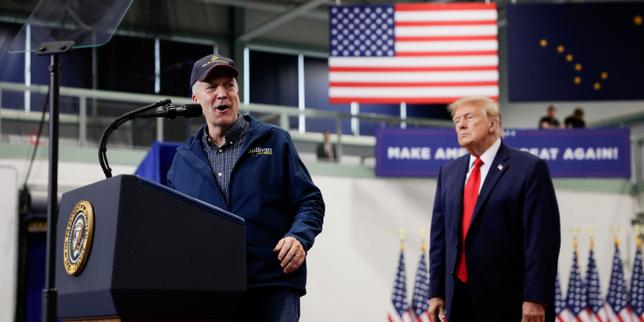
Donald Trump and his legal allies have initiated a preemptive legal strategy in Alaska designed to challenge the state's ranked-choice voting system before the final Senate race ballots are even tabulated. By filing early motions and establishing standing ahead of an official certification, Republican operatives are building a procedural firewall to contest a potential defeat of their preferred Senate candidate. This maneuver shifts the battlefield from the ballot box to the courtroom long before a concession speech is ever drafted.
Most observers view post-election lawsuits as desperate, last-minute scrambles by losing campaigns. That assumption is obsolete. Modern political litigation operates on a preventative timetable, where the groundwork for overturning or delaying results is laid months—and sometimes years—in advance. In Alaska, the target is not merely a specific batch of absentee envelopes or a malfunctioning tabulator in Anchorage. The target is the entire statutory architecture of how Alaskans choose their federal representatives. For another look, read: this related article.
The Mechanics of Preemptive Election Litigation
To understand why a campaign files a lawsuit before losing, you have to understand the doctrine of laches. In legal terms, laches is an unreasonable delay in pursuing a right or claim in a way that prejudices the opposing party. Courts routinely throw out post-election challenges because judges ask a simple, devastating question. Why did you wait until you lost to complain about rules that were on the books for years?
Preemptive filings neutralize that defense entirely. Related reporting on this trend has been shared by Reuters.
By lodging constitutional and procedural objections ahead of the final tally, Trump's legal network forces state election officials onto the defensive while the votes are still in transit. Even if an initial injunction is denied, the filing itself preserves the legal argument for rapid appellate review the second a Democrat or an anti-Trump independent pulls ahead in the rounds of elimination.
Alaska presents a uniquely fertile ground for this approach because of its hybrid election model. Voters approved Ballot Measure 2 in 2020, replacing traditional party primaries with an open top-four primary followed by a ranked-choice general election. Under this system, if no candidate wins an outright majority of first-place votes, the last-place finisher is eliminated, and their voters' second choices are redistributed until someone crosses the 50 percent threshold.
For Republican strategists aligned with Trump, this mechanism is viewed as an existential threat. When multiple conservative candidates split the initial vote—a dynamic famously illustrated during Alaska's 2022 special House race—ranked-choice voting can allow a moderate or Democratic candidate to triumph in the later rounds. A preemptive legal challenge attacks the constitutionality of this redistribution process under the Elections Clause of the U.S. Constitution, arguing that the tabulation method dilutes single-vote finality and disenfranchises voters whose ballots are exhausted in early rounds.
Why Alaska Matters to the National Playbook
Alaska is a laboratory. With only three electoral votes and a relatively small, geographically dispersed electorate, the state offers a manageable testing ground for legal theories that conservative election lawyers hope to export to larger battlegrounds.
Consider the logistical realities of the state. Alaska's vast terrain, reliance on bush planes for ballot transport in rural Native villages, and generous mail-in deadlines mean that final results routinely take up to two weeks to materialize. That two-week window is a vacuum. In modern American politics, an information vacuum is an invitation for narrative warfare.
When initial Election Night returns show a Republican ahead on first-choice ballots, only for that lead to evaporate ten days later during the ranked-choice tabulation rounds, the optics are tailor-made for claims of irregularity. By having active litigation already docketed in federal or state court, Trump's team can immediately frame a completely legal, statutory tabulation shift as an ongoing constitutional crisis.
The Shifting Burden of Proof
Traditional election contests require the plaintiff to prove that enough illegal votes were cast—or legal votes rejected—to alter the outcome of the race. That is a notoriously high bar. Recounts rarely flip margins larger than a few hundred votes.
Preemptive structural challenges flip that burden. Instead of hunting for individual fraudulent ballots in precinct-level spreadsheets, the lawyers argue that the entire mechanism of tabulation is facially invalid. If a court agrees that a specific rule governing ballot curing, witness signatures, or ranked-choice elimination violates state or federal constitutional guarantees, the remedy isn't a recount. The remedy is throwing out entire categories of ballots or reverting to an earlier stage of the count where the Republican candidate held the lead.
The Counter-Argument From Election Administrators
State election officials and constitutional scholars push back hard against this characterization, arguing that preemptive suits erode public trust under the guise of protecting it.
From an administrative standpoint, Alaska's Division of Elections operates under strict statutory mandates passed by the voters and upheld repeatedly by the Alaska Supreme Court. Officials point out that ranked-choice voting does not manufacture votes out of thin air; it simply conducts an instant runoff using preferences voters explicitly recorded on their ballots. Nobody's vote is counted twice, and nobody's vote is stolen. If a voter chooses not to rank a second or third candidate, their ballot simply stops advancing once their first choice is eliminated—a functional equivalent to sitting out a traditional runoff election.
Furthermore, critics of the Trump legal strategy note a glaring political contradiction. Ranked-choice voting is not inherently partisan. In jurisdictions across the country, it has helped both Republicans and Democrats consolidate fractured majorities. When conservative candidates campaign actively for second-choice votes rather than attacking their intraparty rivals, the system rewards coalition-building.
Yet, in the current political climate, legal mobilization is rarely about long-term institutional consistency. It is about immediate tactical leverage.
The Financial and Organizational Infrastructure Behind the Filings
Filing complex constitutional litigation in federal district court requires immense resources, specialized appellate counsel, and local co-counsel who understand the nuances of Alaska's civil procedure. This is not an ad-hoc operation thrown together by a local campaign manager.
Over the past four years, the Republican National Committee and aligned external groups have systematically redirected millions of dollars away from traditional get-out-the-vote field offices and into permanent election integrity legal war rooms. These entities retain elite constitutional litigators on year-round retainers. Their sole mandate is to audit state election codes, identify statutory ambiguities, and prepare draft complaints ready for immediate filing the moment a race enters a contested zone.
In Alaska, this infrastructure has worked in tandem with local grassroots campaigns to repeal Ballot Measure 2 at the ballot box while simultaneously attacking its implementation in the courts. It is a classic pincer movement. If the legislative or ballot-initiative route stalls or fails to take effect in time for the current cycle, the judicial track serves as an immediate backstop.
Gray Areas in Election Law That Invite Litigation
To dismiss every preemptive lawsuit as pure theater would be a mistake. Seasoned election lawyers know that state election codes are frequently riddled with genuine ambiguities—gray areas written decades ago before the rise of universal mail voting and algorithmic tabulation.
In Alaska, several procedural friction points offer legitimate footholds for litigation:
- Ballot Curing Timelines: The exact window and notification procedures allowing voters to fix missing signatures or mismatched identifiers on absentee envelopes often pit strict statutory deadlines against constitutional due process claims.
- Rural vs. Urban Verification: Differences in how remote precincts handle witness signatures—particularly in communities lacking regular postal service or notary access—create openings for Equal Protection arguments modeled on the Bush v. Gore precedent.
- Tabulation Transparency: Alaska's centralized computer tabulation of ranked-choice rounds requires complex software algorithms. Legal teams routinely demand source-code audits and cast-vote records, arguing that proprietary systems prevent meaningful public observation as required by state law.
A skilled litigator does not need to prove a grand conspiracy to disrupt an election. They only need to find one ambiguous statute where an election administrator exercised discretionary judgment, then argue that the administrator unconstitutionally usurped the power of the state legislature.
How Preemptive Lawsuits Alter Campaign Behavior
The mere existence of an active lawsuit changes how campaigns operate on the ground during the final stretch of a Senate race.
First, it alters messaging. Candidates no longer have to rely solely on persuading undecided voters in Anchorage or Fairbanks. They can pivot their rhetoric toward mobilizing their base around the idea that the system itself is rigged against them, driving higher turnout among skeptical voters who might otherwise stay home.
Second, it forces the opposing campaign to divert cash. Every dollar a Democratic or independent Senate campaign spends paying white-shoe election lawyers to file amicus briefs and intervene in pre-election motions is a dollar stripped away from television ads in the final media buy. In a state like Alaska, where media markets are relatively inexpensive compared to Pennsylvania or Georgia, a half-million-dollar legal distraction carries massive opportunity costs.
Third, it conditions the judiciary. Judges are human beings who read the news and understand the stakes of their rulings. By introducing constitutional objections early, plaintiffs acclimatize the bench to the idea that the election's outcome is legally contested, making a post-election stay or emergency injunction feel less like a radical intervention and more like a routine continuation of an ongoing docket.
The Historical Precedent of Pre-Certification Warfare
While the scale of today's preemptive litigation is unprecedented, the strategy has deep roots in American political history.
During the 2000 Florida recount, both campaigns scrambled to assemble legal teams on the fly after the networks prematurely called the state. Lawyers literally chartered private jets the morning after Election Day, writing briefs on yellow legal pads without local library access. Both sides vowed never to be caught flat-footed again.
By 2004, preemptive filing became standard practice in Ohio, with battles over provisional ballots and voter registration paper weight waged in federal court weeks before November. What has changed in the Trump era is the willingness to challenge not just marginal administrative rules, but the core legitimacy of state-certified voting mechanisms themselves. The objective has expanded from winning close races on the margins to invalidating entire frameworks when the demographic or structural math looks unfavorable.
What Happens When the Final Tallies Drop
If the Republican candidate wins the Alaska Senate race outright on first-choice ballots, or overtakes the field in the final ranked-choice round, the preemptive lawsuit will quietly vanish. Plaintiffs will file a notice of voluntary dismissal, declare victory, and move on to the next cycle.
If the Republican loses, however, that pre-filed complaint transforms instantly into the centerpiece of a national political standoff. Because standing has already been established and initial briefs have already been exchanged, the legal team can immediately move for an emergency stay blocking the Lieutenant Governor from certifying the election results.
Certification is the legal linchpin of the entire American electoral system. Without a signed certificate of election from the state executive, a winning candidate cannot be seated in the U.S. Senate when the new Congress convenes in January. Even a temporary injunction delaying certification by a few weeks gives political allies in Washington a pretext to question the legitimacy of the incoming senator and potentially delay committee assignments or narrow floor votes in a closely divided chamber.
The courtroom filings in Anchorage are not an insurance policy against fraud; they are an offensive weapon designed to ensure that no matter how Alaskans mark their ballots, the final decision belongs to a judge.