The proclamation of emergency rule in Khyber Pakhtunkhwa represents a profound institutional rupture, marking the dismantling of the final provincial bastion held by jailed former Prime Minister Imran Khan's Pakistan Tehreek-e-Insaf (PTI). When President Asif Ali Zardari signed off on federal cabinet recommendations to invoke Articles 232 and 234 of the constitution, Islamabad did not merely target a political rival. It dissolved the administrative machinery of an entire frontier province, suspended fundamental liberties, and placed senior regional leadership under detention.
To understand why this confrontation erupted, one must look past the surface rhetoric of administrative failure and examine the mechanics of state control in South Asia. For months, the PTI-led provincial administration and the central government in Islamabad engaged in a high-stakes game of political chicken. Federal authorities pointed to surging militant violence, cross-border security challenges, and a perceived absence of local counter-terrorism infrastructure. Conversely, the PTI argued that the security crisis was being weaponized by Islamabad to dismantle a democratically elected mandate and neutralize mass mobilization campaigns demanding Khan's release from prison.
The immediate trigger for the constitutional suspension was not a sudden military defeat on the rugged Afghan border, but a projected march toward the federal capital. When regional leaders mobilized supporters to challenge federal authority at the doorstep of Islamabad, the central establishment utilized the apparatus of the state to preempt the movement. The subsequent house arrest and detention of prominent regional figures, including former Chief Minister Ali Amin Gandapur, signaled that the center viewed regional autonomy not as a constitutional right, but as an existential threat to central stability.
This escalation exposes a structural flaw in Pakistan's federal design. The constitution outlines explicit boundaries between provincial and federal powers, yet security imperatives are routinely invoked to override local governance. When emergency powers are deployed to dissolve an assembly and replace it with direct federal oversight, the long-term cost is the erosion of democratic trust. Citizens in the Pathan heartland view the suspension not as a security measure, but as an explicit disenfranchisement of their electoral choices.
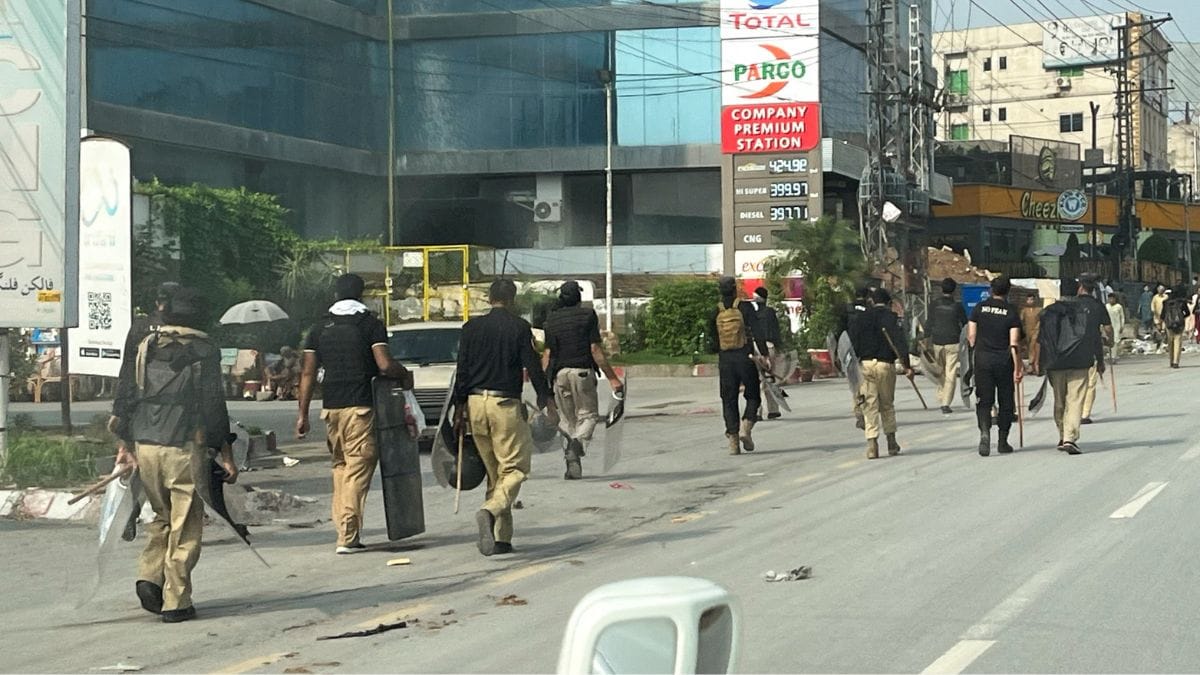
Critics of the federal action argue that sidelining elected regional representatives achieves the exact opposite of its stated intent. Instead of stabilizing a volatile region, centralizing authority alienates local populations who rely on their own political representatives to mediate grievances. The heavy deployment of military personnel under Article 245 may suppress street protests in the short term, but it deepens the ideological chasm between the populace and the central apparatus.
As the administrative dust settles in Peshawar and Islamabad, the underlying friction remains entirely unresolved. The state faces an intractable dilemma. Suppressing a popular political movement through emergency measures damages the fragile architecture of civilian democracy, while allowing it to persist threatens the writ of the established order.
The emergency framework in Khyber Pakhtunkhwa is now the law of the land, governing through executive decree rather than legislative consensus. Whether this hardline intervention secures the frontier or merely pushes political dissent further underground will define the trajectory of the nation's political future.
Pak Declares Emergency: Fighting Terrorism Or Silencing Imran Khan's Party? | The Palki Sharma Show
This video provides an in-depth analysis of the geopolitical and domestic pressures surrounding the emergency declaration in Khyber Pakhtunkhwa and its impact on the political opposition.