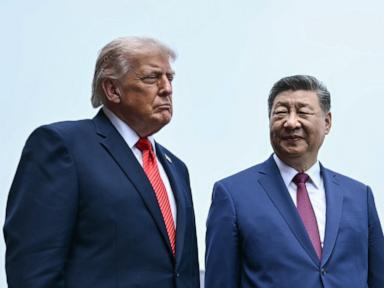
Washington is walking into high-stakes diplomatic talks with Beijing carrying a massive credibility problem on semiconductor export controls. While the U.S. government has spent years erecting a statutory wall to keep advanced artificial intelligence processors out of Chinese data centers, high-end Nvidia hardware continues to surface inside restricted borders through gray-market brokers, shell corporations, and third-party cloud rentals. As Donald Trump prepares for high-level engagement with Chinese leadership, this enforcement gap has turned from a quiet regulatory headache into a central geopolitical flashpoint. The hardware meant to secure American technological dominance is leaking through the cracks of global supply chains, forcing policymakers to confront an uncomfortable reality about how modern compute actually moves.
For decades, export control regimes relied on tracking physical cargo that was heavy, slow, and easy to inspect at ports of entry. Graphics processing units do not follow those rules. A single server rack packed with flagship AI accelerators weighs a few hundred pounds and carries millions of dollars in computational value. That high value-to-weight ratio makes semiconductor hardware uniquely vulnerable to diversion. When a shipment leaves a manufacturing facility in Taiwan and arrives at a data center operator in Southeast Asia or the Middle East, American regulators lose direct line of sight almost immediately.
How Hardware Slips Past the Border
To understand why the current export framework is straining, you have to look at how enterprise server hardware is bought, sold, and deployed globally. Nvidia does not typically sell individual chips directly to end users; it sells processors to original equipment manufacturers and system integrators like Supermicro, Dell, and Gigabyte. Those companies assemble the chips into full server racks and distribute them through a sprawling network of authorized resellers, regional distributors, and cloud service providers.
Once a server rack enters the commercial channel outside the United States, tracking its final resting place becomes an exercise in forensic accounting. Consider a hypothetical scenario that mirrors documented enforcement vulnerabilities. A newly registered logistics or cloud hosting firm in Singapore or Malaysia places a legitimate order for fifty high-density AI servers. The paperwork checks out, the end-user certificates look clean, and the hardware arrives at a local warehouse. Within weeks, that company quietly liquidates its assets, transfers ownership to an obscure holding entity, or ships the hardware across borders disassembled as generic computer components.
Customs officials looking at shipping manifests rarely possess the technical training to distinguish a restricted AI accelerator from a standard enterprise graphics card designed for video rendering or gaming. Even when serial numbers are flagged, the secondary market moves faster than regulatory audits. By the time investigators trace an invoice back to a shell company, the chips are already bolted into racks in Shenzhen or Beijing, training large language models behind closed doors.
The Compute Loophole Nobody Can Close
Smuggling physical silicon is only half the story. The more intractable problem facing Washington is that you do not need to move a chip across a border to use its processing power.
Cloud computing has fundamentally broken the traditional logic of territorial export controls. Under current U.S. Department of Commerce regulations, restricting the physical export of advanced semiconductors to China does not automatically prevent Chinese entities from renting access to those exact same chips hosted in data centers located in Tokyo, Frankfurt, or Ashburn, Virginia. While regulators have floated proposals requiring cloud providers to verify the identity of foreign customers training large AI models, enforcing "Know Your Customer" rules on cloud infrastructure is a technical and legal minefield.
A research lab or state-backed enterprise in China can easily spin up accounts through foreign subsidiaries, academic partnerships, or decentralized compute brokers. They upload their training datasets over encrypted fiber-optic cables, run their workloads on clusters of H100 or Blackwell processors sitting legally in a friendly jurisdiction, and download the resulting model weights back home. No customs agent ever sees a box. No export license is technically violated if the contracting entity appears to be a commercial software firm registered in a compliant country.
This cloud loophole puts Nvidia and its hyperscale partners in an impossible bind. If cloud providers aggressively police every customer's corporate lineage and inspect their workloads to guarantee compliance, they risk alienating legitimate international clients and driving business toward less scrupulous hosting providers. If they rely on basic self-certification, Washington accuses them of turning a blind eye to national security risks.
Washington's Diplomatic Leverage Problem
This structural leakage directly undermines American bargaining power ahead of Trump's upcoming engagement with Beijing. Trade negotiations depend on credible enforcement. When U.S. officials demand concessions from China on intellectual property, market access, or industrial subsidies, their primary stick is the threat of tightening the technological noose around China's domestic AI sector.
That threat loses its bite when Chinese firms are visibly acquiring restricted compute anyway. Beijing knows that the U.S. export control apparatus—specifically the Bureau of Industry and Security—is severely underfunded relative to the scale of the global semiconductor industry. Trying to police thousands of global distributors with a compliance budget designed for Cold War-era defense manufacturing is like trying to stop a flood with a chain-link fence.
Furthermore, aggressive unilateral sanctions carry a steep economic cost for American industry. Every time the U.S. government tightens the technical thresholds for chip exports—banning first the A100 and H100, then the modified A800 and H800 variants built specifically to comply with earlier rules—it cuts off billions of dollars in legitimate revenue for U.S. chipmakers. That lost revenue is not simply absorbed; it is money that Nvidia cannot reinvest into research and development to stay ahead of global competitors.
Meanwhile, those exact restrictions act as a massive state-sponsored stimulus package for China's domestic semiconductor champions. Before the export bans, Chinese tech giants preferred buying Nvidia hardware because its CUDA software ecosystem was vastly superior to domestic alternatives. By cutting off legal supply, Washington forced Chinese firms to pour capital and engineering talent into domestic alternatives like Huawei's Ascend series. Even if Huawei's chips lag behind Nvidia's flagship silicon in raw performance or manufacturing yield, captive domestic demand guarantees them the cash flow and real-world deployment data needed to close the gap over time.
The Myth of the Watertight Supply Chain
Industry veterans have seen this movie before. Whenever governments attempt to use trade barriers to bottleneck a general-purpose technology with immense commercial value, gray markets emerge instantly to capture the arbitrage spread. In China, an underground market for restricted AI chips operates openly in electronics hubs, where brokers quote daily prices for smuggled Nvidia cards that carry a substantial markup over U.S. retail rates.
Some policymakers in Washington have proposed embedding hardware-level tracking mechanisms—such as cryptographic location verification or remote kill switches—directly into the silicon. On paper, the idea sounds straightforward: if a chip detects that it has been moved to an unauthorized geographic location, it throttles its performance or shuts down entirely.
In practice, hardware-level geofencing is fraught with risk. Enterprise customers around the world—including U.S. defense contractors, European banks, and sovereign cloud operators—are deeply wary of buying critical infrastructure that contains a built-in remote shutdown mechanism. They worry about false positives locking up mission-critical servers during an outage, or malicious actors finding a way to exploit the tracking firmware to launch a catastrophic denial-of-service attack across global data centers. Nvidia has consistently pushed back against mandates that would compromise the reliability or security architecture of its commercial products, arguing that such measures would hand a competitive advantage to foreign chipmakers who offer hardware without strings attached.
What Actually Happens Next in Trade Talks
As Trump prepares to sit across from Chinese officials, the Nvidia controversy exposes a fundamental clash between two competing philosophies in Washington. One camp views advanced AI chips strictly as strategic weapons, arguing for a total blockade regardless of the collateral damage to U.S. corporate earnings or diplomatic relations. The other camp views semiconductors through a transactional trade lens, seeing export licenses and market access as bargaining chips that can be traded for concrete Chinese commitments on tariffs, agricultural purchases, or fentanyl enforcement.
Trump's past approach to trade suggests he favors leverage over rigid ideology. During his previous administration, high-profile tech restrictions—most notably against Huawei and ZTE—were repeatedly adjusted, delayed, or used as negotiating tactics during broader trade discussions. If the administration decides that complete containment of China's AI compute is physically impossible without crippling U.S. tech companies, it may pivot toward a more transactional model: allowing controlled sales of downgraded silicon in exchange for verifiable trade concessions, while focusing enforcement resources strictly on military end-users rather than broad commercial markets.
Yet even a negotiated settlement will not erase the underlying friction. Artificial intelligence is no longer just another software vertical; it is the foundational infrastructure for economic productivity and modern warfare. Neither Washington nor Beijing can afford to cede the lead, and neither trusts the other to abide by paper agreements when compute power is on the line.
The reality facing both capitals is that silicon does not respect diplomatic boundaries. As long as an AI accelerator is worth more than its weight in gold, someone will find a shipping container, a shell company, or a fiber-optic cable to move it where the market demands.