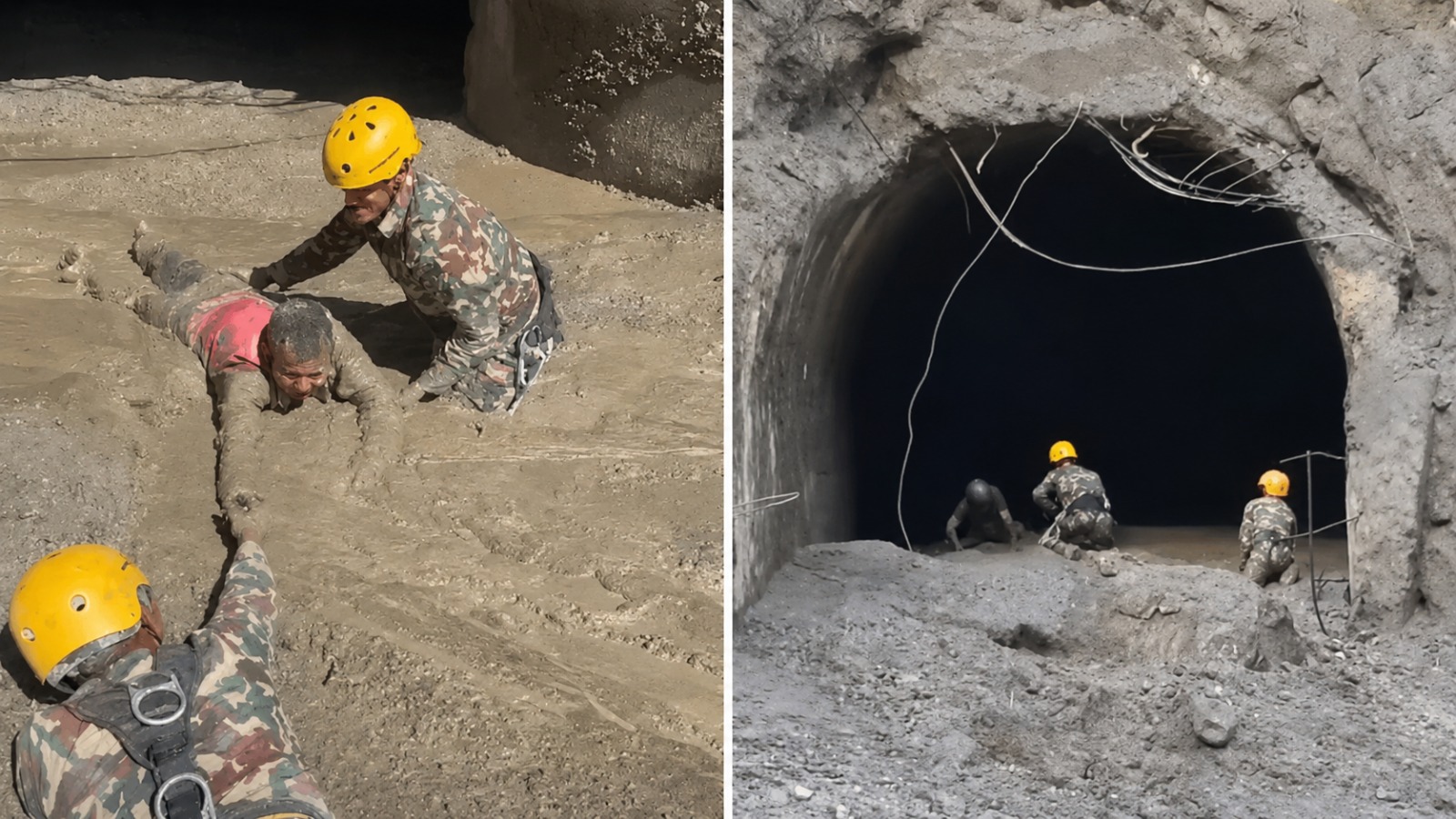
Catastrophic flash floods triggered by high-altitude ice and rock avalanches near the Nepal-Tibet border have left more than 900 people dead and plunged rescue operations into an unprecedented subterranean crisis. Over 900 hydropower project workers and employees have been reported missing or out of contact, with hundreds estimated to be stranded deep inside subterranean tunnels and underground infrastructure across eleven project sites.
The disaster struck on August 26, sending walls of water, mud, and debris crashing down river corridors like the Bhotekoshi and the Trishuli. While surface rescue efforts focus on clearing roads and distributing aid to displaced communities, elite engineering corps and international specialists from India and China are racing against time to breach sealed subterranean chambers. The logistical nightmare of subterranean extraction reveals deep vulnerabilities in how rapid-infrastructure buildouts intersect with volatile Himalayan geography.
The Anatomy of Subterranean Entrapment
Hydroelectric engineering in the Himalayas relies heavily on diversion tunnels, desanding basins, and underground powerhouses carved deep into mountain rock. These spaces offer hydraulic efficiency, but they function as high-risk dead ends when massive debris flows slam into portals.
When the floodwaters surged down the Trishuli and Mailung corridors, they did not just wash away surface-level administrative blocks and residential camps. They carried millions of tons of slurry that slammed directly into tunnel entrances, acting like concrete plugs.
Inside those dark passages, survival became a terrifying exercise in physics and endurance. Workers caught near the interiors faced sudden absolute darkness as backup generators failed, followed by surging walls of water mixed with sharp boulders and timber. Survivors like Ramchandra, who spent hours clinging to fixed iron ladders near a tunnel roof while water churned below, represent the lucky minority. Hundreds of others were deeper inside when the portals choked shut with mud, creating sealed air pockets or total inundation.
Rescuers attempting to break through these blockages face structural hazards that standard urban search-and-rescue teams are rarely equipped to handle. Heavy machinery vibrates unstable mountain faces, risking secondary landslides that could bury the very teams trying to force an entry.
Engineering Blind Spots in Fragile Terrains
The rush to harness Nepal's immense hydroelectric potential has transformed remote river valleys into industrial zones. Energy demands across South Asia incentivize rapid construction, but environmental safeguards and early-warning telemetry often lag behind corporate buildout schedules.
Many projects lack automated, rapid-seal bulkhead doors inside long water-conveyance tunnels. When an upstream dam site or glacial lake outburst flood occurs, warning times are measured in minutes. At the Upper Trishuli-1 project, civil engineers and staff scrambled up steep hillsides only because an emergency siren sounded moments before the infrastructure below vanished. For workers stationed deep underground, surface sirens are frequently muffled or completely inaudible.
The geological reality of the region compounds these design limitations. The Himalayas represent one of the most dynamic and tectonically active zones on Earth. Slopes are naturally prone to mass-wasting events, and shifting climate patterns are accelerating glacial retreat, increasing the frequency of high-altitude lake outbursts. Placing multi-megawatt engineering hubs directly in these narrow gorges creates permanent hazard points where a single upstream trigger can wipe out downstream industrial corridors entirely.
The Brutal Physics of Tunnel Extraction
Drilling through tens of meters of compacted mud, boulders, and ruined electrical infrastructure inside a narrow mountain bore requires painstaking precision. At the Upper Trishuli-3A project, a joint team of military engineers and civilian specialists deployed heavy equipment alongside controlled blasting to punch a vertical six-square-foot opening down into the main conduit.
The physical environment inside these tunnels defies easy intervention. Oxygen levels drop rapidly behind mud plugs, toxic gases can pool in stagnant pockets, and the risk of structural collapse inside the bored rock is high. Rescuers lowered through narrow core-drilled shafts must navigate pitch-black, slurry-filled chambers where visibility is near zero.
Communication lines are tenuous. When rescue crews dropped through the newly created openings to call out for survivors, they frequently met only silence. Every meter gained through the packed debris requires shoring up the tunnel walls to prevent cave-ins, turning what should be a sprint into a grueling, meter-by-meter excavation.
International assistance, delayed in earlier crises due to bureaucratic friction, has shifted the operational capacity on the ground. Specialized teams equipped with thermal imaging, acoustic life-detectors, and heavy diamond-core drills are working alongside the Nepali Army. Yet, time is an unforgiving variable. As days stretch past the initial impact, the window for finding trapped individuals alive narrows drastically, shifting the emotional and operational weight of the mission toward recovery rather than rescue.
The mountain valleys will eventually be cleared, and the twisted turbines of the damaged power stations will be repaired, but the human cost etched into these rock walls demands a total reassessment of how underground industrial work is protected against the fury of a changing Himalayan climate.
Watch more about the ongoing rescue operations in this Nepal tunnel rescue report detailing the mobilization of international teams at the disaster sites.
http://googleusercontent.com/youtube_content/1