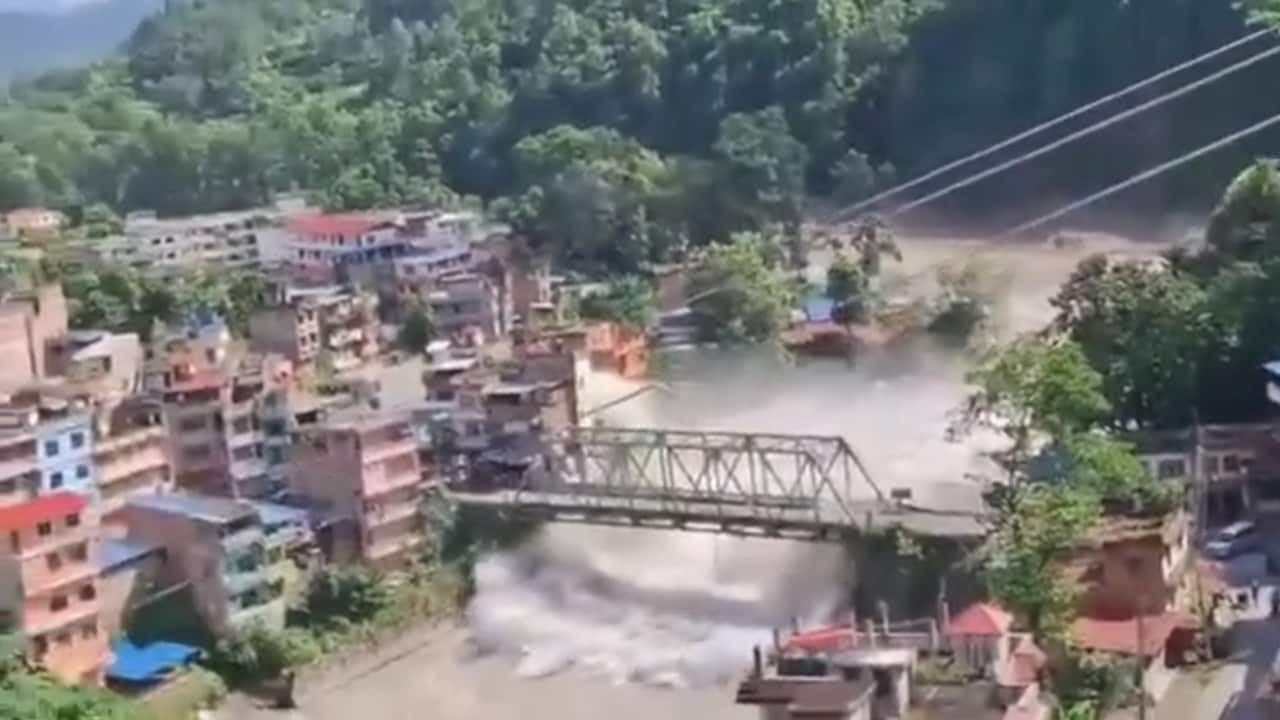
More than 150 people are dead and hundreds remain missing following a catastrophic flash flood that tore through central Nepal. Medical teams are racing against time, but the official narrative of an immediate, organized humanitarian response masks a fractured reality on the ground.
When a wall of water originating near the Nepal-Tibet border smashed through the Bhote Koshi and Trishuli river valleys, it did more than wash away motorable bridges and hydropower infrastructure. It shattered the logistical backbone of the region. Medical relief workers attempting to reach isolated pockets in Rasuwa and Nuwakot districts are finding that standard disaster response models are failing completely. For another look, read: this related article.
The Logistical Nightmare of High-Altitude Recovery
Disaster medicine in the Himalayas is governed by brutal geography. When forty kilometers of core connecting roads vanish into torrents of mud, medical logistics shift instantly from ground transport to aviation. Yet, aviation is constrained by erratic mountain weather, low-hanging cloud cover, and a severe bottleneck in aviation fuel supply lines.
Tanks carrying thousands of liters of fuel have struggled to reach staging grounds. Helicopters assigned to evacuate trauma patients from inaccessible hamlets have repeatedly been forced to ground themselves or fly back empty-handed. Related reporting regarding this has been provided by The New York Times.
"It came like a volcano erupting," local survivors recounted, describing the sheer velocity of a flood triggered by an unstable rock and ice mass near the border.
For emergency physicians stationed at Tribhuvan University Teaching Hospital in Kathmandu, the trickle of incoming survivors arriving via air ambulance represents only a fraction of those who need acute intervention. The patients making it to major centers are suffering from severe polytrauma, hypothermia, and aspiration pneumonia from swallowing debris-laden water. Those still trapped upriver face a darker timeline.
Secondary Health Threats Lurk in the Mud
As the initial search-and-rescue window narrows, the operational focus shifts from trauma surgery to public health defense. Stagnant floodwaters mixing with sewage systems across densely populated old trade routes create prime conditions for waterborne pathogens.
Histories of Himalayan flash floods show that the deadlier phase often begins days after the water recedes. Without immediate access to potable water purification units, outbreaks of acute gastroenteritis and typhoid are virtually guaranteed.
- Washed-out sanitation infrastructure leaves communities drinking from contaminated river runoff.
- Disrupted cold chains threaten remaining stocks of emergency vaccines and insulin supplies for chronic patients.
- Overwhelmed local clinics lack baseline antibiotics to treat severe wound infections contracted from abrasive river silt.
International aid packages carrying essential medicines have begun arriving from neighboring countries, but distribution bottlenecks at regional hubs threaten to keep those supplies locked away from village health posts that need them most.
The Blind Spots of Foreign National Tracking
The human toll extends far beyond local villagers. Hundreds of foreign nationals, including Indian pilgrims traveling the Kailash Mansarovar route, trekkers near Gosaikunda Lake, and international workers stationed at regional hydropower sites, are unaccounted for.
This creates a dual-track crisis for responders. Medical triage teams cannot simply treat physical ailments; they must coordinate with consular offices to match unidentified bodies with missing persons databases. Communication lines remain severed across multiple districts, leaving families overseas relying on fragmented social media updates while field teams comb through debris fields manually.
Accountability for structural resilience is also coming under fire. Independent power producers report that multiple operational and under-construction hydropower projects sustained catastrophic damage, raising hard questions about environmental risk assessments in narrow tectonic valleys experiencing accelerating climate volatility.
The water levels in the swollen river basins fluctuate unpredictably as upstream blockages threaten secondary bursts. Medical personnel remain tethered to shifting safety perimeters, watching the skies, waiting for clearance to move deeper into the gorge.


