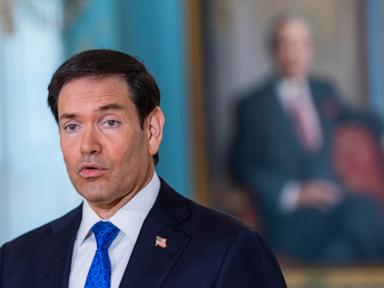
Marco Rubio’s decision to skip New Delhi on his second visit to India in six months—choosing instead to meet External Affairs Minister S. Jaishankar in Mumbai before heading to an oil refinery in Jamnagar—provoked anger across Indian opposition ranks because it looked like a deliberate snub to a sovereign capital. Yet the deeper provocation was not geography. It was transactional pressure over tariffs, Russian oil waivers, and Venezuela crude at a moment when electoral math in Washington collided with strategic autonomy in New Delhi.
Anyone who has watched bilateral summits for decades knows that protocol rows rarely erupt over hotel coordinates alone. Symbols hurt when they confirm a suspicion people already harbor. When a U.S. Secretary of State—also serving as National Security Advisor—flies into India’s commercial capital and industrial heartland rather than its seat of government, domestic critics see a downgrade from strategic partnership to commercial haggling.
Why Mumbai and Jamnagar Replaced New Delhi
Route selection in diplomacy is never accidental. Skipping New Delhi on an October 20–22 itinerary just months after an earlier trip to the capital signals a shift in immediate priorities. Rather than staging ceremonial meetings at Hyderabad House or South Block, the trip concentrated on commercial leverage, refining capacity, and trade talks that had stalled after months of friction.
Opposition figures in India seized on the optics immediately. Critics framed the arrangement as a cabinet minister traveling to meet a visiting foreign envoy on terms set by Washington rather than through traditional capital-to-capital protocol. That framing landed hard because Indian foreign policy prides itself on strategic autonomy—the principle that New Delhi answers to its own security and economic ledger, not to external choreographers.
When a visiting official bypasses a capital to talk oil and tariffs, the dispute is rarely about mileage. It is about who sets the agenda.
Still, treating the route purely as an insult misses the practical arithmetic behind it. Mumbai is India’s financial engine, and Jamnagar in Gujarat sits beside massive refining infrastructure capable of processing heavy crude. If the immediate goal was pressing commercial terms, supply diversification, and refinery coordination rather than broad political theater, going where the money and barrels sit made cold operational sense.
Tariffs, Russian Oil, and the Waiver Trap
Friction between Washington and New Delhi did not start on an October tarmac. It built up over punitive tariffs, disputes over India’s purchases of Russian crude, and negotiations that struggled to cross the finish line after earlier tariff shocks and partial rollbacks.
Washington’s moves around sanctions waivers ahead of the November 3 U.S. elections added another layer of uncertainty. Invoking statutory waiver authority to ease energy strain at home before a vote looks pragmatic to domestic political strategists. To foreign partners, however, temporary relief granted under electoral pressure feels fragile.
| Pressure Point | Washington's Leverage | New Delhi's Calculus | Key Friction |
|---|---|---|---|
| Trade and Tariffs | Tariff rates and market access in stalled negotiations | Protecting domestic industry and export competitiveness | Agreement remains incomplete despite prolonged talks |
| Russian Oil | Sanctions pressure and conditional executive waivers | Energy security and discounted supply availability | Waivers tied to short-term political timing create policy whiplash |
| Refining and Venezuela | Heavy crude supply and commercial engagement in Gujarat | Refining margins and concession options | Commercial alignment does not erase broader diplomatic distrust |
Consider a hypothetical example to see how policy whiplash plays out in a corporate boardroom. Suppose an Indian refiner has to lock in crude deliveries and shipping insurance sixty to ninety days ahead. If a waiver or tariff adjustment is driven by short-term domestic politics rather than a durable legal framework, executives face real exposure if rules snap back once an election passes.
That is the gray area that commentators on both sides often gloss over. Energy trade is never purely ideological. Even critics of New Delhi’s oil procurement have to confront a basic constraint: India is a major energy importer where fuel costs directly affect inflation, growth, and social stability. Pushing a country of more than a billion people to abandon cheaper or accessible supply without predictable alternatives invites pushback.
What Refining Politics in Jamnagar Actually Means
Heading to Jamnagar put energy security and heavy-crude refining front and center. Indian refiners have built deep technical capability to process complex, heavy grades of oil, and discussions around Venezuelan crude and broader supply diversification highlighted how industrial capacity intersects with geopolitics.
For Washington, steering Indian buyers toward alternative crude streams—including Venezuelan oil as production dynamics shift—serves two purposes at once. It attempts to reshape global energy flows while offering commercial openings to a partner whose refining scale matters globally.
For New Delhi, talking refining in Gujarat is a double-edged sword. On one hand, it underscores India’s indispensability as a refining superpower and market that global suppliers cannot ignore. On the other, hosting high-profile energy diplomacy at a private conglomerate’s industrial hub invites domestic scrutiny over corporate influence, transparency, and whether commercial deals are substituting for a comprehensive trade pact.
Why Domestic Politics on Both Sides Magnified the Spat
Foreign policy rarely happens in a vacuum; it is constantly filtered through domestic grievances. In India, opposition parties look for any opening to argue that the ruling government is absorbing diplomatic slights while failing to secure clean, predictable trade terms. Pointing to a skipped capital is an easy, high-impact line of attack.
In the United States, debates over executive waiver authority, congressional oversight, and campaign-season affordability mean the administration is juggling conflicting constituencies. Lawmakers across party lines have questioned how short-term economic relief squares with long-term sanctions credibility, while voters feel pump prices and grocery bills directly.
When two capitals are simultaneously managing domestic political heat, misunderstandings multiply. A trip designed to close commercial gaps and keep channels open gets read in New Delhi as high-handedness, while Indian caution over tariffs and energy commitments gets read in Washington as foot-dragging.
Neither side is walking away from the relationship, because the strategic stakes—from Indo-Pacific balance to supply chain resilience—are too heavy to discard over a bruised protocol ego. Yet until trade negotiations move past piecemeal frameworks and energy policy rests on rules that survive an election cycle, every detour around New Delhi will carry an avoidable political cost.