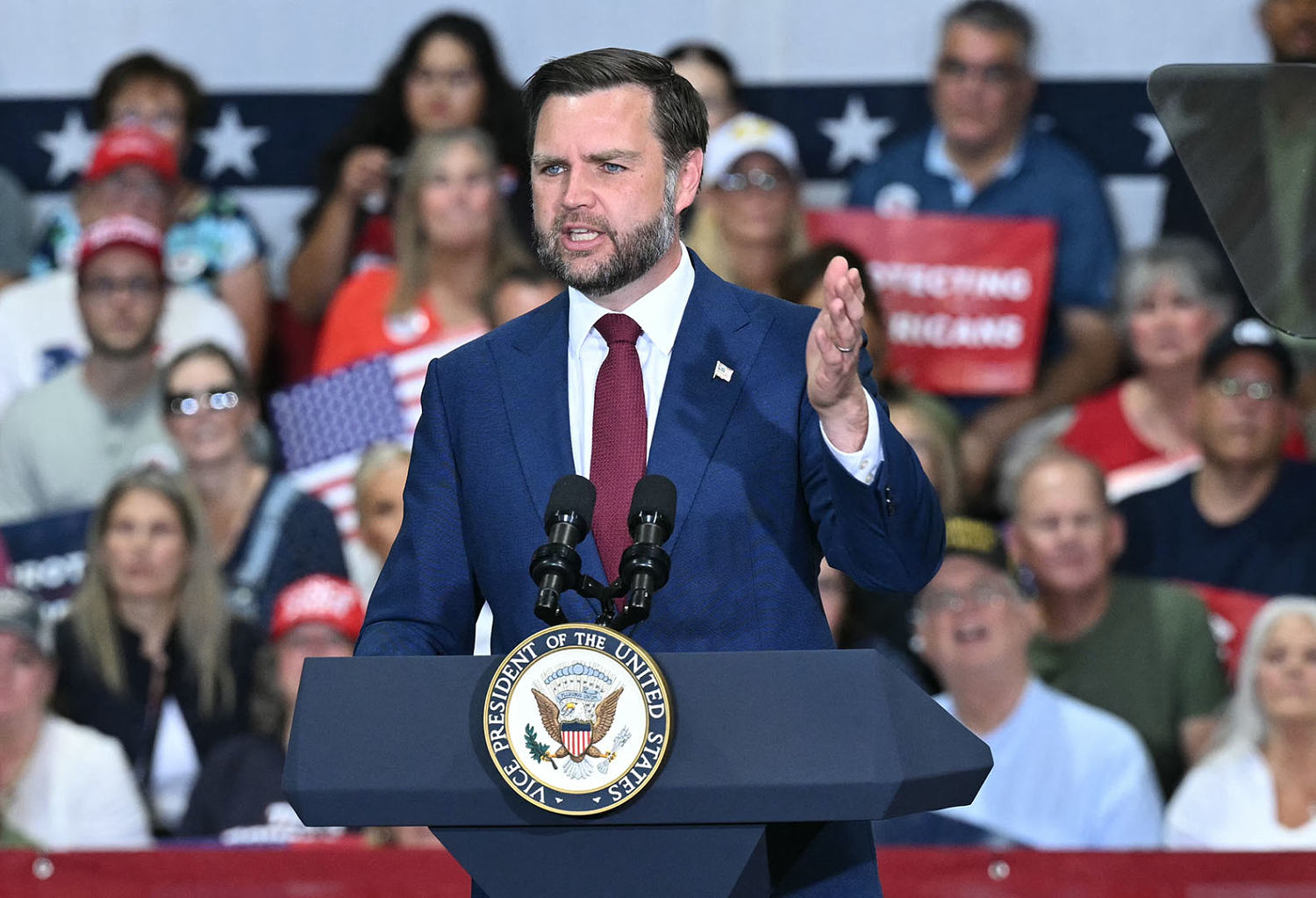
The Michigan Senate race has transformed into one of the most volatile political battlegrounds in the country, marked by an escalating war of words between Vice President JD Vance and Democratic nominee Abdul El-Sayed. During a high-profile rally in Sterling Heights supporting Republican candidate Mike Rogers, Vance leveled severe accusations against El-Sayed, branding the progressive Democrat as "very, very evil" and drawing immediate national scrutiny. This clash goes far beyond standard political hyperbole. It exposes deep fault lines over identity, national loyalty, and the shifting boundaries of acceptable discourse in modern American campaigns.
To understand why this race has turned uniquely toxic, one must look at the strategic imperatives facing both parties. Michigan represents a critical firewall for Democrats trying to hold ground in a Senate map heavily favored for Republican pickup opportunities. El-Sayed secured the Democratic nomination after a bruising primary, positioning himself as a champion of economic populism and healthcare reform. Yet his past associations, public statements, and progressive platform have handed conservative opponents a target-rich environment.
Vance capitalized on this dynamic during his appearance, arguing that El-Sayed represents a dangerous faction of politicians who prioritize narrow identity groups over a shared national identity.
The Anatomy of a Escalating Feud
The animosity between the White House and the Michigan nominee did not materialize overnight. Republicans have spent weeks tying El-Sayed to controversial figures on the far left, including online political commentator Hasan Piker. Vance hammered these connections during the rally, accusing El-Sayed of harboring sympathies for fringe elements hostile to American interests.
The rhetoric reached a personal apex when Vance pivoted to address remarks made by El-Sayed regarding Second Lady Usha Vance. Visibly angered by the Democrat's invocation of his family in political jabs, Vance issued a blunt warning from the podium.
"Whatever you want to talk about, Abdul, keep my wife's name the hell out of your mouth, because she's way out of your league," Vance told the roaring crowd.
This fiery exchange underscores how deeply personal and raw modern political combat has become. For the White House, neutralizing El-Sayed is not merely about winning a Senate seat in a swing state; it is about discrediting a brand of left-wing politics that Republicans believe is fundamentally out of touch with the American working class.
Navigating the Fallout over Public Statements
A central pillar of the Republican offensive involves El-Sayed's handling of local security incidents and foreign policy debates. Critics have heavily scrutinized comments El-Sayed made following a violent attack on Temple Israel, a synagogue in West Bloomfield, Michigan. In the immediate aftermath of the incident, El-Sayed remarked that "violence is a cycle" and that "hurt people hurt people".
Facing immense backlash from Jewish leaders and political opponents, El-Sayed issued a public apology shortly before Vance's visit, admitting that his attempt to provide context was ill-timed and insensitive to real trauma.
"We condemned that terrorist attack. We condemned it outright," El-Sayed told reporters in Lansing. "What I was trying to do was offer context for why it happened, but it wasn't the time for context, and you don't ever want to trample somebody's pain."
Despite the apology, political analysts note that the damage may linger. In competitive toss-up environments, wedge issues involving community safety and foreign conflicts can rapidly erode a candidate's support among moderate voters who prioritize social stability above all else.
The Democratic Counter-Offensive
El-Sayed has refused to absorb the blows passively. Launching his own counter-attacks, he has sought to reframe the election as a referendum on Republican economic policies and the overarching chaos surrounding the current administration. Pointing to expanded trade disputes, particularly tariffs affecting commerce with Canada, El-Sayed argued that working families in Michigan are paying a heavy price for reckless policymaking.
"Evil is ripping healthcare away from working people in exchange for tax breaks for billionaires," El-Sayed fired back in a statement. "Evil is making people pay more for groceries and gas while pushing for trade wars and actual war. Evil is dividing people for your own gain."
Furthermore, El-Sayed has attempted to saddle Republican opponent Mike Rogers with the baggage of federal policies, characterizing Rogers as a compliant surrogate willing to rubber-stamp measures that hurt local manufacturing and agricultural interests.
The Broader Implications for the Midterms
As the campaign enters its final stretch, the Michigan contest offers a stark preview of how nationalized and abrasive state-level races have become. Independent polling shows a tight race with a notable slice of undecided voters still up for grabs. Whether voters prioritize national security rhetoric and cultural flashpoints or economic pocketbook issues will ultimately determine who wins this crucial seat.
The volume will only increase as millions of dollars flood into local media markets. Both sides have made it clear that compromise is off the table, leaving voters to navigate an unforgiving landscape of starkly contrasting visions.
Vance torches El-Sayed for sharia law remarks |Michigan Senate
A detailed look at Vice President JD Vance's sharp remarks targeting Michigan Senate candidate Abdul El-Sayed during a campaign appearance.