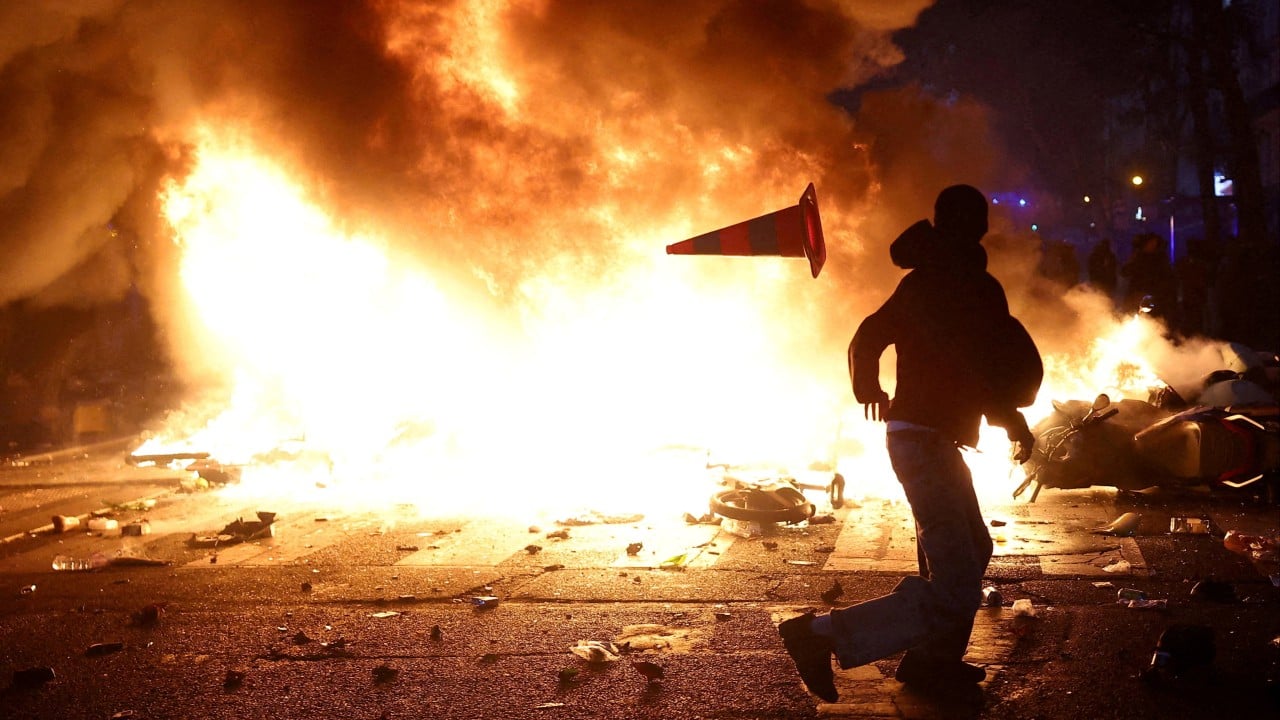
When Typhoon Champi slammed into eastern China, local authorities evacuated thousands of coastal residents and grounded hundreds of commercial flights across major transit hubs. While breaking news reports focused heavily on dramatic footage of battered shorelines and crowded airport terminals, the real story lies beneath the surface. The storm exposed the extreme fragility of global supply chains and the immense financial cost of preemptive climate defense along the Yangtze River Delta.
Emergency planners executed a textbook mass relocation to prevent loss of life, moving vulnerable populations out of low-lying coastal zones in provinces like Zhejiang and Fujian before the worst storm surges arrived. Aviation regulators simultaneously halted operations at critical regional airports, severing vital passenger and air-freight corridors. Yet looking solely at the immediate human displacement misses the wider economic shockwave. Eastern China is not just a densely populated coastline; it is the beating industrial heart of global manufacturing and maritime trade.
The Anatomy of a Preemptive Shutdown
Modern disaster management in coastal China relies on aggressive, early intervention. Rather than waiting for wind speeds to breach catastrophic thresholds, municipal governments now trigger evacuation protocols and transit freezes hours before landfall.
This approach saves lives. Historical precedent from devastating Pacific storms in previous decades taught regional planners that once storm surges breach seawalls, rescue operations become nearly impossible. Moving tens of thousands of workers from temporary construction housing, coastal fishing villages, and flood-prone urban districts is a logistical feat that requires military-grade coordination. Buses are commandeered, schools are converted into shelters, and high-speed rail networks are throttled down to zero.
However, this zero-tolerance policy for physical risk carries a staggering operational price tag. Shutting down a major eastern Chinese metropolis is not like flipping a light switch. Industrial facilities, particularly petrochemical plants, semiconductor foundries, and automated assembly lines, require complex, multi-stage shutdown procedures. You cannot simply walk away from a running chemical reactor or a precision silicon wafer line when a typhoon warning flashes red.
The Hidden Friction in Aviation Hubs
When flights are grounded during a typhoon, the public sees stranded vacationers and delayed business travelers. Industry analysts see something entirely different: the sudden, violent clogging of the world's most critical air cargo arteries.
Airports in Shanghai, Hangzhou, and Ningbo handle a massive percentage of the world's high-value, time-sensitive freight. Electronics components, pharmaceuticals, and fast-fashion inventory move through the bellies of passenger jets and dedicated freighters every single hour. Grounding those planes creates an immediate bottleneck that ripples across continents within forty-eight hours.
Airlines face a brutal calculus during these weather events. Leaving a multi-million-dollar widebody aircraft parked on an exposed tarmac in the path of 100-mile-per-hour gusts is financial suicide. Carriers must ferry empty planes out of the storm's projected cone hours in advance, scattering crews and equipment across inland airports. Once Typhoon Champi passes and the skies clear, those aircraft are out of position. Reassembling the flight schedule takes days, meaning factories in Europe and North America experience component shortages long after the rain stops falling in China.
Why the Yangtze River Delta is Uniquely Vulnerable
To understand why a single storm causes such widespread disruption, you have to look at the geography and economic density of eastern China. Over the past forty years, rapid urbanization transformed mudflats and agricultural deltas into a continuous megalopolis of ports, factories, and high-rise residential towers.
This region sits directly in the path of the Western North Pacific typhoon basin, the most active tropical cyclone breeding ground on Earth. Warm ocean currents act as high-octane fuel for developing storms, allowing them to intensify rapidly just before brushing against or making direct landfall along the Chinese coast.
The physical reality of coastal subsidence compounds the danger. Decades of groundwater extraction and the sheer weight of massive urban infrastructure have caused parts of the eastern coastline to sink slowly over time. At the same time, rising sea levels mean that storm surges ride atop a higher baseline ocean level. Seawalls built thirty years ago to withstand a once-in-a-century storm are now tested every few years.
The Maritime Domino Effect
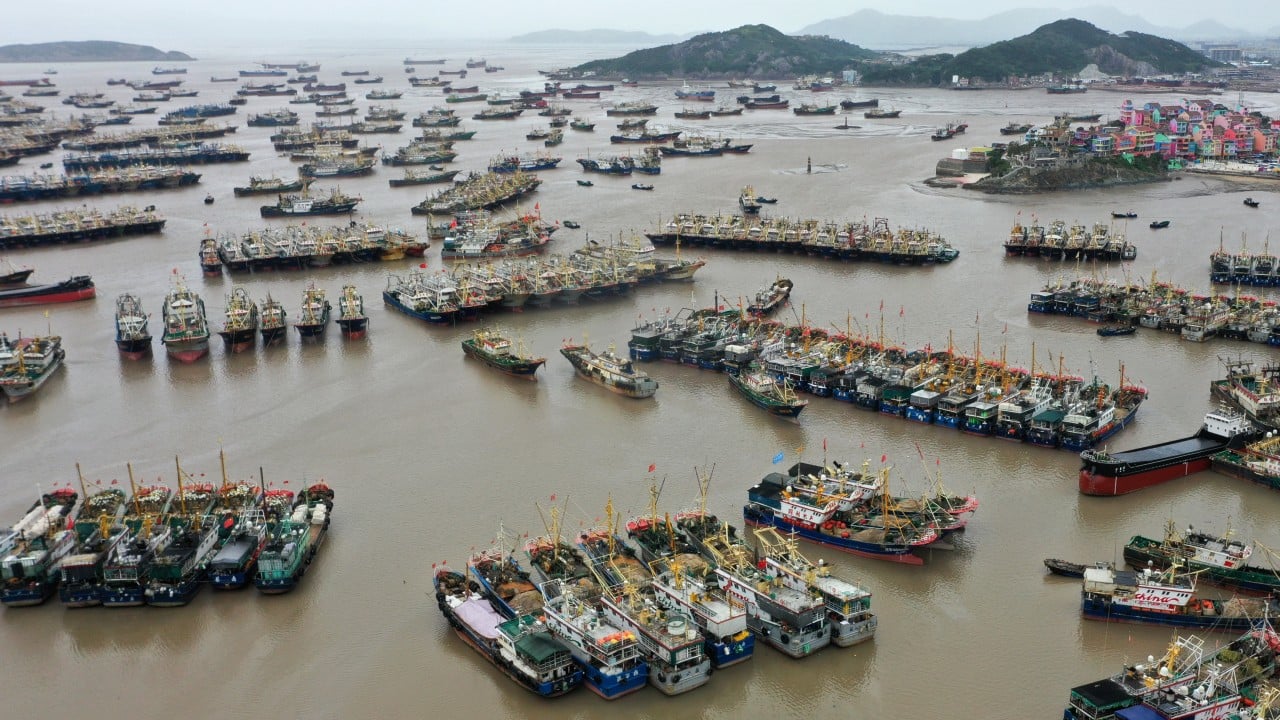
While grounded flights grab headlines because airports are easily accessible to television cameras, the quiet paralysis of maritime container ports does far greater economic damage. Ahead of Typhoon Champi, port authorities ordered commercial vessels to clear the berths and seek shelter in designated deep-water anchorages or out in the open sea.
Gantry cranes—massive steel structures towering hundreds of feet above the docks—must be locked down and anchored to prevent them from toppling in high winds. Container stacks are lowered from five or six boxes high down to two or three to reduce their wind profile.
Consider a hypothetical example of how this plays out for a mid-sized electronics manufacturer. A factory fifty miles inland finishes assembling fifty thousand laptops just as the typhoon warning is issued. The trucks carrying those containers cannot reach the port because coastal highways are closed to high-profile vehicles. When the port finally reopens, hundreds of waiting ships are queued up outside the harbor, creating a maritime traffic jam that takes two weeks to clear. The manufacturer misses its seasonal retail window, triggering penalty clauses with overseas buyers and freezing working capital.
The Financial Reality of Climate Adaptation
Covering the immediate evacuation numbers ignores the massive, ongoing capital expenditure required to keep eastern China functional during typhoon season. Municipal governments spend billions of dollars annually upgrading drainage networks, building subterranean flood-retention caverns, and reinforcing coastal embankments.
Yet engineering has hard limits. When a slow-moving typhoon dumps a month's worth of rain onto a concrete-paved urban center in twenty-four hours, no storm drain system on the planet can clear the water fast enough. Water pools in underpasses, floods subway tunnels, and shorts out electrical substations.
This reality forces local officials into a defensive posture. They must shut down public transit and cut power to flooded districts preemptively to prevent electrocutions and drownings. The economic losses from these precautionary shutdowns are rarely tabulated in official disaster assessments, which typically focus on direct physical destruction like collapsed roofs or damaged crops. Lost productivity, spoiled perishable goods, and delayed export shipments vanish into corporate balance sheets as mysterious quarterly dips.
Insurance Markets and Shifting Risk
The frequency and intensity of severe weather events along the Pacific Rim are quietly rewriting the rules of commercial insurance. Global reinsurers have steadily raised premiums and tightened coverage terms for coastal industrial properties across eastern China.
Many factory operators now find themselves carrying massive deductibles for wind and flood damage. Some international corporations have responded by quietly diversifying their manufacturing footprints, moving secondary assembly lines inland to provinces like Sichuan or Anhui, or shifting production entirely to Southeast Asia. However, moving a factory inland does not insulate it from coastal typhoons. If your raw materials arrive through eastern ports and your finished goods leave through eastern airports, a storm like Champi still holds your business hostage.
The Human Toll Behind the Evacuation Statistics
News dispatches routinely reduce human displacement to neat, round numbers. Saying "thousands evacuated" sanitizes a grueling, deeply disruptive ordeal for the people on the ground.
The majority of those moved during mandatory evacuations are not affluent urbanites living in reinforced concrete high-rises. They are migrant construction workers living in prefabricated dormitories, elderly residents in older, low-lying neighborhoods, and agricultural workers tending coastal aquaculture farms.
For a shrimp farmer or a coastal fisherman, a typhoon warning triggers an agonizing dilemma. Evacuating means leaving their entire livelihood unguarded. High winds and surging saltwater can wipe out years of investment in a single night, destroying nets, sinking boats, and contaminating freshwater ponds. Authorities frequently have to deploy local officials door-to-door to physically persuade reluctant residents to abandon their property and board evacuation buses.
Once inside emergency shelters—typically school gymnasiums or community centers—evacuees face days of uncertainty. They sleep on thin mats, eat basic rations, and wait anxiously for news about whether their homes or workplaces survived the storm intact. When the all-clear signal finally sounds, there is no immediate return to normalcy. They return to mud-caked streets, downed power lines, and the exhausting work of cleanup, often without comprehensive personal property insurance to cover their losses.
Questioning the Long-Term Sustainability of Coastal Megacities
The response to Typhoon Champi demonstrates that China has mastered the mechanics of short-term emergency mobilization. The state's ability to clear coastlines, halt transit, and shelter thousands of citizens on short notice is unmatched anywhere in the world. Few other nations could execute a shutdown of that scale without descending into widespread chaos.
Still, operational competence in crisis management masks a deeper structural vulnerability. Every major storm forces a complete halt to the economic engine that powers the region. As weather patterns grow more volatile, the intervals between these forced shutdowns are shrinking.
Relying indefinitely on mass evacuations and complete transit freezes is an expensive, reactive strategy. Reinforcing seawalls and building better pumps will buy time, but concrete alone cannot solve the fundamental problem of concentrating so much global economic infrastructure on a sinking, storm-battered coastline. Until supply chains build genuine redundancy away from vulnerable coastal chokepoints, every tropical cyclone forming in the western Pacific will continue to hold global commerce at ransom.