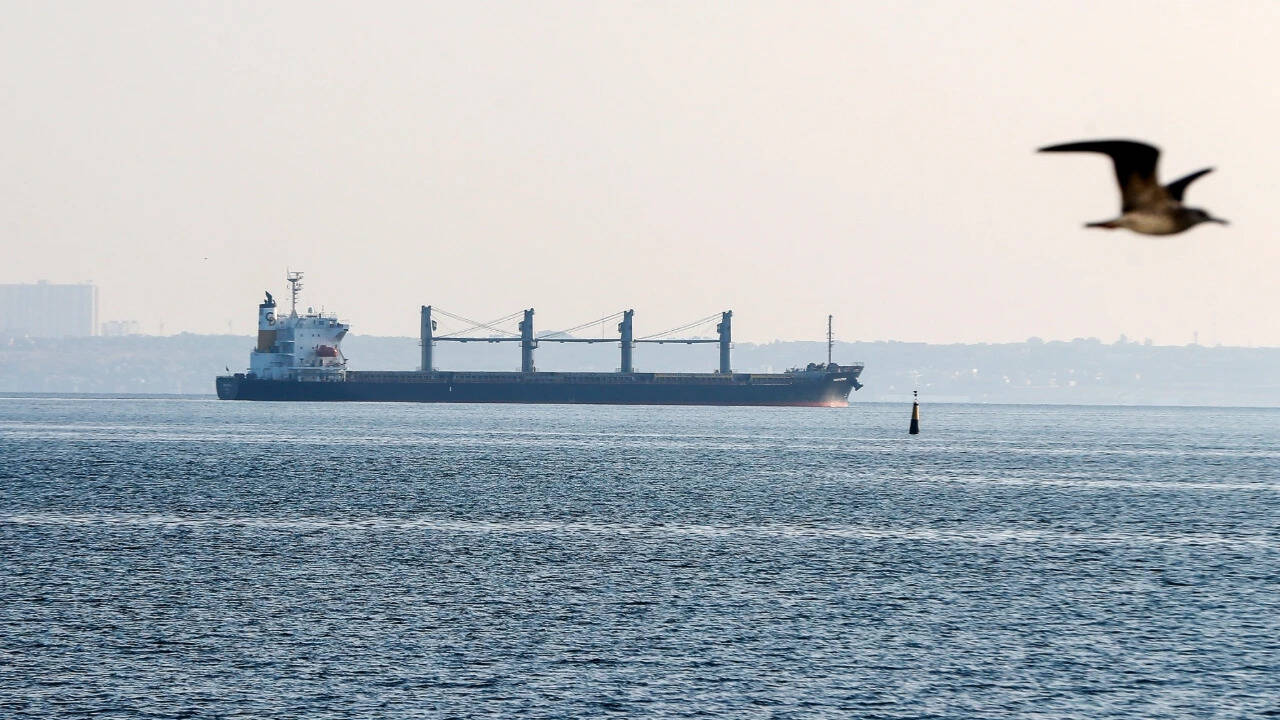
When Indonesian maritime authorities boarded a cargo vessel carrying undeclared Chinese industrial chemicals bound for Bangladesh, they did not uncover a cinematic smuggling ring. They exposed a far more unsettling reality about modern defense procurement. The seizure of high-grade chemical precursors—substances capable of serving both benign civilian manufacturing and solid-propellant rocket production—highlights how Asian shipping lanes have become the primary battleground for dual-use technology enforcement. While sensationalist headlines immediately framed the incident as a covert missile plot, the truth rooted in international trade compliance and South Asian defense modernization is considerably more complex.
Defense analysts and maritime regulators have watched this exact scenario develop for years. You do not need to smuggle a finished warhead to alter a regional balance of power. You only need to move the foundational chemistry under a benign commercial manifest.
The Anatomy of a Dual-Use Seizure
Modern maritime interdiction rarely looks like a Cold War spy thriller. It looks like a customs discrepancy buried on page forty of a digital bill of lading.
When Indonesian patrols detain a vessel carrying sensitive Chinese exports destined for the Bay of Bengal, the legal friction almost always centers on export control regimes and end-user verification. Chemical compounds such as ammonium perchlorate, hydroxyl-terminated polybutadiene, or specialized industrial oxidizers occupy a legal gray zone. On paper, these materials manufacture commercial mining explosives, agricultural fertilizers, or industrial adhesives. In a military laboratory, those exact same molecular structures form the core of solid rocket fuel.
The shipping industry operates on speed and volume, not forensic chemistry. Freight forwarders rely on Harmonized System codes—standardized numerical classifications used globally to track traded products. A slight alteration in how a chemical compound is described on a manifest can shift it from a restricted strategic material to an ordinary industrial solvent. By the time a vessel transits critical chokepoints like the Malacca Strait or the Sunda Strait, local port authorities face an impossible diagnostic burden. Without specialized mass spectrometry equipment at every dock, customs officers must rely on intelligence tip-offs, anomalous routing patterns, or blatant paperwork errors to justify boarding a foreign-flagged ship.
Indonesia sits astride the world’s busiest maritime arteries. Jakarta’s coast guard and naval intelligence units face constant pressure from Western allies and regional partners to police these waters against proliferation. Yet Indonesia is also deeply intertwined with Chinese trade infrastructure and maintains cordial diplomatic ties with Dhaka. Seizing a vessel carrying Chinese cargo to Bangladesh is never a routine bureaucratic action. It is a calculated diplomatic maneuver that signals Jakarta’s willingness to enforce international non-proliferation norms, even at the risk of irritating major trading partners.
Why Bangladesh Is Modernizing Its Arsenal
To understand why a shipment of suspect Chinese materials headed toward Chittagong triggers immediate alarm in New Delhi and Washington, you have to look at Dhaka’s long-term military trajectory.
For decades, Bangladesh maintained a modest, defensive military posture focused primarily on disaster relief, border security, and United Nations peacekeeping deployments. That posture has shifted steadily under long-term modernization frameworks like Forces Goal 2030. Dhaka has systematically upgraded its air defense networks, naval fleet, and artillery capabilities to deter regional coercion and protect its maritime exclusive economic zone in the Bay of Bengal.
China has served as the primary architect of this transformation. Beijing supplies the overwhelming majority of Bangladesh’s major weapons platforms, ranging from submarines and frigates to fighter jets and coastal defense missiles. This relationship is driven by straightforward economics and geopolitical pragmatism. Chinese defense hardware costs a fraction of Western equivalents, comes without stringent political preconditions, and includes generous financing terms.
However, purchasing finished weapons systems is only the first phase of military maturation. Developing nations inevitably seek indigenous maintenance, repair, and manufacturing capabilities to reduce vulnerability to foreign supply cutoffs. Establishing domestic propellant or munitions production requires importing raw chemical precursors and specialized tooling.
Does this mean Dhaka is secretly building long-range ballistic missiles? There is zero credible evidence to support that claim. Bangladesh lacks the test ranges, telemetry infrastructure, and strategic doctrine required for long-range ballistic missile programs. What Dhaka does possess is an expanding requirement for tactical artillery rockets, surface-to-air missile maintenance, and domestic ammunition manufacturing. To an intelligence analyst sitting in New Delhi, however, the distinction between tactical rocket fuel and strategic missile propellant is uncomfortably thin. Once a state masters the chemistry of solid propellants and acquires the precursor supply chains, scaling up the airframe becomes an engineering problem rather than a materials barrier.
The Chokepoint Dilemma in the Indo-Pacific
Geography dictates strategy in maritime Asia. Every ton of cargo moving between East Asia and the Indian Ocean must pass through narrow geographic funnels controlled largely by Southeast Asian states.
The Malacca Strait and the Lombok Strait carry roughly a third of global maritime trade. For China, this geographic bottleneck represents an acute strategic vulnerability—a reality Beijing refers to as the Malacca Dilemma. For regional intelligence agencies, these same chokepoints serve as the ultimate dragnet for monitoring proliferation.
When a ship leaves a Chinese port like Tianjin or Ningbo with ambiguous cargo, it enters a dense web of maritime surveillance. Satellite synthetic aperture radar tracks vessel drafts to see if a ship is riding lower in the water than its declared cargo weight suggests. Automatic Identification System transponders are monitored for unexplained dark periods where crews switch off tracking beacons. Financial intelligence units cross-reference the shell companies chartering the vessels against known proliferation networks.
Consider a hypothetical example of how an interdiction unfolds in practice. A bulk carrier registers under a flag of convenience in Panama, owned by a holding company in Hong Kong, and chartered by a logistics firm in Singapore. The manifest lists fifty metric tons of industrial polymers destined for a textile chemical plant outside Dhaka. However, signals intelligence flags that the specific batch was produced by a state-owned Chinese chemical conglomerate with known ties to defense aerospace. When the vessel anchors in Indonesian territorial waters due to weather or refueling, local authorities execute a targeted inspection under port state control regulations. They find drums lacking standard commercial safety labeling, accompanied by falsified certificates of origin.
In this scenario, Indonesia does not even need to prove the chemicals are intended for a missile. Proving customs fraud, hazardous materials violations, or fraudulent documentation is sufficient to impound the cargo and stall the shipment indefinitely. Administrative law becomes a blunt instrument of geopolitical containment.
Beijing’s Export Control Paradox
China maintains an extensive legal framework governing the export of sensitive materials. On paper, Beijing’s Export Control Law mirrors Western standards, restricting the transfer of missile technology, dual-use chemicals, and nuclear components. China also claims adherence to the guidelines of the Missile Technology Control Regime, even though it is not a formal member.
Enforcement, however, remains deeply inconsistent.
China’s chemical and manufacturing sectors are vast, fragmented, and fiercely competitive. Thousands of mid-sized firms operate at the margins of state oversight, eager to fulfill foreign contracts without asking invasive questions about end-use applications. When a foreign buyer places an order for dual-use precursors through an intermediary trading house, compliance checks often stop at verifying that the payment clears.
Furthermore, Beijing views Western non-proliferation enforcement with deep suspicion. Chinese policymakers frequently argue that international export control regimes are wielded selectively by Washington and its allies to stifle the legitimate industrial and defense development of Global South nations. When Indian media outlets and Western analysts sound the alarm over Chinese shipments to Bangladesh or Pakistan, Beijing routinely dismisses the coverage as geopolitical smear campaigns designed to drive a wedge between China and its regional partners.
This friction creates a permissive environment for gray-market proliferation. State-backed defense conglomerates may follow strict diplomatic protocols, while private or provincial chemical suppliers exploit regulatory blind spots to move sensitive materials across borders. When interdictions occur in foreign ports, Beijing can plausibly deny state involvement, blaming rogue commercial actors or simple clerical errors in freight forwarding.
New Delhi’s Strategic Anxiety
To understand the breathless tone of Indian news coverage surrounding any Chinese shipment to Bangladesh, one must account for New Delhi’s acute sensitivity regarding its eastern flank.
India shares a porous, four-thousand-kilometer border with Bangladesh. For decades, New Delhi viewed Dhaka as a reliable security partner that denied safe haven to Northeast Indian insurgent groups and cooperated closely on counter-terrorism. Political volatility in Bangladesh, combined with deepening Sino-Bangladeshi defense integration, has eroded that sense of security in New Delhi.
Indian defense planners already contend with a two-front military challenge along the Line of Actual Control with China and the Line of Control with Pakistan. The prospect of Bangladesh acquiring advanced Chinese rocket artillery, coastal defense systems, or indigenous propellant manufacturing introduces a third vector of concern—particularly near the Siliguri Corridor, the narrow strip of Indian territory connecting the country’s mainland to its northeastern states.
Consequently, Indian intelligence agencies scrutinize every Chinese vessel entering the Bay of Bengal. Survey ships, research vessels, and commercial freighters carrying industrial materials are all viewed through the prism of encirclement. When Indonesian authorities seize a ship carrying suspected missile precursors bound for Bangladesh, Indian media amplifies the event not merely as a maritime crime, but as validation of New Delhi’s darkest strategic warnings about Chinese encroachment in South Asia.
Yet alarmism often obscures operational reality. Acquiring raw chemical precursors is worlds apart from deploying an operational missile battery. Solid-propellant rocket motors require precision casting facilities, non-destructive X-ray testing equipment to detect microscopic air bubbles in the fuel grain, and sophisticated guidance systems. A crack in a solid rocket motor casing caused by poorly cured propellant will cause the missile to detonate on the launchpad. Importing a container of chemical precursors without the surrounding industrial ecosystem does not suddenly grant a nation ballistic missile capability.
The Structural Flaws in Global Maritime Screening
The broader lesson of the Indonesian seizure has very little to do with Bangladesh and everything to do with the fragility of global supply chain security.
Over ninety percent of global trade moves by sea, packed inside standardized steel shipping containers. Major ports process tens of thousands of containers daily. Physical inspection rates globally hover below two percent of total cargo volume. Customs agencies rely almost entirely on automated risk-assessment algorithms that scan manifests for red flags—anomalous shipping routes, sanctioned entities, or mismatched weight declarations.
Proliferation networks exploit this structural blindness with ruthless efficiency. By breaking shipments into smaller lots, routing them through multiple transshipment hubs like Port Klang, Singapore, or Colombo, and relabeling cargo at free trade zones, bad actors erase the digital trail linking a manufacturer to an end user.
Free trade zones represent the weakest link in the entire chain. Within these designated economic enclaves, goods can be unloaded, stored, re-packaged, and re-exported with minimal customs interference. A drum of dual-use chemical oxidizer manufactured in central China can be shipped to a distributor in a Southeast Asian free trade zone, merged into a consolidated cargo manifest alongside legitimate agricultural supplies, and loaded onto a feeder vessel bound for Chittagong. By the time the feeder ship sails, the original Chinese export documentation has effectively vanished from the immediate bill of lading.
Reforming this system requires unprecedented intelligence sharing between rival geopolitical blocs—a prospect that grows dimmer every year. Effective maritime interdiction depends on real-time data fusion between the intelligence agencies of the United States, India, ASEAN member states, and port operators. Yet political friction, data privacy laws, and competing commercial interests routinely stall cooperation. Ports compete fiercely for transshipment volume; a terminal known for aggressive, time-consuming customs inspections risks losing shipping lines to a more lenient competitor down the coast.
Separating Proliferation Threat from Sensationalism
When maritime seizures make headlines, public discourse immediately bifurcates into extremes. One camp cries imminent regional war and covert nuclear proliferation; the other dismisses the entire affair as routine customs bureaucracy blown out of proportion by partisan media.
Both interpretations miss the mark.
The proliferation of dual-use industrial materials is a chronic, slow-moving security challenge that defines modern asymmetric competition. States no longer need to transfer complete weapons systems to shift regional capabilities. Transferring the industrial inputs—the specialty alloys, the carbon-fiber winding machines, the chemical precursors, and the microelectronics—allows recipient nations to build sovereign defense capacity over time while maintaining plausible deniability.
Indonesia’s decision to intercept and detain suspect cargo demonstrates that maritime chokepoints remain effective tripwires when local authorities possess both the intelligence and the political will to act. Yet a single interdiction represents only the visible tip of a massive, submerged logistical network. For every vessel stopped in the Sunda Strait due to a manifest discrepancy, dozens more transit undetected through the world’s busiest sea lanes, quietly delivering the raw building blocks of modern warfare under the cover of ordinary global commerce.