No, Prime Minister Anwar Ibrahim’s unity government will not implode. Despite Transport Minister Anthony Loke’s dramatic resignation and former premier Najib Razak’s return to his Kuala Lumpur mansion under house arrest, Putrajaya’s governing pact remains mathematically and politically locked in place. Loke has surrendered his cabinet portfolio to appease his party’s outraged urban base, yet every single Democratic Action Party lawmaker remains committed to keeping Anwar in office. Meanwhile, the United Malays National Organisation has secured its prized concession and lacks a viable alternative path to federal power before the next general election. What looks to casual observers like a terminal constitutional rupture is, in reality, a carefully choreographed release valve designed to let rival factions survive an impossible contradiction.
To understand why the administration is holding together even as its top leaders trade public barbs on the campaign trail, one has to look past the theatrics in Kuala Lumpur and examine the cold parliamentary arithmetic binding these former enemies together.
The Anatomy of a Calculated Exit
When a convoy carrying Najib Razak rolled out of Kajang Prison and toward his residence on Jalan Langgak Duta in early November 2026, the political shockwaves were immediate. Hours after the Kuala Lumpur High Court cleared the final procedural hurdles for Najib to serve the remainder of his SRC International sentence at home, Anthony Loke announced that his resignation as Transport Minister would take effect immediately.
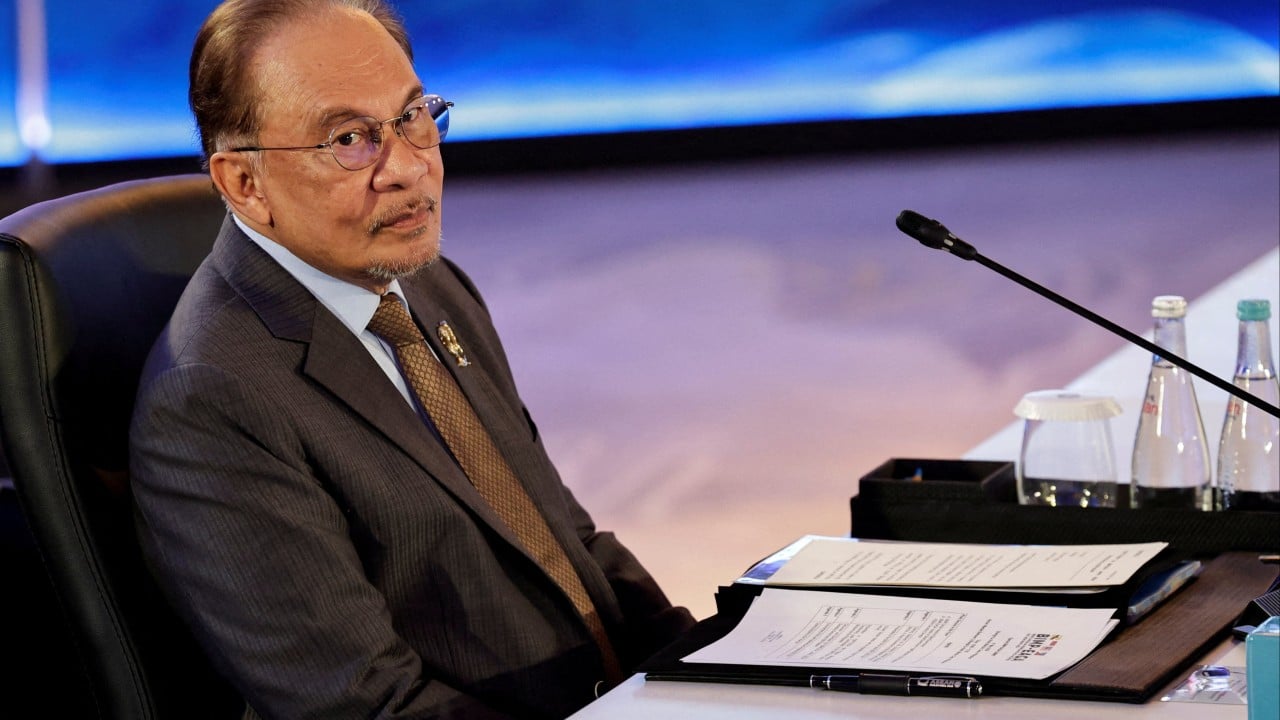
On paper, losing the secretary-general of the coalition’s largest single parliamentary bloc looks like a death knell. In practice, Loke’s exit was a surgical maneuver. He had telegraphed the move months earlier following the Federal Territories Pardons Board’s September 18 decision, waiting until Najib physically left prison to pull the trigger. More tellingly, Loke was explicit about what his departure did not mean. Other DAP ministers—including Federal Territories Minister Hannah Yeoh, who sits on the Pardons Board itself—remained at their desks. Loke pledged that all DAP Members of Parliament would continue backing Anwar’s administration. Even Anwar’s response underscored the staged nature of the crisis; the prime minister stated he had not yet formally accepted the resignation, casually suggesting Loke could take a short break before they discussed the matter further.
The real target of Loke’s resignation wasn't Anwar Ibrahim. It was the disillusioned Chinese and urban middle-class electorate that forms the bedrock of Pakatan Harapan’s support.
For nearly four years, DAP leaders have asked their voters to swallow bitter ideological compromises for the sake of national stability. Watching the architect of the 1MDB scandal leave a prison cell for a palatial estate—after UMNO casually wired RM50 million to settle his court-ordered fine—threatened to trigger mass voter apathy ahead of state polls in Melaka and the eventual 16th General Election. By stepping down from the cabinet, Loke bought himself and his party a clean alibi. He can now stand on campaign stages, criticize Barisan Nasional MPs for attacking the government while clinging to ministerial perks, and tell angry supporters that the DAP paid a personal price to register its dissent.
The Constitutional Trap Behind the Pardon
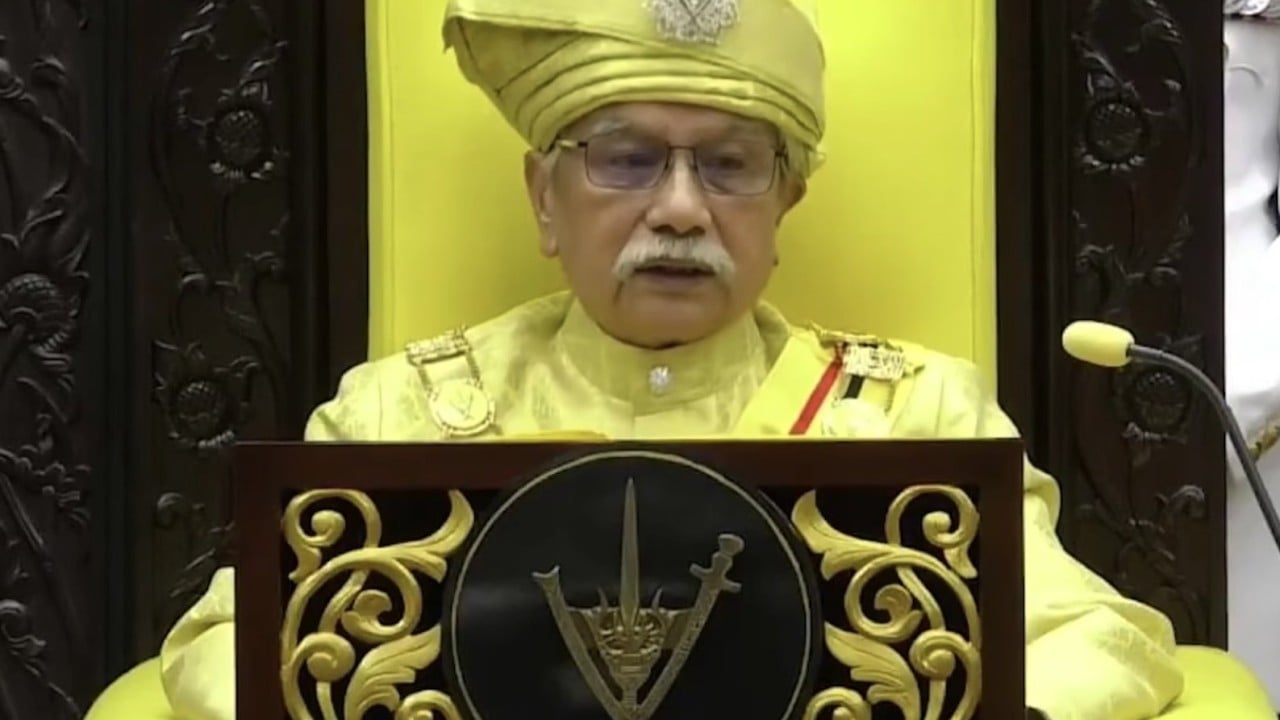
Much of the public fury directed at Anwar stems from a widespread misunderstanding—or deliberate political distortion—of how Malaysia’s royal prerogative of mercy operates. Under Article 42 of the Federal Constitution, the Yang di-Pertuan Agong holds the absolute discretion to grant pardons, reprieves, and respites for offenses committed in the Federal Territories. While the Pardons Board advises the monarch, the ruler is not constitutionally bound to follow the cabinet's wishes.
Anwar found himself trapped between two irreconcilable imperatives. In recent public remarks, the prime minister acknowledged that he had personally ensured Najib’s pardon application was placed on the board's agenda back in 2024, arguing that a former premier had the right to have his petition heard. At the same time, Anwar revealed he had cautioned the board that Malaysian society might not be ready for such leniency while his administration was campaigning on an anti-corruption platform.
Once the king issued the conditional pardon decree, Anwar’s room for maneuver vanished entirely. Defying or delaying a royal order carries severe legal and political peril in Malaysia, a reality underscored when the palace issued stern warnings against disputing the unambiguous terms of the decree. Yet complying with the order alienated Anwar’s reformist base, who viewed the months-long legal wrangling by the Attorney-General's Chambers—first halting the transfer, then seeking clarifications—as mere theater before an inevitable capitulation.
The conditional nature of Najib’s release reveals how tightly the state has tried to thread this needle:
- Strict Confinement: Najib is restricted to his designated Jalan Langgak Duta residence; authorities swiftly rejected his request to include a second property.
- Political Gag Order: He is barred from media appearances, social media activity, public gatherings, and any form of political organizing.
- Temporary Reprieve: The house arrest applies strictly to his SRC International sentence. Unless his ongoing appeal succeeds, the Attorney-General has specified that Najib must return to Kajang Prison on August 24, 2028, to begin serving his separate 15-year sentence from his December 2025 conviction over RM2.3 billion in 1MDB funds.
Even with these guardrails—and despite a constitutional challenge mounted by the Malaysian Bar Council questioning the statutory basis for house arrest—the optics are devastating for a prime minister who built his career on the Reformasi movement. Anwar himself captured the futility of his position when he lamented that whether he facilitated the process or blocked it, critics from one side or the other would brand him a traitor.
Why UMNO Won’t Pull the Plug
If the DAP is wounded by Najib’s release, UMNO is emboldened—and immediately began testing the boundaries of its leverage. Within days of Najib returning home, senior UMNO figures began publicly taunting the DAP, suggesting four pathways for the party to resolve its discomfort, including terminating the coalition agreement and triggering a snap dissolution of Parliament. Meanwhile, UMNO and Pakatan Harapan candidates have been locked in bitter, head-to-head combat in the Melaka state election, trading accusations over corruption and loyalty to the monarchy.
It is easy to mistake this hostility for an imminent divorce. That would be a misreading of UMNO’s survival instincts.
UMNO President and Deputy Prime Minister Ahmad Zahid Hamidi knows better than anyone that walking out of Anwar’s government today would be an act of political suicide. Consider the alternative. If Barisan Nasional withdraws its support and collapses the unity government, its only mathematical path back into Putrajaya runs through the opposition Perikatan Nasional coalition—dominated by the Malaysian Islamic Party (PAS) and Bersatu.
In a coalition with Perikatan Nasional, UMNO would be the junior partner. PAS commands the overwhelming majority of conservative Malay-Muslim voters in the northern and eastern heartlands, and it actively covets the exact parliamentary seats UMNO is trying to rebuild. Entering an alliance with PAS and Bersatu wouldn't restore UMNO to its former hegemony; it would accelerate its absorption and irrelevance.
Inside Anwar’s coalition, by contrast, UMNO enjoys power wildly disproportionate to its 26 parliamentary seats. It holds key ministries, controls vast state-linked corporate patronage, and possesses enough veto power to extract major concessions—such as securing Najib’s house arrest—without surrendering its identity. Furthermore, getting Najib out of prison now, well ahead of the 16th General Election due by early 2028, clears a toxic issue off UMNO’s internal calendar. Zahid has neutralized the loudest grievance of Najib’s loyalists within the party grassroots, buying himself time to consolidate control before voters head to the national polls.
The Real Casualty of Putrajaya’s Stalemate
The stability of Anwar’s coalition rests on a grim mutual deterrence. Neither Pakatan Harapan nor Barisan Nasional can win an outright majority alone, and neither can afford to let Perikatan Nasional seize the federal government. That shared fear is far stronger than their mutual resentment.
Yet surviving until 2028 is not the same thing as governing effectively. The true cost of this crisis isn't a collapsed government; it is institutional paralysis. Every major policy initiative—from subsidy rationalization to institutional anti-corruption reforms—now has to pass through a gauntlet of partners who are actively campaigning against one another in state elections. When a senior minister can resign over a core principle while his party stays in the cabinet, and when a deputy prime minister’s party openly dares its allies to dissolve Parliament while collecting government salaries, collective cabinet responsibility ceases to exist.
Anwar Ibrahim has mastered the art of keeping a fractious alliance alive through tactical compromises and constitutional deference. What he has yet to prove is whether a government held together solely by the fear of its opposition can still convince exhausted Malaysian voters that reform was ever more than a slogan.
For deeper context on the political fallout and competing reactions inside Putrajaya following the court's ruling, watch Malaysia politics: Former PM Najib's house arrest draws differing views within government, which breaks down the immediate tensions between UMNO and Pakatan Harapan leaders.