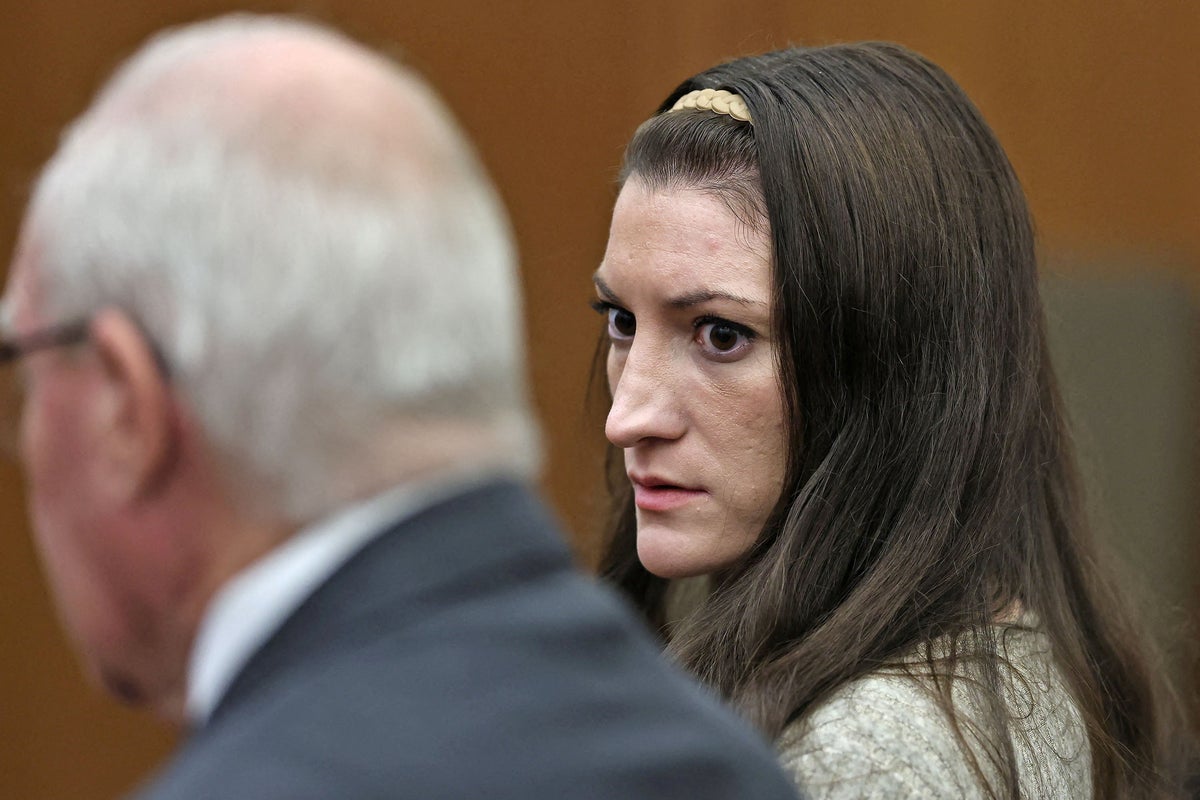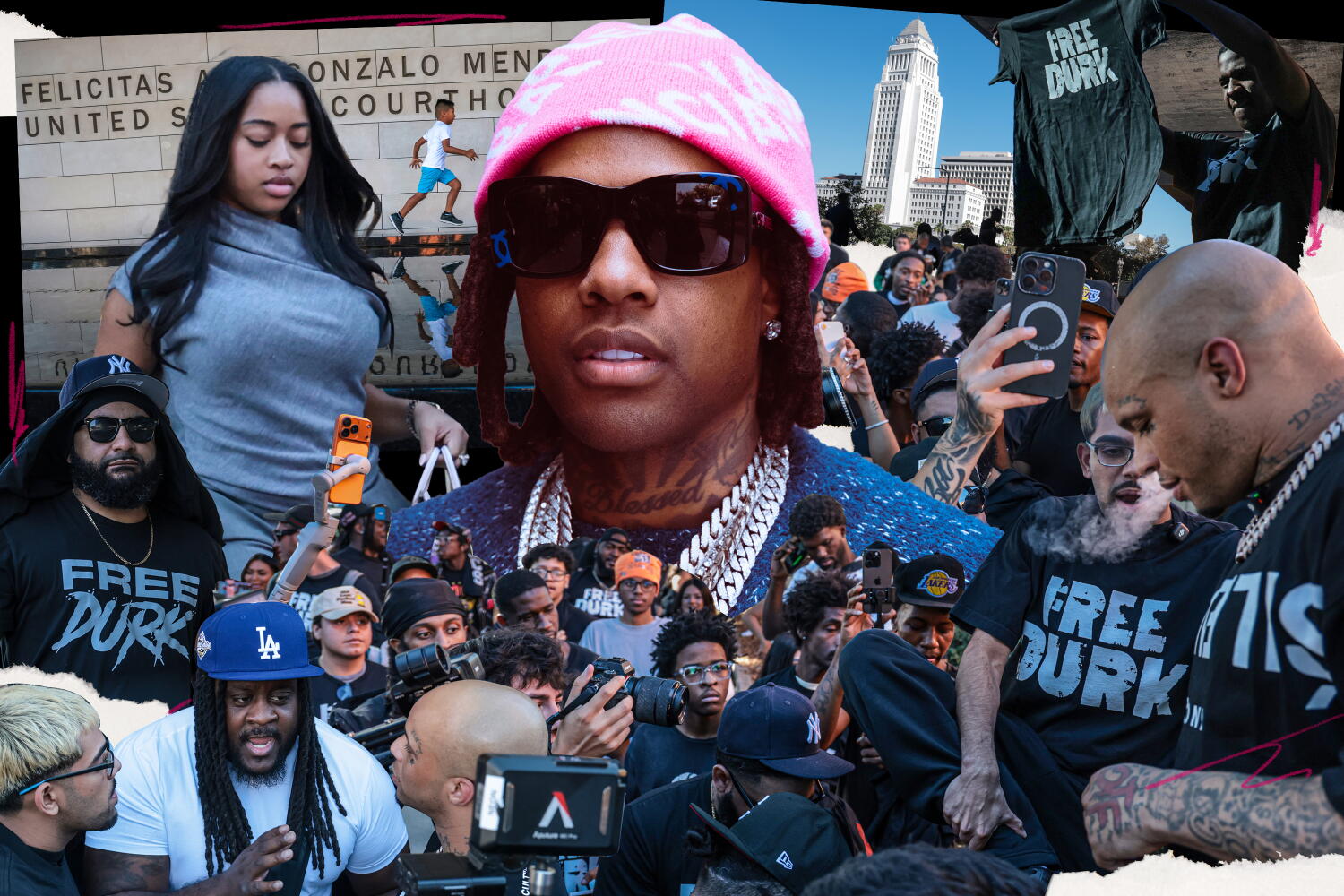
The federal courtroom in downtown Los Angeles smells like wet wool, cheap carpet, and panic. Inside, the high-stakes murder-for-hire trial of Grammy-winning Chicago rapper Durk Banks—better known as Lil Durk—grinds toward a verdict. Prosecutors allege that a lethal cross-country operation unfolded in August 2022 to settle an old, bloody debt. The target was rival rapper Tyquian "Quando Rondo" Bowman. The collateral damage was Bowman’s 24-year-old cousin, Saviay’a "Lul Pab" Robinson, gunned down outside a West Hollywood gas station near the Beverly Center.
For months, the culture watched from a distance, reducing the indictment to social media gossip and memes. Now, under the glare of federal scrutiny, the mechanisms of modern street politics colliding with corporate rap infrastructure are laid bare. This is not just a trial about a botched hit. It is an autopsy of a subculture that monetizes trauma, where the command to "slide for Von"—referring to the 2020 murder of Chicago rapper King Von—transcends casual slang and becomes an operational blueprint.
The Anatomy of the Conspiracy
The federal government’s case rests on a chillingly casual approach to logistics. According to court documents and testimony, the operation began when Banks allegedly grew consumed by a desire for vengeance following the killing of King Von outside an Atlanta nightclub. Prosecutors laid out a trail of digital breadcrumbs and cooperating witnesses to prove that the infrastructure of Only the Family (OTF)—Banks' record label and alleged street crew—was repurposed for a targeted assassination.
The mechanics were straightforward yet sloppy. In August 2022, a close associate paid for five men to fly from Chicago to California. Banks himself flew out separately on a private jet. Text messages presented in court showed Banks instructing his inner circle to avoid booking travel under names connected to him. Yet, the execution lacked the polish of professional syndicate hits. Ski masks were bought with a credit card tied to Banks at an REI. Rental cars were tracked. Communication flowed freely over standard cellular lines.
When the hit squad finally cornered Quando Rondo's vehicle on August 19, 2022, they unleashed at least 18 rounds of gunfire. Rondo survived, but Robinson did not. Following the shooting, the alleged perpetrators drove straight to an In-N-Out Burger for dinner, an eerie juxtaposition of mundane suburban routine and extreme violence.
The Defense Strategy and the Finger-Pointing
Faced with a mountain of digital evidence, cell tower pings, and iCloud data, the defense has adopted a high-risk strategy of internal redirection. Banks' legal team, anchored by veteran litigators, has sought to decouple the rapper from the execution, pointing the finger squarely at his former personal assistant and right-hand man, Kavon Grant.
During grueling cross-examinations, defense attorneys argued that Grant was the true mastermind. Grant, who was with King Von when he died and drove him to the hospital, had direct access to Banks' credit cards, orchestrated the vehicle rentals, and procured the weapons. The defense paints a picture of a subordinate leveraging his proximity to a wealthy artist to execute a personal vendetta under the guise of loyalty, utilizing his boss's financial resources without explicit, real-time command.
Cooperatives like Keith Jones, one of the admitted shooters, added dramatic tension to the courtroom. Under cross-examination, defense attorneys exposed shifting narratives between Jones’s initial police interviews—where he claimed the trip to Los Angeles was merely to acquire marijuana—and his later testimony under a federal cooperation agreement. Jones admitted on the stand that his initial statements were filled with lies, driven by the immediate terror of facing life in prison.
Yet, the prosecution countered with devastating testimony from Grant himself, who took the stand to claim that upon learning of the shooting's tragic outcome, Banks' reaction was direct: "Finally, we got somebody."
The Corporate and Cultural Cost
Beyond the immediate legal jeopardy, the trial exposes the uneasy marriage between modern hip-hop economics and legacy criminal investigations. Federal prosecutors have leaned heavily on the Racketeer Influenced and Corrupt Organizations (RICO) and Violent Crimes in Aid of Racketeering (VICAR) statutes, treating a major record label imprint like an enterprise. Furthermore, the court’s decision to allow specific rap lyrics and unreleased tracks into evidence has reignited a fierce debate over the criminalization of artistic expression. When bars from songs like "Pissed Me Off" are projected onto courtroom screens as confessions of state-of-mind, the boundary between performance art and criminal evidence dissolves entirely.
The financial gravity surrounding the defense is equally staggering. Reports from industry analysts and media figures highlight that maintaining a defense against a federal multi-count indictment requires astronomical resources, with prominent figures in the broader hip-hop ecosystem reportedly contributing to legal defense funds. It underscores an insular industry's desperate attempt to shield one of its top-tier stars from the ultimate federal penalty.
The jury is now tasked with navigating a labyrinth of jailhouse confessions, blood feuds, conflicting testimony from co-conspirators looking for sentence reductions, and the cold reality of digital forensics. Whatever the verdict, the trial serves as a definitive, somber milestone. The era of operating a modern rap empire under the long-standing shadow of street-level warfare is colliding with the unyielding machinery of the federal penitentiary system, leaving an indelible mark on an entire generation of music and culture.