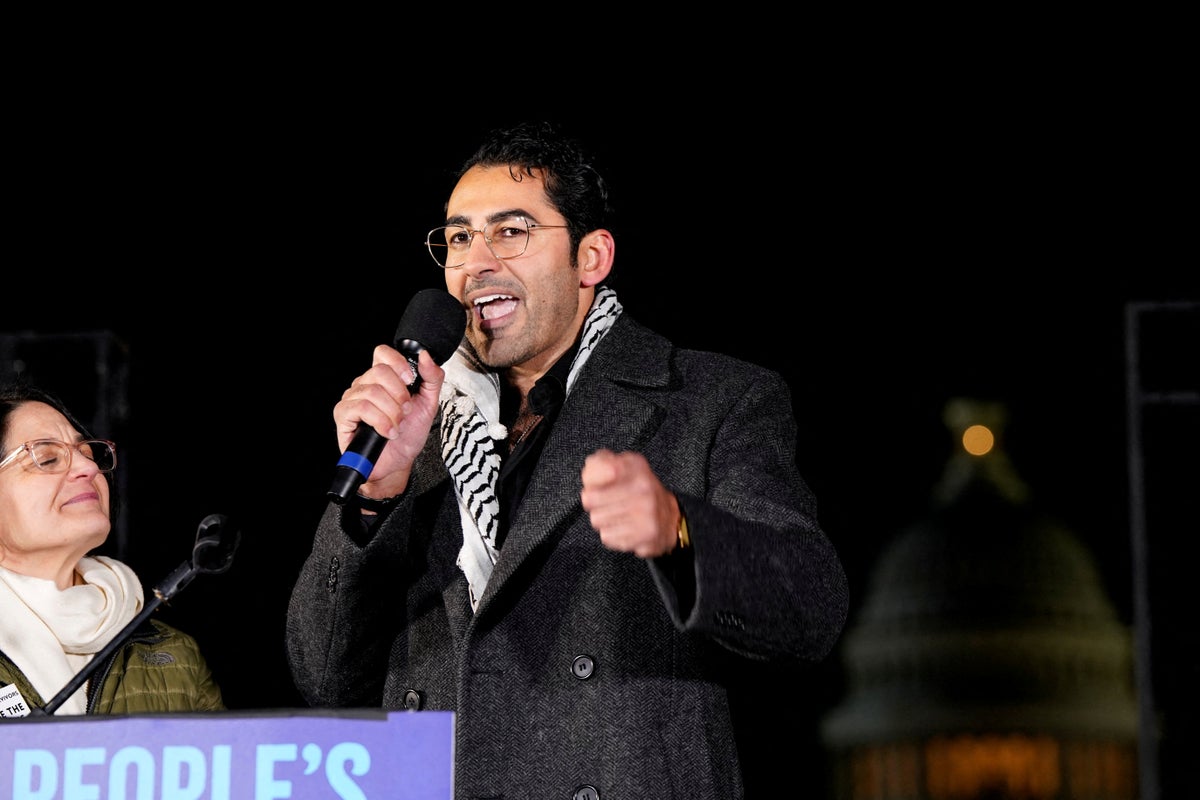
In a high-stakes ruling that redefines procedural boundaries for foreign nationals residing in the United States, a federal appeals panel overturned a district court decision that had freed Columbia University activist Mohsen Mahdawi from immigration custody. The decision from the 2nd U.S. Circuit Court of Appeals invalidates a 2025 order by U.S. District Judge Geoffrey Crawford, who had released Mahdawi after determining his arrest by Immigration and Customs Enforcement (ICE) violated his First Amendment rights. By ruling that district courts lack subject-matter jurisdiction to intervene before immigration proceedings conclude, the appellate judges have effectively stripped noncitizen dissidents of their fastest judicial shield.
The ruling sends a clear message to lawful permanent residents across the country. The federal judicial system will not act as an immediate emergency stop against executive deportation efforts, no matter how strongly a case touches on protected speech.
The Procedural Trap Silencing Campus Dissent
When ICE officers detained Mohsen Mahdawi in April 2025, the setting was not a street protest or a raid, but a routine administrative appointment in Colchester, Vermont, intended to finalize his U.S. citizenship application. Mahdawi, a 35-year-old green card holder and third-generation Palestinian refugee born in the West Bank, had spent months organizing student rallies at Columbia University criticizing Israeli military actions in Gaza and American foreign policy.
Instead of walking out with a citizenship date, Mahdawi was handcuffed, transferred to a Vermont detention center, and put into expedited removal proceedings.
The legal machinery driving his arrest relied on an underused statutory provision of the Immigration and Nationality Act. Under a directive issued by Secretary of State Marco Rubio, the executive branch asserted that Mahdawi’s public advocacy posed potential adverse foreign policy consequences for the United States. This designated foreign policy threat exception allows the government to bypass standard criminal charges, relying instead on subjective foreign policy determinations to revoke lawful permanent residency.
Mahdawi’s legal team immediately filed a petition for a writ of habeas corpus in federal district court. Habeas corpus has long served as the fundamental constitutional protection against unlawful imprisonment. District Judge Geoffrey Crawford agreed with the defense, issuing a ruling that ordered Mahdawi’s release. Judge Crawford held that lawful permanent residents hold constitutional free-speech protections equal to those of natural-born citizens, warning that detaining an individual solely over political commentary risked turning immigration enforcement into a tool of political suppression.
The executive branch appealed, setting up a clash between federal judicial oversight and executive immigration authority.
How Federal Panels Are Closing the Habeas Door
The Second Circuit’s 41-page opinion, authored by U.S. Circuit Judge Debra Ann Livingston and joined by Judges Steven Menashi and William Nardini, dismantled the procedural foundation of Judge Crawford’s intervention.
The appellate court did not rule on whether political speech can legally form the basis for deporting a green card holder. Instead, the judges focused entirely on judicial authority and timing.
Writing for the panel, Judge Livingston asserted that the district court had stepped out of bounds by evaluating the constitutional merits of the case while immigration proceedings were still ongoing. The panel argued that because Mahdawi’s challenge to his detention relied on the exact same argument as his challenge to his deportation—namely, that Secretary Rubio’s foreign policy determination was unconstitutional retaliation—the district court lacked subject-matter jurisdiction to hear the petition.
Federal immigration law requires individuals facing removal to exhaust every administrative remedy within the Executive Office for Immigration Review (EOIR) before seeking intervention from a federal court of appeals. The Second Circuit ruled that allowing noncitizens to file habeas petitions in district courts creates an unauthorized bypass of this statutory scheme.
This procedural distinction carries massive real-world consequences.
       TRADITIONAL HABEAS PATH (BLOCKED)
  [ICE Detention] ──> [District Court Habeas Petition] ──> [Immediate Judicial Release]

       MANDATED ADMINISTRATIVE PIPELINE
  [ICE Detention] ──> [Immigration Court (EOIR)] ──> [Board of Immigration Appeals] ──> [Circuit Court Appeal]
By forcing activists through the administrative route, the court requires noncitizens to contest their removal before immigration judges who belong to the Department of Justice. Because immigration courts are administrative bodies under the executive branch rather than independent constitutional courts, they lack the authority to declare federal statutes or executive orders unconstitutional.
An activist claiming a First Amendment violation must argue their entire case through an administrative hierarchy that cannot officially grant them constitutional relief, waiting months or years in detention before an actual Article III federal court ever hears their appeal.
An Administrative System Under Political Pressure
The Second Circuit’s ruling does not exist in a vacuum. It follows a nearly identical decision by the 3rd U.S. Circuit Court of Appeals involving Mahmoud Khalil, another Columbia graduate student and pro-Palestinian organizer whose release by a lower court was similarly overturned on jurisdictional grounds.
The administrative history of Mahdawi’s case illustrates the extreme friction inside the immigration system itself.
In February, Immigration Judge Nina Flores terminated the government's deportation proceedings against Mahdawi, finding that the Department of Homeland Security had failed to produce sufficient evidentiary support for its claims. Soon after issuing that decision, Judge Flores was removed from her judicial bench by the Department of Justice.
Following her removal, the Board of Immigration Appeals (BIA) quickly overturned Judge Flores's ruling, reinstated the removal order, and remanded the case back to the administrative court.
This sequence of events highlights the fundamental structural flaw in relying exclusively on executive-branch courts for constitutional protection. When administrative judges can be removed after issuing rulings unfavorable to federal agencies, noncitizens face a system where executive policy and judicial review are handled by the same branch of government.
Legal representatives from the American Civil Liberties Union (ACLU) argue that this structure leaves noncitizens without a timely defense against political retaliation. By stripping district courts of habeas jurisdiction in these instances, the judiciary effectively permits prolonged pre-deportation detention while administrative appeals grind forward.
The Tiered Reality of Civil Liberties
The Second Circuit ruling establishes a clear legal hierarchy between natural-born or naturalized U.S. citizens and lawful permanent residents when it comes to political expression.
While a U.S. citizen participating in campus protests is protected from federal prosecution under the First Amendment, a green card holder doing the exact same thing faces the immediate threat of foreign policy revocations under immigration law. Once the executive branch links student speech to foreign policy interests, the noncitizen’s constitutional defenses are pushed behind administrative procedures that offer no immediate release mechanism.
The legal strategy deployed against student organizers like Mahdawi, Khalil, and Tufts University doctoral student Rumeysa Ozturk relies heavily on this asymmetry. By utilizing executive foreign policy bars rather than criminal charges, federal prosecutors avoid having to prove criminal intent or incitement before a civilian jury.
Instead, the decision rests entirely on administrative discretion, where the burden of proof operates under significantly lower standards.
Mahdawi remains out of custody for now as his legal team prepares an en banc petition requesting a review by the full panel of active Second Circuit judges, alongside a parallel appeal in the 1st U.S. Circuit Court of Appeals targeting the Board of Immigration Appeals order. However, the appellate ruling removes the legal injunction that previously barred federal agents from re-detaining him.
The battle over Mahdawi’s status is no longer just about one student or one campus movement. It has exposed a structural shift in how federal power can be applied to noncitizen residents, transforming routine administrative channels into potent tools for managing political dissent.