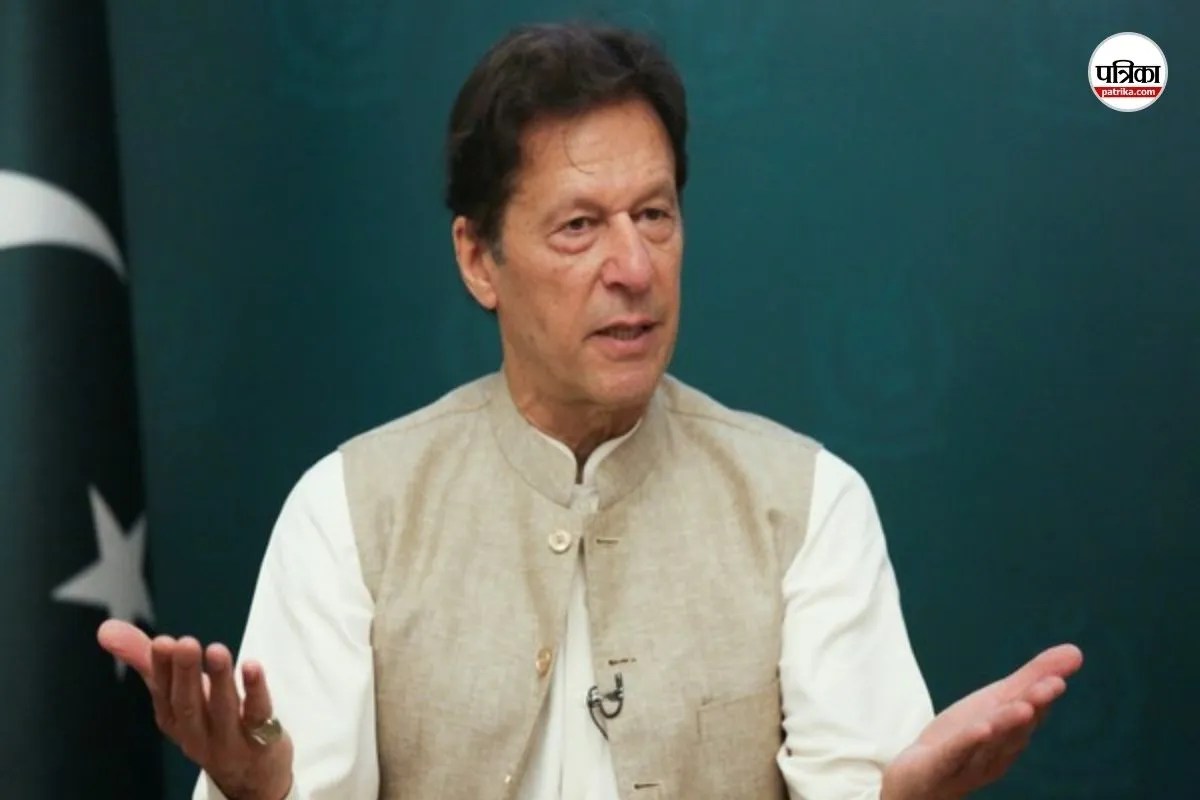
The arrest of Aleema Khan from her Lahore residence is not a standalone police procedure; it is a calculated mechanical response to a recurring political headache. When the district administration invoked the Maintenance of Public Order (MPO) ordinance to secure her detention ahead of the September 27 mobilization, they exposed the fragile architecture of civilian governance in Pakistan. This administrative tool, originally designed to prevent immediate threats to public safety, has increasingly functioned as a pre-emptive strike against political organization.
To understand why a state apparatus targets family members of an incarcerated former prime minister, one must look past the immediate headlines of street protests and examine the mechanics of custodial deterrence. When political parties lose their traditional street leadership or face structural disqualifications, family networks often step into the administrative vacuum. Aleema Khan, along with her sisters Dr. Uzma Khan and Noreen Niazi, assumed prominent roles in sustaining the Pakistan Tehreek-e-Insaf (PTI) campaign following Imran Khan's imprisonment. By removing these focal points prior to a planned demonstration, authorities attempt to disrupt the chain of command before a crowd can coalesce.
The legal justifications offered by provincial authorities rely heavily on intelligence reports claiming that a public appearance by opposition figures poses a grave threat to public order. Yet, this reliance on preventive detention highlights a widening chasm between statutory frameworks and constitutional guarantees. Under Section 3 of the MPO, individuals can be held without formal charges for extended periods based on executive subjective satisfaction rather than judicial verdicts. The subsequent fifty-three-day detentions of Uzma Khan and Noreen Niazi, which eventually concluded with the quiet withdrawal of orders and their release, illustrate a pattern of administrative containment followed by tactical retreat when judicial pressure mounts.
State responses to opposition movements frequently oscillate between outright suppression and bureaucratic exhaustion. When individuals are locked away without trial, the burden shifts entirely to defense counsels who must navigate a congested and politically sensitive court system. Hearings are delayed, medical emergencies—such as Noreen Niazi's transfer to a cardiac hospital during her custody—occur behind closed doors, and families are left scrambling for basic updates. This environment of uncertainty acts as a deterrent not just for the political elite, but for rank-and-file workers considering whether to join upcoming marches.
The broader implications extend far beyond the immediate fate of the Khan family. A political system that relies on preventive arrests to manage dissent reveals deep institutional insecurity. When civic spaces contract to the point where family advocacy is treated as a security threat, the possibility for mediated political dialogue diminishes. The cycle of detention, legal challenge, and eventual release establishes a exhausting rhythm that drains the opposition's resources while hardening ideological lines.
As administrative measures continue to shape the contours of political participation, the line between law enforcement and political management blurs entirely. The state maintains short-term control over the streets, but the long-term cost is paid in the erosion of institutional credibility. Every preventive order signed in a Lahore office deepens the structural gridlock, ensuring that the conflict remains permanently unresolved.