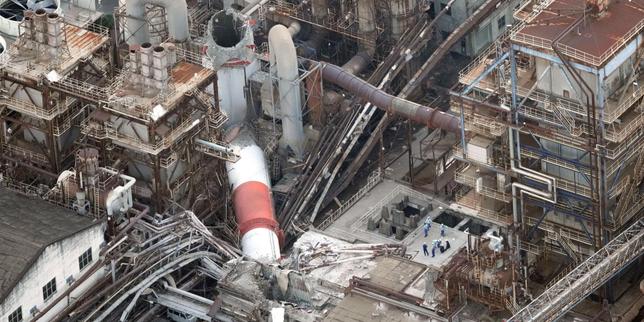
A magnitude 7.1 earthquake struck southwestern Japan's Kyushu island, registering the maximum level seven on the country's Shindo seismic intensity scale and triggering immediate structural collapses, infrastructure gridlocks, and a brief tsunami advisory. The tremor, centered in Kumamoto prefecture at a shallow depth of roughly 16 kilometers, exposed immediate fault lines in regional emergency resilience as rescue teams scrambled to reach trapped survivors inside a collapsed shopping complex and a crippled paper factory.
Decades of meticulous engineering standards shielded the broader population from catastrophic casualty counts, yet the ground-level reality proved unforgiving.
The Shindo Seven Reality
When the Japan Meteorological Agency awards a maximum Shindo 7 rating, theoretical physics translates into immediate physical impossibility. People cannot remain standing. They crawl, they get thrown through the air, and heavy furniture becomes a projectile.
This specific event hit Kumamoto with a vertical and horizontal violence that older residents immediately compared to the devastating sequence of tremors that tore through the exact same prefecture a decade prior.
- The epicentre sat approximately twenty kilometers south of Kumamoto city, pulsing through densely populated commercial and residential corridors.
- Power outages knocked out electricity for nearly fifty thousand households across Kyushu.
- Water mains fractured, leaving upwards of one hundred forty thousand properties without municipal supply lines.
Infrastructure took an immediate hit. A cargo train operated by Japan Freight Railway derailed at Yatsushiro Station, though the driver escaped injury. Elevated sections of the Kyushu Expressway sustained structural displacement, rendering critical transit lanes impassable. Meanwhile, historic stone walls at Kumamoto Castle—still undergoing painstaking restoration from the 2016 disasters—crumbled once again under the relentless lateral force.
Commercial Vulnerability and Structural Failure
Earthquake preparedness in the archipelago usually focuses on residential reinforcement and towering skyscrapers designed to sway with harmonic grace. Mid-rise commercial infrastructure, however, often occupies a dangerous middle ground.
In Kashima Town, the second floor of the Aeon Mall shopping center pancaked downward following an apparent explosion triggered by the initial shockwave.
"It shook vertically and sideways for about 10 to 20 seconds. It was worse than during the Kumamoto earthquake."
Emergency responders faced immediate barriers. Firefighters could not safely enter the ground floor of the commercial complex due to shifting debris and suspected gas leaks, leaving dozens of employees and shoppers unaccounted for in the immediate aftermath. Concurrently, at a nearby Nippon Paper Industries plant in Yatsushiro, a massive smokestack toppled over, crushing parts of the facility and trapping maintenance crews underneath industrial wreckage.
Industrial supply chains felt the shockwaves instantly. Toyota Motor Corporation and Honda Motor Co. suspended operations at regional manufacturing plants across Kyushu, initiating mandatory safety inspections that highlight how modern industrial just-in-time logistics remain hostage to tectonic realities.
The Nuclear Calculus and Institutional Response
Panic following major subduction zone activity frequently centers on atomic infrastructure. Fortunately, the Nuclear Regulation Authority confirmed zero abnormalities at nearby facilities, including the Sendai and Genkai nuclear power plants.
Prime Minister Sanae Takaichi deployed over three thousand Self-Defense Forces personnel to coordinate relief efforts, urging hundreds of thousands of residents across Kumamoto and neighboring prefectures to move toward designated evacuation centers.
Yet, institutional readiness cannot entirely eliminate the psychological toll of chronic seismic exposure. Emergency shelters filled rapidly with weary citizens bracing for inevitable aftershocks. The Japan Meteorological Agency warned that the region faces elevated risks of secondary tremors and landslides over the coming week, demanding absolute vigilance from a population already exhausted by recurring geological instability.
The ground beneath Kyushu has stopped shaking for the moment, but the structural audit of Japan's commercial preparedness is only beginning.


