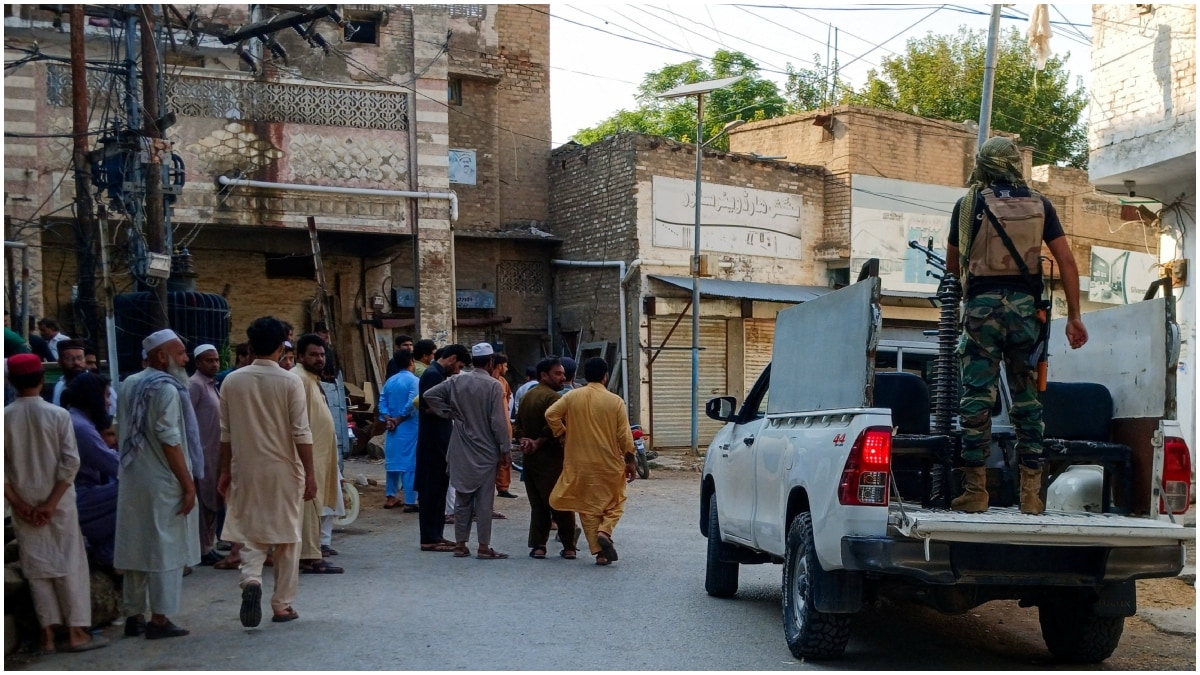
The raid on the Kohat Police Lines was not merely an isolated breach. It was a calculated assault that laid bare the structural fragility of frontline security installations in Pakistan's Khyber Pakhtunkhwa province. When heavily armed militants targeted the facility, leaving 23 security personnel dead and a compound in disarray, official statements focused immediately on the bravery of the defenders. Security forces did fight back until the attackers were outnumbered and neutralized. Yet, bravery alone cannot substitute for adequate defensive architecture, timely intelligence sharing, and hardened installations.
For years, security analysts have warned that provincial police lines, often situated within urban or semi-urban environments, remain soft targets for insurgent networks. These facilities serve as administrative hubs, residential quarters, and armories rolled into one. When perimeter defenses fail, the consequences are catastrophic. The Kohat incident demands an unvarnished look at how militant groups continue to exploit predictable vulnerabilities in law enforcement infrastructure, turning defensive strongholds into high-casualty zones during the initial moments of an ambush. In similar updates, take a look at: The Forgotten Surfmen Who Stormed Normandy And Why The Navy Is Finally Watching.
Anatomy of a Breached Perimeter
Frontline posts in high-threat districts face a persistent asymmetry. Insurgents choose the exact time, vector, and scale of the assault. Defenders must maintain perpetual vigilance across sprawling compounds that were rarely engineered to withstand coordinated suicide raids and heavy weaponry.
At Kohat, the attackers capitalized on the element of surprise and explosive entry tactics. A breach at the outer gate instantly compromises the entire compound. Many regional police lines rely on legacy infrastructure constructed decades ago, long before modern asymmetric warfare evolved to incorporate suicide bombers, night-vision equipment, and coordinated multi-pronged infiltration teams. Associated Press has analyzed this critical topic in great detail.
Observers often point to a lack of investment in modern surveillance gear and hardened bunkers within these provincial installations. While elite counter-terrorism units receive specialized gear, ordinary district police forces stationed at vulnerable transit hubs like Kohat often make do with aging communication systems and perimeter walls that offer little protection against determined saboteurs. This disparity creates fatal blind spots. When an attack unfolds, response times depend heavily on external reinforcements because internal defensive positions are easily overrun or suppressed by initial gunfire.
The Intelligence Deficit
Tactical failures rarely happen in a vacuum. A successful assault of this magnitude requires extensive reconnaissance, logistical staging, and local facilitation. The ease with which heavily armed fighters bypassed initial checkpoints to strike the heart of a police installation raises serious questions about local intelligence networks.
Counter-terrorism operations have historically relied heavily on reactive kinetic strikes rather than proactive disruption. When intelligence agencies focus exclusively on high-profile militant commanders in remote tribal belts, urban and semi-urban support networks often go unchecked. These local cells provide safe houses, transport, and reconnaissance data on police routines, shift changes, and armory locations.
Without robust human intelligence and signal interception capabilities at the district level, local police forces remain blind to imminent threats. The Kohat raid underscores a dangerous reality. Insurgent groups retain the capacity to project force deep into settled areas, exploiting gaps between federal intelligence apparatuses and provincial law enforcement agencies.
Beyond the Rhetoric of Resilience
Official communiques following such tragedies invariably praise the ultimate sacrifice of the fallen and promise swift retribution. Retribution, however, is a tactical reaction, not a strategic solution.
If the state wishes to prevent future mass-casualty events within police compounds, policymakers must move past empty rhetoric and fund comprehensive structural overhauls. This means auditing every major police facility in high-risk zones, upgrading perimeter walls, installing advanced biometric and electronic surveillance, and decentralizing armories so that a single breach does not grant attackers access to the entire cache of weapons.
Furthermore, command structures must empower local officers to make rapid tactical decisions without waiting for bureaucratic clearance from provincial headquarters. In an ambush, seconds determine survival.
The 23 lives lost at Kohat represent more than a grim statistic in a security report. They are a stark indicator of institutional inertia. Until the state treats frontline security infrastructure with the same urgency as military cantonments, police lines will remain tragic monuments to a strategy that reacts to disaster rather than preventing it.