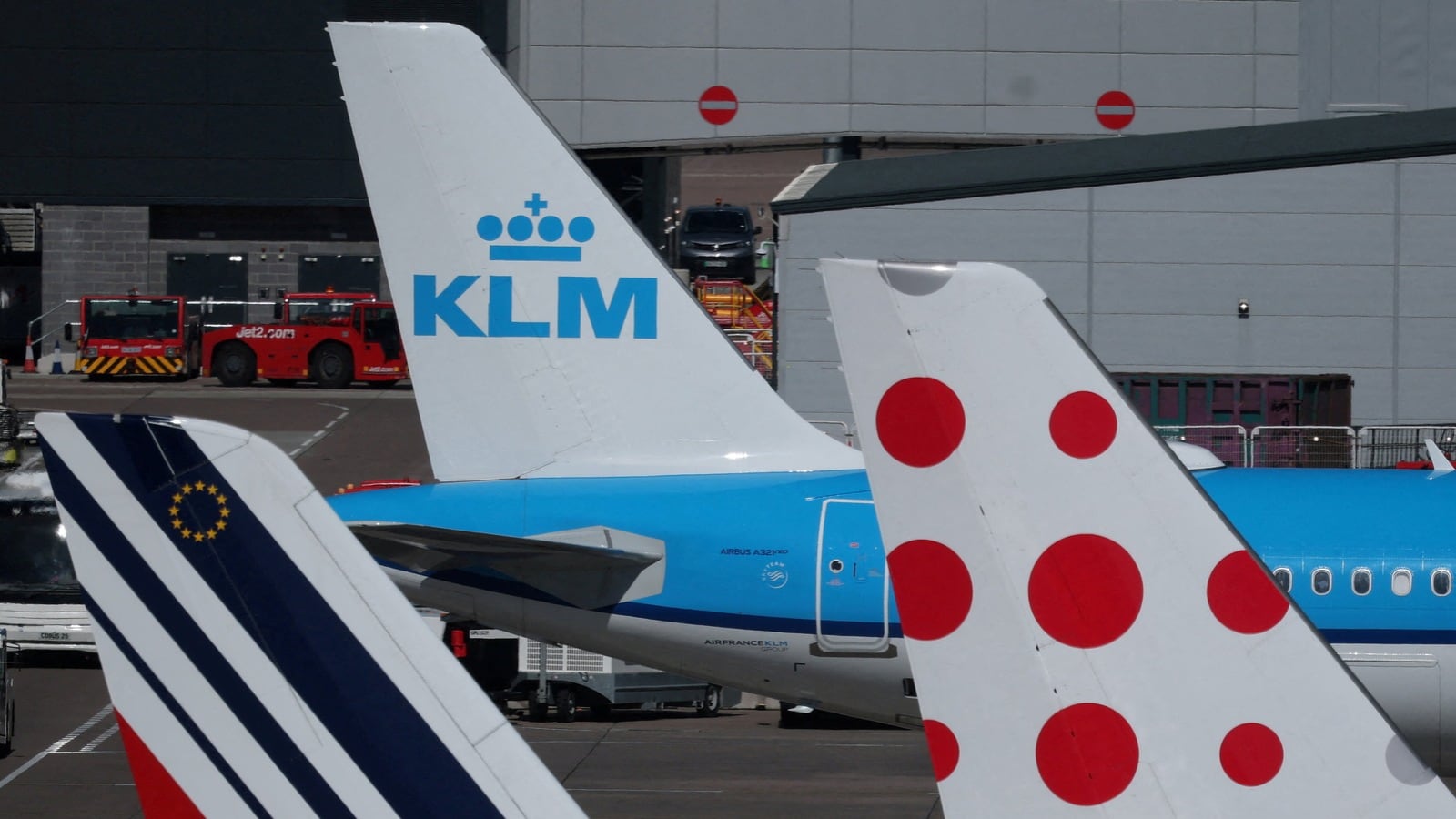
KLM Royal Dutch Airlines is eliminating 1,000 roles and transferring another 2,000 positions directly to its parent holding company, Air France-KLM. On the surface, the move looks like routine corporate housekeeping designed to trim overhead and streamline reporting lines. Look closer at the balance sheets, union agreements, and decades-old political rivalries in Schiphol and Paris, and a very different story emerges.
This is not merely a cost-cutting exercise. It is a structural power shift within one of Europe's largest airline groups, driven by rising operational costs in the Netherlands, squeezed profit margins, and a long-simmering battle over who actually controls the purse strings of the Franco-Dutch aviation giant.
The Anatomy of a 3,000-Person Shuffle
To understand what is happening at KLM, you have to separate the two numbers at the heart of the announcement. They represent completely different corporate mechanisms, even though they hit the workforce at the exact same moment.
First, the 1,000 eliminated positions. These are outright cuts, heavily concentrated in administrative, support, and back-office functions rather than frontline flight crews or aircraft mechanics. KLM has spent the better part of the post-pandemic recovery struggling with a bloated cost base. While passenger demand snapped back aggressively, the airline's operating margins lagged behind competitors like IAG (owner of British Airways and Iberia) and Lufthansa Group. Cutting 1,000 roles is an immediate attempt to stop the financial bleeding without grounding aircraft or cancelling profitable long-haul routes.
Second, the 2,000 transferred positions. These workers are not necessarily losing their paychecks tomorrow, nor are they all packing their bags for Paris. Instead, their employment contracts and reporting structures are moving from KLM to the Air France-KLM group level. Think of IT infrastructure, procurement, data analytics, and digital customer service.
Historically, Air France and KLM operated almost like two separate airlines sharing a bank account. Each maintained its own duplicate departments, negotiated its own vendor contracts, and built its own software systems. Moving 2,000 staffers into the holding company centralizes those functions. On paper, it eliminates duplication. In practice, it strips KLM of operational autonomy.
Why Amsterdam Is Losing Its Financial Edge
Aviation is a brutally thin-margin business. Airlines operate on pennies per seat-mile, meaning small local cost increases can quickly erase an entire year's profit. For KLM, its home base at Amsterdam Airport Schiphol has transformed from a competitive advantage into a massive financial headache.
Consider the compounding pressures hitting KLM's Amsterdam hub:
- Exploding airport tariffs: Schiphol has raised airline fees dramatically over the past few years to cover rising security costs, baggage handling bottlenecks, and capital investments. Every takeoff and landing in Amsterdam is significantly more expensive than it was five years ago.
- Dutch government flight taxes: The Netherlands aggressively increased its passenger departure tax, making short-haul connecting tickets through Schiphol less price-competitive against hubs in Frankfurt, London, or Istanbul.
- Capacity caps and environmental pressure: Ongoing political battles over noise pollution and nitrogen emissions have forced constant uncertainty around maximum annual flight movements at Schiphol. When an airline cannot grow its flight volume, it cannot spread its fixed overhead costs across more tickets.
- Inflation-driven wage hikes: Strong Dutch labor unions secured substantial pay increases for ground staff, pilots, and cabin crew to offset inflation, locking in higher permanent labor expenses.
When your revenue is capped by airport slot restrictions and your local expenses keep climbing, the math stops working. KLM management found itself trapped between a rigid cost structure in the Netherlands and impatient shareholders demanding better returns.
The Paris Versus Amsterdam Power Dynamic
Anyone who has followed European aviation since the 2004 merger of Air France and KLM knows that the marriage has rarely been peaceful. For years, KLM was the golden child of the partnership. The Dutch carrier ran a leaner, more profitable operation while Air France struggled with frequent strikes and chronic losses. That financial outperformance gave KLM executives immense political leverage to resist centralization from Paris.
The tables have turned.
Over the past few years, Air France executed a painful, aggressive restructuring of its domestic network, cutting money-losing short-haul routes and retiring older, fuel-guzzling aircraft. Meanwhile, KLM's cost structure deteriorated. As KLM's profit margins shrank toward single digits, its ability to say "no" to the group executive board evaporated.
By absorbing 2,000 KLM employees into the Air France-KLM umbrella, group leadership is finally achieving the deep operational integration that Paris has pushed for over two decades. Centralizing IT, purchasing, and digital operations means decisions about software platforms, vendor contracts, and capital allocation will increasingly be made at the group level rather than inside KLM's headquarters in Amstelveen.
To illustrate how this plays out in practice, consider a hypothetical example involving aircraft maintenance software. Previously, KLM's internal IT team might have customized a tracking system specifically tailored to Schiphol's ground operations, while Air France built a separate tool for Charles de Gaulle. Under a centralized group structure, a single committee chooses one standardized platform for both airlines. KLM saves money on software development, but it loses the ability to tailor tools to its own specific operational quirks.
What This Means for Workers and Unions
In the Netherlands, corporate restructurings are never simple unilateral decisions. Dutch labor law grants powerful consultative rights to works councils, known as the Ondernemingsraad, alongside traditional trade unions.
KLM cannot simply hand out 1,000 pink slips on a Friday afternoon. The airline relies heavily on natural attrition, early retirement packages, hiring freezes, and voluntary buyouts to reduce headcount without triggering devastating strikes. Back-office staffers whose roles are eliminated will likely be offered internal redeployment opportunities where possible, though many administrative positions simply will not exist in the new organizational chart.
For the 2,000 employees shifting to Air France-KLM, the anxiety is different. The immediate fear among Dutch staff is a gradual erosion of working conditions and career progression. When your employer changes from a national carrier with deep local roots to a multinational holding company, your promotional path often runs through Paris. Even if physical desks remain in the Netherlands, strategic leadership sits across the border.
Furthermore, once functions are pooled at the group level, it becomes much easier for executives to execute a second wave of reductions two or three years down the road. You merge the teams first, map out the overlapping responsibilities, and then trim the redundancies once the dust settles. Union leaders in Amsterdam know this playbook well, which is why negotiations over the transition terms will be fierce.
Will Passengers Notice a Difference?
If you are booking a flight from New York to Amsterdam, or connecting through Schiphol on your way to Nairobi, you will not see immediate changes at the boarding gate tomorrow morning. Planes will still carry the iconic light-blue livery. Flight attendants will still serve stroopwafels.
However, indirect effects on the passenger experience are almost guaranteed over the medium term.
First, expect digital standardization. KLM has historically earned high marks in the aviation industry for its customer-facing technology, including its mobile app and social media customer service responsiveness. Merging digital and IT teams with Air France means both airlines will increasingly share identical booking engines, mobile interfaces, and automated rebooking algorithms during weather disruptions. Depending on how smoothly that integration runs, travelers could see either faster cross-airline rebooking options or clunky software transitions during the handover.
Second, service compromises often creep in when procurement is centralized. When a single group purchasing department buys everything from cabin headsets to catering supplies in massive bulk quantities for two airlines, regional touches tend to get smoothed out in favor of volume discounts.
Third, operational resilience remains fragile. Cutting 1,000 support roles—even in back-office departments—always carries the risk of institutional knowledge walking out the door. Aviation runs on complex, interconnected scheduling, crew logistics, and maintenance planning. When administrative teams are stretched thin, minor disruptions at a crowded hub like Schiphol can cascade into major delays faster than management anticipates.
The Bigger Picture in European Aviation
KLM's restructuring does not exist in a vacuum. It is the latest symptom of a wider consolidation squeeze across European skies.
Unlike the United States, where four mega-carriers control roughly 80 percent of the domestic market and enjoy massive economies of scale, Europe remains fragmented among national flag carriers and aggressive ultra-low-cost airlines like Ryanair and Wizz Air. Legacy airlines in Europe face strict environmental mandates, expensive sustainable aviation fuel quotas, high air traffic control fees, and congested airspace.
To survive against both budget carriers on short-haul routes and heavily subsidized Middle Eastern airlines on long-haul routes, European airline groups are abandoning the old model of letting their subsidiary brands operate independently. Lufthansa Group has spent years pulling Austrian Airlines, Swiss, and Brussels Airlines tighter under centralized Frankfurt management. IAG does the same across British Airways, Iberia, and Aer Lingus.
Air France-KLM was actually behind its peers in enforcing this kind of structural discipline, largely because of the delicate political truce between the French and Dutch governments, both of whom hold major equity stakes in the company. KLM's financial squeeze finally gave group executives the opening they needed to break that deadlock.
The Risk Management Is Taking
Corporate centralization looks clean on a PowerPoint slide. Combine two departments, eliminate duplicate management layers, negotiate bulk vendor discounts, and watch the operating margin climb by two percentage points.
In reality, aviation mergers and internal reorganizations frequently stumble on cultural friction. KLM built its century-old reputation on pragmatic, flat-hierarchy Dutch efficiency, where operational staff could solve problems quickly without waiting for layers of bureaucratic approval. Air France historically operated with a much more hierarchical, top-down corporate culture.
Forcing 2,000 specialists into a shared organizational structure risks slowing down decision-making at the exact moment KLM needs to be agile. If a local operational manager in Amsterdam has to wait three weeks for a group-level committee in Paris to approve a minor software patch or a local vendor contract, the theoretical cost savings quickly evaporate in lost productivity.
KLM is betting that trimming 1,000 roles and handing over 2,000 more to its parent company will restore the financial buffer it needs to survive high Dutch taxes and Schiphol's rising fees. If the integration works, KLM emerges leaner and better protected against economic downturns. If it bogs down in cross-border bureaucracy and labor disputes, the airline will have surrendered its operational independence without fixing its bottom line.