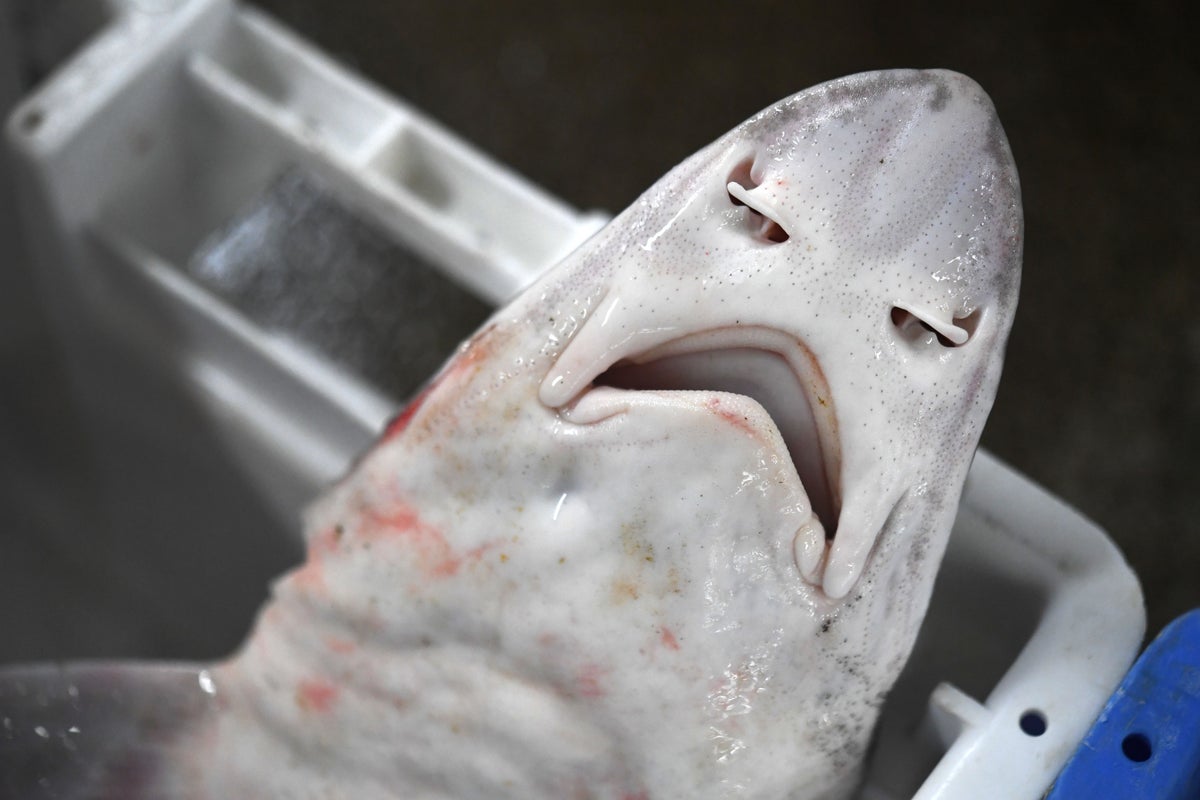
Dozens of dead sharks washing ashore along the Jersey Shore is not a standard summer headline. Beachgoers found themselves staring down a grim coastal reality as multiple carcasses littered the sand, sparking panic, confusion, and a wave of sensationalized panic on social media.
Visitors muttered phrases like "Well, this is odd," but the situation goes far beyond mere oddity. It points toward ecological strain hitting the mid-Atlantic coastline.
Marine biologists and local wildlife officials faced an immediate onslaught of inquiries. Yet, finding the precise trigger behind a mass marine mortality event requires moving past superficial assumptions about localized pollution or sudden shark population spikes.
The Anatomy of a Strand Event
When a single marine predator washes up, investigators typically look for boat strikes, hook injuries, or natural end-of-life trajectories. When dozens appear simultaneously across a concentrated stretch of beach, the scope shifts instantly. This pattern points away from isolated trauma and toward a systemic environmental shock.
Oceanographic data from the mid-Atlantic reveals a complex matrix of shifting variables. Water temperatures fluctuate violently due to unusual upwelling patterns, while dissolved oxygen levels drop rapidly in specific nearshore pockets.
Sharks rely heavily on precise environmental conditions to maintain their metabolic equilibrium. Rapid changes in water chemistry or temperature can disorient pelagic or coastal species, driving them into shallow surf zones where navigation fails completely.
Species Vulnerability
Not all marine predators react to environmental stress in identical ways. Dogfish and small coastal sharks frequently bear the brunt of nearshore ecological disturbances because of their habitat preferences.
"Coastal ecosystems act as pressure cookers during extreme seasonal shifts. When the chemistry alters too quickly, mobile species run out of room to maneuver."
Commercial fishing interactions also demand rigorous scrutiny. Bycatch discard remains an uncomfortable reality of regional fisheries. If commercial vessels pull up nets heavy with unwanted catch and dump them offshore near currents pushing toward the beaches, wind and tide action will deposit the remains directly onto public swimming areas.
Separating Natural Mortality from Human Impact
Public perception immediately leaps toward worst-case scenarios involving industrial waste or toxic spills. Environmental protection agencies dispatched teams to collect tissue samples and run toxicology screens on the recovered specimens.
Early indicators suggest a multi-factorial sequence rather than a single smoking gun. Pathologists look for specific markers during necropsies.
- Gill tissue damage indicates chemical exposure or severe oxygen depletion.
- Stomach contents reveal recent feeding habits and potential ingestion of harmful algal toxins.
- Internal trauma rules out or confirms concussive force from seismic testing or military sonar activity.
Without these diagnostic steps, speculation runs wild. Journalists and commentators often amplify worst-case narratives because they drive engagement, but marine science operates on empirical verification.
Historical Precedents Along the Atlantic Flyway
Mass strandings of marine life are rare, but they are not entirely unprecedented in the historical record of the New Jersey coastline. Similar incidents occurred decades ago, often coinciding with extreme weather anomalies, rapid drops in water temperature, or localized plankton blooms colloquially known as red tides.
The Atlantic ocean acts as a dynamic highway. Species move north and south following thermal lines. When an unexpected cold pocket or anoxic zone blocks their traditional migratory route, animals can become trapped against the geographical barrier of the barrier islands.
Climate shifts amplify these historical anomalies. As average sea surface temperatures rise incrementally year over year, the baseline environment changes. Marine organisms find themselves subjected to physiological stress thresholds that their evolutionary lineage did not anticipate happening so rapidly.
The Broader Ecological Warning
Dead sharks on a crowded tourist beach ruin vacation plans. More importantly, they serve as bio-indicators of a failing subsystem within the marine environment.
Apex and mesopredators keep the lower tiers of the food web in check. When they die in clusters, it signals that the water column they inhabit can no longer sustain basic biological functions.
Municipalities must balance public safety with scientific recovery efforts. Removing carcasses quickly prevents pathogen buildup and deters scavengers from bringing wildlife too close to populated boardwalks. Meanwhile, laboratories must process samples with absolute precision to give commercial fishermen, environmentalists, and coastal residents an honest account of what went wrong beneath the surface.
The ocean hides its secrets well, but the shoreline eventually collects the evidence.