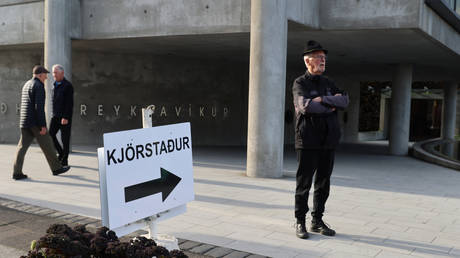
Icelandic voters decisively rejected a government-backed proposal to resume European Union accession talks, settling a high-stakes national debate by a margin of 52.8 percent to 47.2 percent. The August 2026 referendum brought a definitive halt to efforts driven by Reykjavik's centre-left coalition to reopen dialogue with Brussels more than a decade after formal negotiations were frozen. For an island nation of roughly 400,000 residents already tightly integrated into the European Economic Area, the decision protects national autonomy over lucrative maritime resources while closing the door on monetary integration and broader geopolitical alignment.
Understanding why the electorate balked requires looking past surface-level political maneuvering and examining the deep economic and historical anchors that define Icelandic identity.
The Sovereignty Wall and the Fisheries Factor
Maritime territory is not merely an economic sector in Iceland; it is a pillar of national sovereignty. The fierce resistance against restarting membership talks centered almost entirely on the Common Fisheries Policy. Under EU rules, catch limits are administered centrally in Brussels, a reality that domestic fishing operators viewed as an existential threat.
Industry data indicated that roughly ninety percent of commercial fishing enterprises opposed membership. Memories of the twentieth-century Cod Wars against British trawlers remain culturally potent. Handing over control of marine management quotas to a continental authority was treated by rural and coastal constituencies as a non-starter.
Opponents argued effectively that Iceland already secures the commercial advantages of the European single market through the European Economic Area agreement without surrendering regulatory power. Paying the price of full membership meant losing an independent voice at international bodies in exchange for diluted representation within the European Parliament.
Geopolitical Anxieties versus Domestic Pragmatism
The timing of the referendum was accelerated by shifting international dynamics. Prime Minister Kristrún Frostadóttir's administration advanced the vote following a series of unpredictable statements from Washington regarding Greenland, coupled with rising instability across the North Atlantic. Proponents of renewed talks framed the referendum as a necessary defensive maneuver, arguing that formal EU integration would offer structural protection against emerging global trade wars and regional security pressures.
Yet this grand strategy failed to sway a majority of the public. Voters separated high-altitude geopolitical theory from domestic economic realities.
Proponents championed the adoption of the euro as a permanent shield against the chronic volatility of the Icelandic króna, pointing to persistent domestic inflation and high interest rates. Skeptics countered that abandoning an independent currency would strip the nation of a vital shock absorber during economic downturns.
Urban centers told one story, while the rest of the country told another. Central Reykjavik returned a majority in favor of exploring accession, motivated by progressive integration goals and a desire for broader international alignment. But suburban and rural districts heavily rejected the initiative, carrying the opposition across the finish line with a turnout exceeding eighty-two percent.
The Long Shadow for Brussels
The outcome represents a stinging disappointment for European Commission officials who viewed Iceland as a natural partner in the strategic Arctic theater. Brussels had signaled a willingness to negotiate flexible arrangements tailored to Iceland's unique agricultural and maritime profile. Instead, the electorate chose the status quo, preserving an arrangement where Iceland remains functionally half-in through the Schengen Area and the single market, yet legally and politically outside the bloc.
Political leaders have confirmed that the outcome closes the chapter on EU membership for the duration of the current legislative mandate. The question of formal withdrawal from the long-dormant 2009 application now rests with the Althingi, leaving Iceland firmly anchored on its own terms in the North Atlantic.