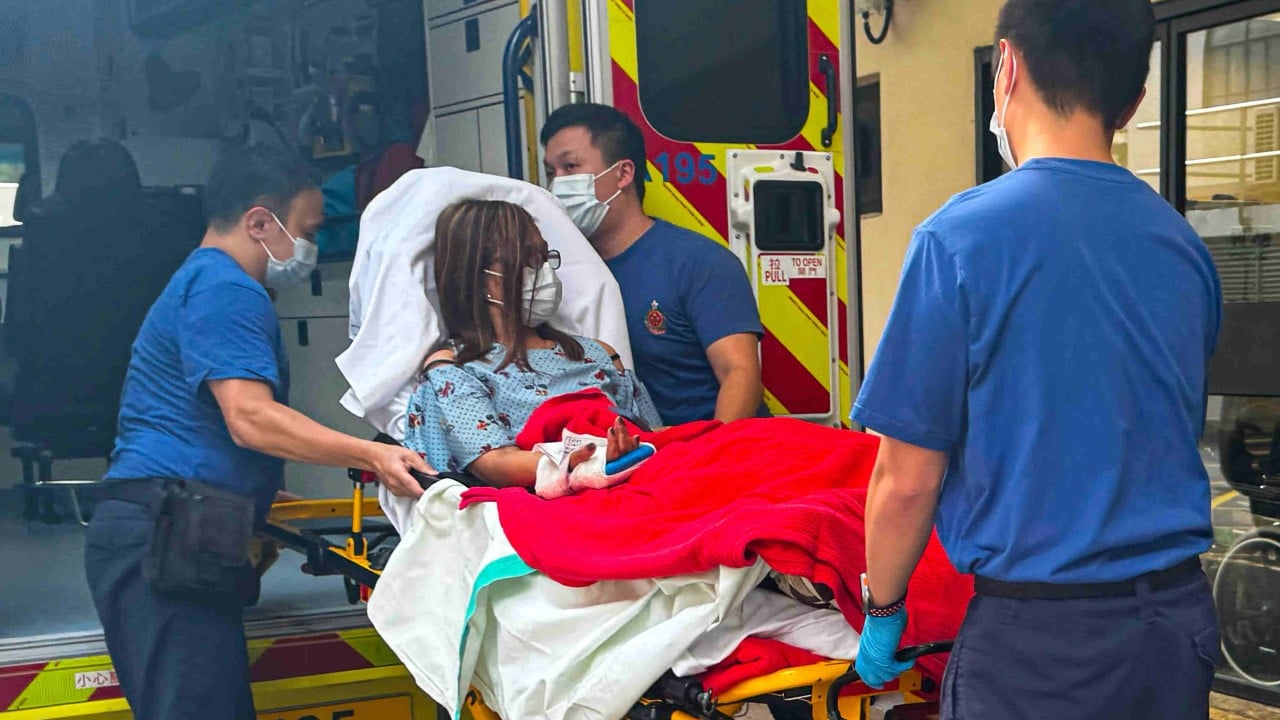
A school bus careened out of control inside the Shing Mun Tunnel after the driver abruptly lost consciousness behind the wheel. One person sustained injuries in the chaos that followed, narrowly avoiding a catastrophic pile-up in a confined subterranean tube. Commuters panicked. Headlines flashed across evening news bulletins. Public outrage flared over the immediate danger to children. Then, the news cycle moved on.
Another transit incident absorbed into the daily noise. Another flash in the pan.
Except the underlying mechanical and human reality driving that crash did not vanish when the wreckage was cleared. A school bus driver blacking out mid-route is not a random act of God. It is a predictable outcome of systemic operational failures that transport authorities refuse to confront. Behind every sudden medical emergency at the wheel lies an industry pushed to the breaking point by impossible schedules, brutal shift work, and an aging workforce abandoned by regulatory neglect.
The Anatomy of a Tunnel Collapse Point
Shing Mun Tunnel is a critical artery connecting Sha Tin and Tsuen Wan. It is narrow, enclosed, and unforgiving. When a heavy vehicle loses control inside a tunnel, the physics leave zero margin for error. There are no shoulders to drift onto. There is no open air to absorb kinetic energy.
When the driver slumped over the controls, the vehicle became a multi-ton projectile. The fact that only one injury was reported is a matter of pure statistical luck rather than systemic resilience. If the bus had drifted six inches further left or collided with a fully loaded commuter coach, the casualty toll would have rewritten transportation safety policy overnight.
Yet transport officials treat these events as isolated anomalies. They blame the individual. They check the driver's personal medical history, verify whether he declared pre-existing conditions, and treat the incident as a closed loop. This investigative laziness protects the status quo. It shifts the burden of failure onto the worker while insulating the corporate operators and government regulators who write the rules of engagement.
The Exhaustion Economy Driving Public Transport
Commercial transport in major metropolitan regions operates on an extraction model. Operators squeeze maximum mileage out of aging vehicles and exhausted human beings while minimizing overhead. Hong Kong's school bus sector relies heavily on aging independent contractors and drivers well past standard retirement age.
The math is simple and brutal. Younger workers refuse to enter an industry plagued by split shifts, low hourly wages, and twelve-hour workdays. The remaining workforce ages in place. Drivers wake up at four in the morning, complete the morning school run, sit idle for six hours without paid downtime, complete the afternoon run, and often take on supplementary night driving to make ends meet.
Chronically sleep-deprived individuals operate heavy machinery loaded with children.
When a driver loses consciousness, investigators rarely examine the preceding forty-eight hours of consecutive shifts. They rarely ask whether the operator was forced to choose between financial survival and adequate rest. Acute medical episodes do not happen in a vacuum. Fatigue attacks the cardiovascular and neurological systems, compounding undiagnosed hypertension, sleep apnea, and diabetes.
Why Pre-Employment Physicals Fail
Regulatory frameworks require annual health certifications for commercial vehicle drivers. On paper, this sounds reassuring. In practice, the system is a paper tiger.
The checks are often superficial. A general practitioner listens to a heartbeat, checks blood pressure in a sterile office, and signs off on a renewal form. These basic checks fail to capture transient ischemic attacks, sudden cardiac arrhythmias, or severe obstructive sleep apnea that manifests only during deep sleep cycles.
Furthermore, drivers have a powerful financial incentive to conceal health issues. If a driver fails a medical exam, they lose their livelihood instantly. There is no social safety net waiting to catch them, no paid medical leave that protects their seniority, and no retraining program to transition them to ground duties. Consequently, drivers pop hypertension pills bought over the counter, ignore chest tightness, and push through chronic dizziness until their bodies stage a complete mutiny at seventy kilometers per hour inside a concrete tube.
The Regulatory Blind Spot
Transport departments love technology. They mandate speed limiters, seatbelts, and increasingly, closed-circuit cabin monitors aimed at the driver's face. These cameras are pitched as life-saving innovations. In reality, they are tools of surveillance designed to shift liability.
If a camera catches a driver nodding off a second before a crash, the operator avoids blame because they installed the monitoring equipment. The narrative becomes one of individual driver non-compliance rather than corporate negligence.
Real safety investment requires structural intervention, not just electronic surveillance. Real safety means capping consecutive driving hours, mandating true rest intervals during split shifts, providing guaranteed healthcare access for commercial drivers, and increasing government subsidies for school bus operators so they can afford higher wages and attract younger talent.
When a society outsources the transportation of its children to a neglected underclass of exhausted, underpaid, and aging workers, tragedies inside tunnels are inevitable. The Shing Mun incident was not an accident. It was an invoice for decades of institutional complacency, coming due at highway speeds.