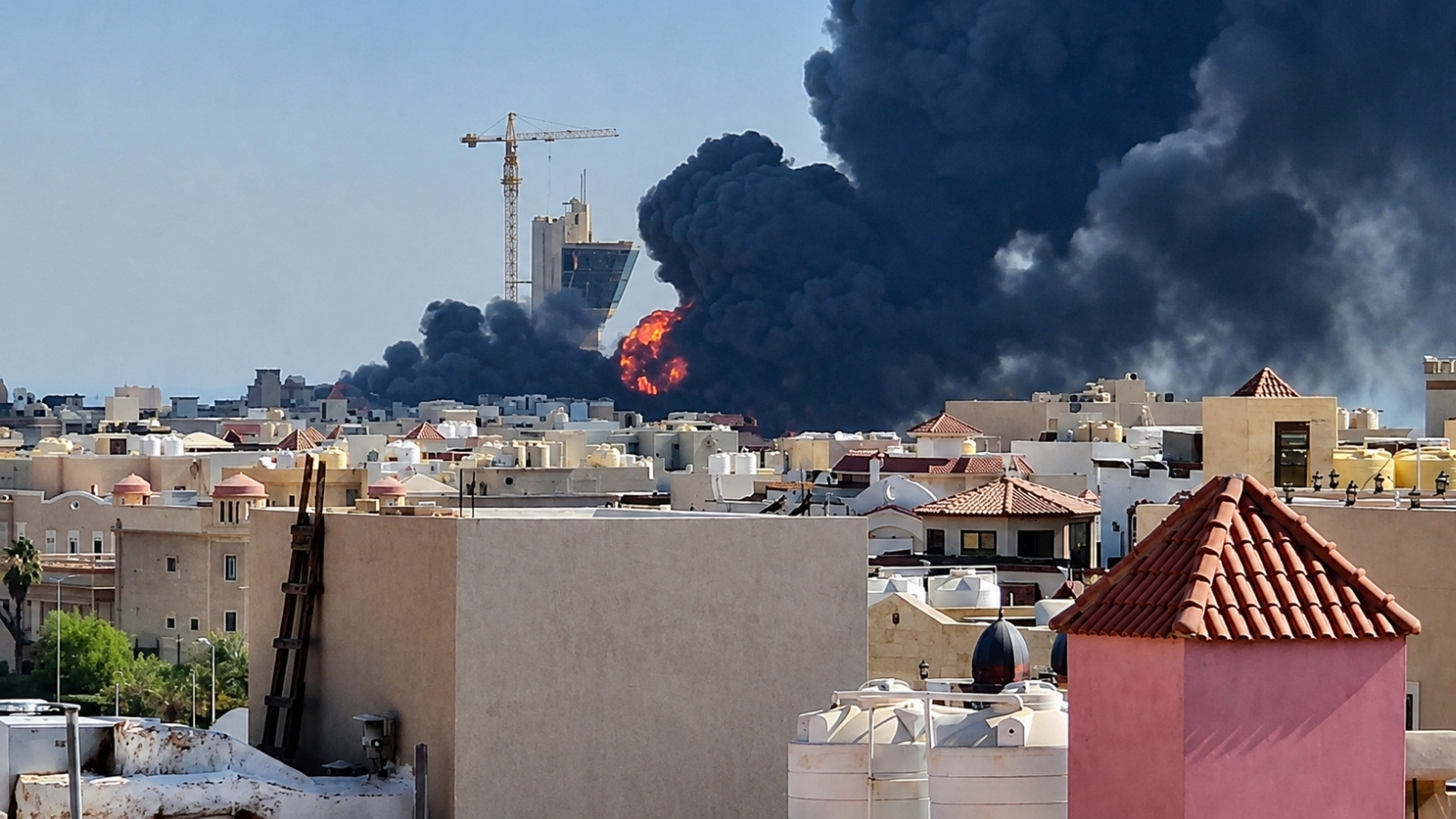
The collapse of the Pakistan-brokered memorandum of understanding has pushed the conflict between the United States and Iran into dangerous territory, moving past energy shipping routes to threaten the literal survival of Gulf populations. Recent Iranian missile and drone strikes hitting a vital power and water desalination facility in Kuwait have exposed a vulnerability that defense analysts have quietly feared for decades. While global markets focus heavily on oil prices, the targeting of life-sustaining infrastructure reveals a chilling shift in regional warfare. Water, not just oil, has become the ultimate strategic target in the Middle East.
The Strategic Bottleneck Beyond Oil
For decades, the standard playbook for assessing conflict in the Persian Gulf focused almost exclusively on the Strait of Hormuz and the flow of crude oil. The logic was simple. If the strait closed, global energy markets would panic, prices would spike, and economic shockwaves would hit Western capitals. This narrow view ignores an even more critical vulnerability right on the coastline. The modern cities of the Gulf cannot survive without artificial freshwater production.
Kuwait relies on desalination plants for roughly 90 percent of its total drinking water supply. Oman stands at 86 percent, while Saudi Arabia depends on these facilities for about 70 percent of its water needs. This is not an industry that can pause for a few weeks while diplomats talk. If these facilities stop operating, major urban centers will run completely dry within days. The recent strike on Kuwaiti infrastructure proves that these facilities are no longer off-limits. They are now frontline targets.
The physical concentration of these facilities magnifies the danger significantly. More than 90 percent of the region’s desalinated water comes from just 56 major plants scattered along the Persian Gulf coast. They sit completely exposed to modern missile arrays and low-altitude drone strikes. A classified CIA analysis from 2010 warned that targeted attacks on these specific facilities could spark immediate national emergencies across multiple Gulf nations. If critical, specialized machinery inside these plants is destroyed, repairs cannot happen quickly. The resulting outages could easily last for several months.
How the Co Generation Trap Weaponized the Desert
To understand why these facilities are so vulnerable, one must look at how they are engineered. Most major desalination plants in the Gulf operate as co-generation facilities. They do two things at once. They generate electricity and they purify seawater using the excess heat or power from that generation process. The system is highly efficient during peacetime. In wartime, it becomes a structural liability.
An attack does not need to obliterate the water intake pipes to stop the flow of drinking water. If a missile strike damages the electrical grid or the power generation units, the entire desalination process grinds to an immediate halt. This is precisely what occurred during the recent strikes in Kuwait, where authorities had to take multiple power units offline to stabilize the wider grid after a fire broke out. The physical integration of water and power means that any strike on an energy target is, by default, a strike on the civilian water supply.
The purification process itself relies heavily on complex technical systems that are highly sensitive to disruption. Most modern facilities use reverse osmosis, forcing seawater through ultra-fine membranes under immense pressure, or multi-stage flash distillation, which boils seawater in successive chambers. Both methods require an uninterrupted supply of immense electrical power and clean chemical inputs. When a facility is forced into an emergency shutdown due to nearby explosions or shrapnel damage, the delicate membranes can become fouled, and the high-pressure systems can suffer catastrophic mechanical failure. Replacing these components requires international supply chains that are currently choked by the widening maritime conflict.
The Collapse of the Islamabad Memorandum
The recent escalation follows the complete breakdown of the temporary ceasefire signed in June. That agreement, mediated through intense diplomatic efforts by Pakistan, was supposed to provide a framework for a lasting peace deal. Instead, it exposed the deep ideological and strategic chasm between the warring parties. The United States and its regional allies viewed the memorandum as a tool to freeze Iranian enrichment and halt maritime harassment. Tehran saw it as an opportunity to demand an immediate end to economic sanctions without offering permanent concessions.
The breakdown became inevitable when U.S. forces launched a series of intense night strikes aimed at rolling back Iranian military capabilities along the coast. The Islamic Revolutionary Guard Corps responded not by engaging American warships directly, but by widening the target list to include regional nations that host U.S. military assets. Kuwait, home to major American support bases like Camp Arifjan, found itself directly in the line of fire.
The rationale coming out of Tehran is explicitly retaliatory. Iranian state media has consistently broadcast statements defending the strikes as a direct response to Western aggression. The official position is that since international bodies have failed to halt American airstrikes inside Iran, the nation has no choice but to strike back proportionally against the infrastructure of countries enabling those operations. By striking Kuwait's domestic infrastructure, Iran is sending a clear warning to other neighbors hosting Western forces. The message is simple. If Iran's domestic infrastructure burns, the rest of the Gulf will lose its utilities as well.
Targeting the Arteries of Bandar Abbas and Chabahar
The American air campaign has focused heavily on degrading Iran’s logistics and surveillance networks, recognizing that the country's military relies on specific geographic nodes. Recent U.S. Central Command operations targeted critical transportation links in the southern Hormozgan province. Precision strikes collapsed highway and railway bridges leading into Bandar Abbas, the country's primary commercial port. The strategic objective here is obvious. By cutting off Bandar Abbas from the central roads leading to Tehran, the U.S. is attempting to isolate the regime and choke the internal movement of military hardware.
Simultaneously, American forces targeted the strategic port of Chabahar on the Gulf of Oman, collapsing a major maritime surveillance tower. While Iranian authorities insisted the tower was purely for civilian commercial traffic, Western intelligence services maintained it was a critical node in the Revolutionary Guard’s maritime tracking network. That network allows Iranian forces to track, identify, and target commercial vessels navigating the narrow waters.
These American actions have caused severe domestic strain within Iran. For the first time, the Iranian Energy Ministry publicly acknowledged significant damage to its own power infrastructure, pleading with citizens in southern provinces to drastically reduce electricity consumption during a period of intense summer heat. The U.S. strikes have effectively turned the southern coastal region of Iran into an isolated combat zone, separating it from the political core in the north. Yet, instead of forcing a surrender, these actions have only hardened Tehran's resolve to employ its asymmetric arsenal against the fragile infrastructure of its neighbors.
A Fragile Region Staring at a Dry Future
The long-term threat to the region extends beyond military exchanges. The physical destruction of desalination infrastructure occurs against a backdrop of severe environmental stress. The Persian Gulf is already one of the most water-stressed regions on earth, and climate change is actively intensifying the problem. Rising ocean temperatures increase the frequency of toxic algal blooms, which can clog the intake systems of desalination plants and force temporary shutdowns even without military interference.
Furthermore, the escalation of marine warfare introduces massive risks of pollution. A single major oil spill resulting from a struck tanker or an attacked coastal refinery could wash into the intake systems of multiple desalination plants. If oil contaminates these systems, the facilities must be shut down immediately to prevent permanent destruction of the filtration membranes. A war fought with missiles around these plants could easily trigger a self-inflicted ecological catastrophe that leaves millions of people without access to drinking water.
The current strategy of trading infrastructure strikes creates a dangerous escalatory loop. The United States continues to strike Iranian bridges, ports, and command centers to enforce a maritime blockade and protect shipping lanes. Iran responds by launching missiles at the co-generation plants that keep the desert cities of America's allies habitable. It is a deeply asymmetrical calculation. Bridges can be bypassed, and port towers can eventually be rebuilt. But a desert nation that runs out of fresh water faces an immediate domestic collapse that no amount of military force can easily fix. Regional governments must urgently decouple their critical water production from military-aligned power grids and establish deep strategic water reserves detached from the coast if they hope to survive this new era of infrastructure warfare.