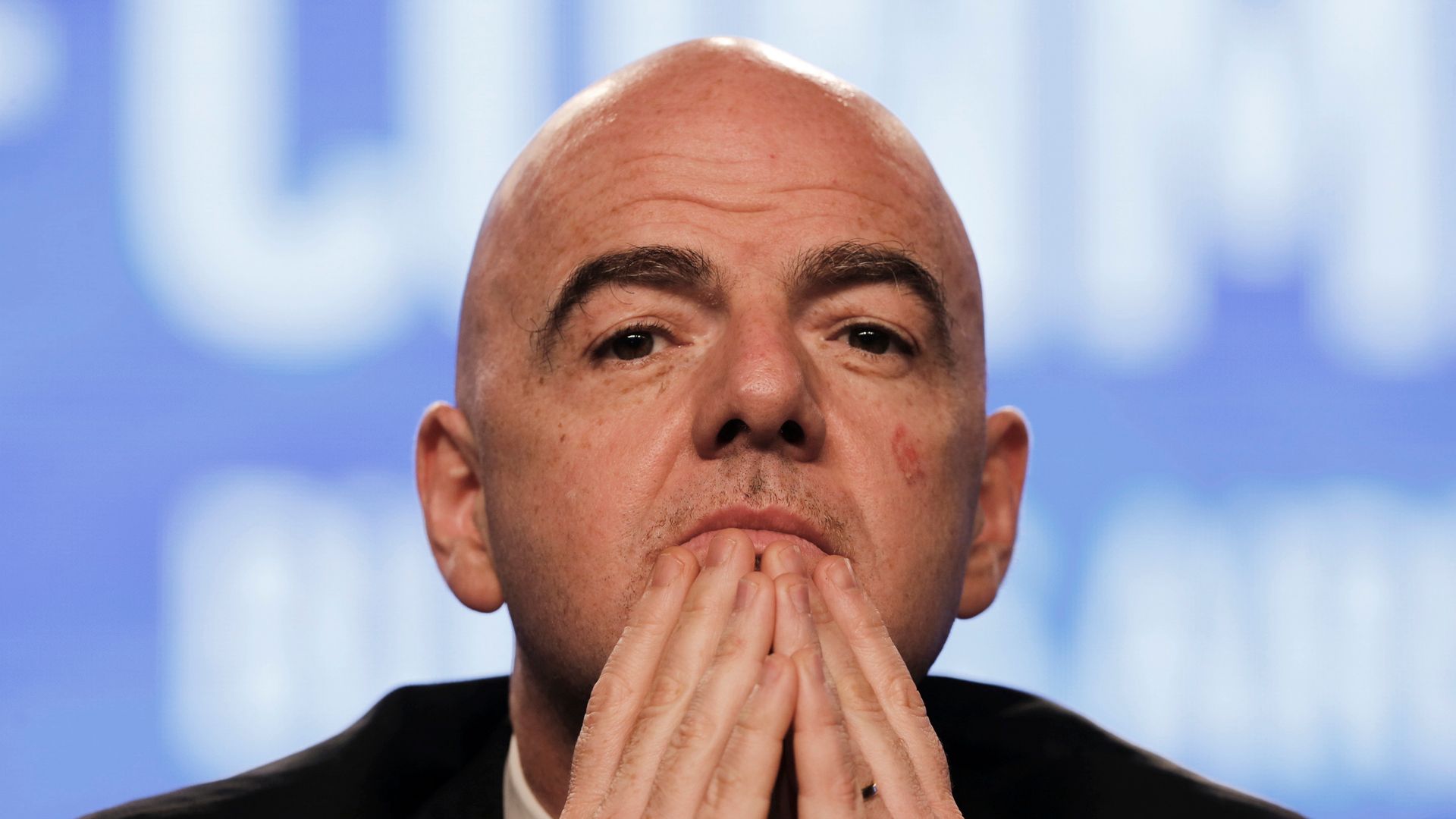
Six Nordic football associations shattered the illusion of administrative harmony on a Sunday in Helsinki, formally declaring they had lost confidence in FIFA President Gianni Infantino. Denmark, Finland, Iceland, Norway, Sweden, and the Faroe Islands did not mince words. Their joint statement ripped open a widening chasm between world football's governing body and regional powerhouses over the monetization of the sport.
This open rebellion follows a botched maneuver by Infantino to open World Cup-linked commercial assets and future profits to private equity investment. The scheme, quietly packaged as the FIFA Forward Enterprise proposal, triggered immediate defensive alarms across multiple continents. When private capital enters the house of football, the traditional distribution of power shifts from member associations to institutional financiers. For traditionalists who spent decades protecting the grassroots structure of the sport, the proposal crossed a red line. Meanwhile, you can explore related events here: The Broken Swing How a Viral Golf Ad Exposed Old Habits in a New Era.
Infantino now faces a multi-front war. Europe's UEFA, the Asian Football Confederation, and CONCACAF have mobilized in unison, demanding a full third-party review of the opaque machinations behind the private equity pitch. The executive suite in Zurich is experiencing a rare moment of acute vulnerability.
The Anatomy of a Private Equity Miscalculation
The blueprint to monetize the crown jewels of international football was never going to pass quietly. FIFA leadership underestimated how fiercely national associations would guard the commercial sovereignty of the World Cup. When details of the enterprise proposal leaked into administrative channels, institutional shockwaves rippled outward from Nyon to Kuala Lumpur. To understand the complete picture, check out the detailed article by Yahoo Sports.
Financial engineering at this scale requires absolute secrecy until execution. Yet secrecy breeds deep institutional paranoia. National federations depend on predictable cycles of solidarity funding and tournament dividends. Introducing profit-driven external stakeholders into the governance loop threatens to prioritize shareholder returns over global development goals.
The Nordic FAs articulated a fear shared by many silent stakeholders. They demanded binding guarantees that FIFA will never again expose its core competitions or administrative governance to private ownership structures.
"We expect that FIFA provides binding assurances that FIFA will never again open its governance or competitions to private ownership."
Management by fear has its limits. When Norway FA president Lisa Klaveness publicly criticized Infantino over the abrupt sidelining of chief operating officer Kevin Lamour, it signaled that internal dissent was no longer being whispered behind closed doors. The autocratic style that characterized much of Infantino's tenure is suddenly colliding with a coordinated pushback from federations accustomed to democratic accountability.
The Fractured Global Map
While the European block and its international allies dig in their heels, the global battlefield remains deeply divided. Infantino retains considerable institutional backing across parts of Africa and South America, where development funding distributed under his tenure bought profound loyalty. Global football politics operates on a transactional axis. Every new slot in an expanded World Cup tournament format represents political currency traded during elective congresses.
The upcoming presidential election cycle is shaping up to be a referendum on governance culture. Denmark's football leadership has already stated an explicit intent to unearth a credible alternative candidate. Yet unseating an incumbent executive who controls the formidable machinery of global distribution is an uphill battle.
Regional confederations are pressing for an independent external investigation to dissect the governance breakdown. They want a forensic look into whether FIFA's internal architecture still retains the checks and balances promised during the reform era of 2016. That historical benchmark was supposed to sweep away the corruption scandals of the past. Instead, critics argue that centralization of authority has simply shifted the locus of control to a smaller circle around the president's office.
The Price of Absolute Centralization
Modern sports administration sits at an uncomfortable intersection of populist entertainment and hyper-capitalism. Infantino championed the expansion of club and national team tournaments to unprecedented sizes. More matches generate higher television rights fees, richer sponsorship tiers, and heavier physical burdens on elite athletes.
The calculus is simple on paper. More inventory yields more revenue. Yet every added fixture strains domestic leagues, exhausts players, and alienates traditional fanbases who view the calendar as hopelessly bloated. When commercial expansion pivots toward private equity, the underlying motivation shifts away from growing the global game and toward servicing external investors seeking predictable yields on capital.
The resistance from the Nordic associations and their continental allies highlights a fundamental identity crisis within world football. If the administrative heart of the sport belongs to global commercial funds, the member associations cease to be owners of the game and become tenants in a stadium they once built.
The pressure on Zurich will not dissipate ahead of the next congress in March 2027. As more national bodies weigh their allegiances, the cracks in the institutional foundation widen, leaving the future of global football governance hanging in a precarious balance