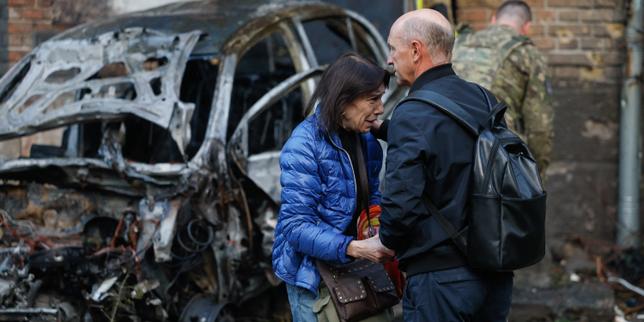
Three years of war have turned Gaza from a densely crowded coastal strip into an engineered landscape of ruins, displaced families, and severed supply lines. While conventional headlines tally casualties or replay diplomatic stalemates, the deeper transformation lies in how physical destruction, spatial control, and financial starvation have rewired survival on a daily basis.
After decades covering conflicts across the Middle East, I have learned that wars rarely end when the heaviest bombardments slow. They mutate. Even after ceasefire arrangements sought to curb large-scale hostilities, residents in Gaza still navigate a territory stripped of its economic foundations, its hospitals operating at partial strength, and roughly seventy million tons of rubble mixed with hazardous debris and unexploded ordnance.
Al Jazeera's October 2026 retrospective captures the immediate human toll of three years of war, documenting displaced families in tents, depleted hospitals, scarce physical cash, and children losing years of schooling. Those observations are real, yet treating the crisis merely as a list of broken sectors misses the structural mechanics driving them. When you look closely at Gaza's economy, geography, and aid architecture, you see why rebuilding cannot simply mean pouring cement back into old neighborhoods.
Why Physical Destruction Is Only Half the Story
Rubble is visible from orbit. What satellites do not easily capture is the quiet erasure of productive capacity.
According to United Nations reporting from mid-2026, Gaza's economy has contracted by roughly eighty-four percent over the course of the war. A contraction of that scale is not a recession; it is a near-total hollowing out of local production. Workshops, factories, solar arrays, water treatment plants, and municipal offices were damaged or destroyed across repeated cycles of fighting. Without electricity grids, spare parts, or reliable fuel, even businesses whose walls remain standing struggle to operate.
Food production suffered a parallel collapse. Farmland has been churned up, contaminated, or placed out of reach by military zones and access restrictions. Livestock herds were largely lost to disease, slaughter, or lack of fodder and water, while Gaza's fishing fleet—once a vital source of protein and coastal employment—was virtually wiped out, with only a tiny fraction of vessels remaining operational by late 2025.
Clearing an estimated 68 million tons of debris laced with asbestos, heavy metals, and unexploded ordnance could cost more than $1.7 billion before large-scale reconstruction even begins.
Consider a hypothetical example to see how this plays out for a family in Khan Younis or Gaza City. Suppose a baker wants to reopen a neighborhood oven. Even if flour arrives through a relief corridor, the baker needs cooking fuel or backup power, clean water for dough, a way to transport bread past checkpoints or damaged roads, and customers who have purchasing power rather than only emergency food rations. Every link in that chain depends on systems that are simultaneously broken.
Critics of Israeli military operations point to the scale of devastation, expansion of Israeli-controlled zones, and restrictions on movement as deliberate drivers of long-term displacement and uninhabitable conditions. Israeli officials and security analysts counter that operations targeted Hamas tunnel networks, rocket infrastructure, and governance capabilities after the October 7, 2023 attacks, arguing that military presence and strict inspection regimes remain necessary to prevent rearmament. Both arguments collide on the ground, where civilians bear the cost of security doctrines that leave almost no room for normal economic life.
The Invisible Economy of Cash and Digital Wallets
Walk through a displacement camp or market in Gaza and you will see another profound shift: how money itself behaves.
Physical shekels have grown scarce inside the enclave, worn out by circulation or tightly constrained by banking and transfer bottlenecks. Palestinian banks operating across the West Bank and Gaza face persistent friction over correspondent banking ties and transferring shekel surpluses into Israel, which limits cash replenishment and cross-border financial clearing.
As a result, digital payments and e-wallets have stepped into the breach alongside humanitarian cash assistance. On paper, moving toward digital transactions sounds modern and efficient. In practice, inside a war zone with intermittent telecommunications and erratic power, electronic money creates its own traps.
- Liquidity taxes: Traders and cash-out agents often charge steep commissions or discounts when converting digital balances into physical bills needed for small-scale purchases.
- Connectivity fragility: When cell towers lose power or network coverage drops, digital wallets freeze, leaving households stranded even if they hold an electronic balance.
- Aid dependency: When wage employment vanishes, humanitarian transfers become the primary lifeline, turning relief distribution into the central axis of household survival.
This financial squeeze reshapes social hierarchy as well. Those with access to remittances, international aid stipends, or reliable connectivity can navigate rising prices better than families reliant on dwindling savings. War does not flatten everyone into identical misery; it sorts people into sharper tiers of vulnerability.
What Happens to a Generation Without Classrooms
Education is often treated as a secondary casualty of war, something to fix once the shooting stops. That is a costly mistake.
United Nations estimates indicate that roughly seven hundred thousand school-aged children in Gaza have missed prolonged periods of formal schooling. The Palestinian Ministry of Education has warned of severe learning losses in basic reading, mathematics, and foundational skills.
In a territory where youth already made up a massive share of the population before October 2023, three years of lost classrooms compounds an existing demographic challenge. Older children drift toward informal street labor, scavenging, or survival errands just to help families get by. Younger children absorb trauma alongside fragmented lessons taught in tents or overcrowded shelters.
Rebuilding a school building takes months or years. Rebuilding lost years of literacy, numeracy, and routine takes a decade—and sometimes never fully happens for cohorts pushed out of school at critical developmental stages.
Cartography, Ceasefires, and Frozen Futures
Three years into the conflict, geography in Gaza feels less like a continuous strip and more like a patchwork of zones, buffers, and shifting boundaries.
Ceasefire frameworks—including the October 2025 arrangement that introduced the so-called Yellow Line separating Israeli-controlled areas from the rest of Gaza—reduced the intensity of full-scale warfare without delivering true peace or free movement. Low-level violence, localized strikes, structural demolitions in controlled zones, and explosive ordnance hazards have continued to claim lives and keep residents on edge.
| Dimension | Pre-October 2023 Baseline | Three Years Into the War | Key Bottleneck to Recovery |
|---|---|---|---|
| Economic Activity | Blockaded and fragile, but with active local trade, farming, and fishing | Severe contraction estimated around 84%; agriculture and fishing largely crippled | Lack of capital, power, input access, and safe market mobility |
| Healthcare System | Strained by years of blockade, yet operating dozens of hospitals and clinics | All 36 hospitals damaged; only 19 functioning partially, per WHO data | Shortages of medical supplies, staff fatigue, and damaged facilities |
| Education | High enrollment rates across dense urban schools | Around 700,000 children facing prolonged schooling disruption | Damaged school stock, displaced teachers, and household survival pressure |
| Spatial & Movement Reality | Tightly controlled borders with internal Palestinian movement | Fragmented control zones, mass tent displacement, and 68M tons of rubble | Unresolved political control, security disputes, and unexploded ordnance |
Human rights monitors and international observers warn that expanding military-controlled corridors and restricting access to former neighborhoods entrench displacement and complicate any credible right or practical path of return. Meanwhile, regional escalations—including wider clashes involving Lebanon, Iran, and maritime chokepoints—have pulled diplomatic bandwidth and military resources across a much broader theater.
There is a hard truth here that diplomats rarely say out loud. Even if every external government agreed tomorrow on a reconstruction pledge, money cannot rebuild Gaza while the underlying political and security questions over governance, border controls, and demilitarization remain unresolved. Donors hesitate to bankroll permanent infrastructure when there is no guarantee it will not be bombed, blocked, or left unfinished.
At the same time, leaving Gaza in permanent limbo is not a neutral option. Untreated sewage, contaminated soil, uncollected waste, and lingering munitions turn temporary displacement into a chronic public health and environmental hazard.
The Real Test Ahead for Policymakers
Any serious plan for Gaza after three years of war has to start with sequence and realism rather than grand slogans.
First, clearance and basic life support must come before monuments or master plans. Removing hazardous debris, neutralizing unexploded ordnance, restoring clean water and sanitation, and expanding medical evacuations and hospital supplies are prerequisites for everything else.
Second, livelihoods need breathing room. Allowing fishing boats back out safely within agreed zones, protecting remaining farmland, enabling small business inputs, and fixing cash-and-digital payment friction would let families earn rather than merely queue for aid.
Third, accountability and clear rules of engagement must replace open-ended ambiguity. Without credible oversight, enforceable ceasefire terms, and a defined political horizon for Palestinians in Gaza and the West Bank, every lull will remain a pause before the next shock.
Three years in, Gaza's tragedy is no longer just what was destroyed in a single night or a single offensive. It is the daily grind of trying to build a human life on poisoned ground while the world argues over who gets to draw the next map.