The iron gates of the Lycée Paul-Éluard in Saint-Denis did not open for class on a damp autumn morning. Instead, they were choked with industrial bins, wooden pallets, and teenagers wrapped in makeshift theatrical costumes, striking a defiant note against a state apparatus that had spent decades looking the other way. Across France, hundreds of secondary schools have partially or completely shut down, transforming quiet municipal neighborhoods into frontlines of structural combat.
This is not a fleeting teenage prank. It is a calculated, sustained explosion of youthful fury targeting chronic underfunding, decaying infrastructure, and an exclusionary higher education portal known as Parcoursup. When students welded school doors shut and rolled burning dumpsters across asphalt, they exposed a fracture running straight through the heart of the Fifth Republic.
The Rot Beneath the Plaster
To understand why thousands of minors are risking police batons and criminal records, you have to step inside the buildings themselves. French high schools, known as lycées, are grappling with a slow-motion collapse of basic operational hygiene.
Students talk openly about broken plumbing, unheated classrooms during freezing snaps, and restrooms that lack running water. In some northern Parisian suburbs, rodents scurry through corridors while teacher absenteeism goes unreplaced for weeks.
Class sizes have ballooned while support staff vanish. A single school nurse might service a thousand students, and guidance counselors are spread so thin they function as administrative ghosts.
When teenagers demand clean toilets and functional heating, they are not asking for luxury. They are pointing to a visible indicator of state abandonment. The social contract promises that public education remains the great equalizer of the Republic. When the ceiling tiles fall in on that promise, the illusion shatters.
The Bottleneck Called Parcoursup
Beneath the physical decay lies a bureaucratic nightmare that dictates the future of every young citizen. Parcoursup, the centralized digital platform used to assign university admissions, functions as a black box of anxiety.
Every spring, hundreds of thousands of students discover themselves stranded on endless waiting lists or funneled into disciplines they never chose. The system rewards algorithmic sorting over human potential, creating an artificial scarcity of university slots.
Critics have argued for years that the platform exacerbates social stratification, locking working-class youth out of elite tracks while preserving privilege for urban centers. When student unions called for blockades, they zeroed in on this bottleneck with surgical precision. Access to higher education in France is supposed to be meritocratic, but the current machinery treats aspirants like disposable numbers.
When the Streets Erupt
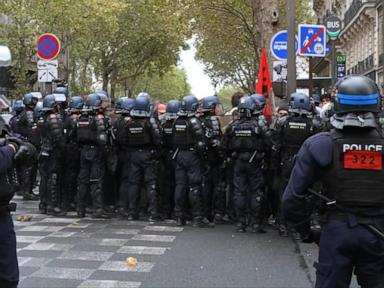
The state response has been heavy-handed, revealing a government terrified of losing control. Interior Ministry squads deployed tear gas, flash-balls, and mass containment tactics—known as kettling—against crowds that included fifteen-year-olds. Thousands of minors have been detained since the autumn mobilization began, drawing sharp condemnation from human rights organizations and civil liberties watchdogs.
Government officials insist they are fighting public disorder and protecting property from radical fringe elements. President Emmanuel Macron drew a sharp line between legitimate student grievances and what he termed ultra-left rioters intent on destroying public infrastructure.
Yet this distinction often blurs in the smoke of tear gas canisters. When riot police charge teenagers outside a barricaded high school in Lille or Marseille, the optics broadcast a devastating message: the state treats the demands of its youth as a security threat rather than a policy failure.
The Wider Labour Alignment
What began as a localized walkout in Créteil quickly metastasized into a national crisis because it resonated with a broader societal burnout. Public sector workers, rail operators, and energy unions recognized kindred spirits in the striking students.
When teachers walked off the job in solidarity, citing miserable wages and unmanageable workloads, the movement crossed the threshold from a student strike into a general rebellion against declining living standards. Inflation has pinched household budgets to the breaking point, with millions skipping meals or cutting back on essentials.
Prime Minister Sébastien Lecornu has floated cosmetic adjustments, promising tweaks to Parcoursup by upcoming deadlines and minor educational investments. The proposals landed with a thud. Union leaders and student representatives dismissed the state's offers as crumbs designed to clear the streets before winter sets in.
The barricades remain a permanent fixture of the morning commute in working-class banlieues. A generation that expected dignity and mobility has discovered that its future has been pawned off to balance municipal ledgers. As long as the classrooms stay cold and the gates stay locked, the smoke will keep rising over the Parisian suburbs.