Foreign policy miscalculations rarely arrive with flashing warning lights. Instead, they manifest as decades-long compounding errors, built on poor intelligence, regional hubris, and a fundamental refusal to understand local micro-politics. For years, Western and Gulf capitals viewed the Houthi movement in Yemen through a lazy, reductionist lens. They painted the group as a simple proxy army, a remote-controlled asset of Tehran acting entirely at the whim of the Iranian Islamic Revolutionary Guard Corps.
This narrative is convenient. It allows foreign ministries to ignore messy local realities and frame complex insurgencies as neat geopolitical chess matches. But it is profoundly wrong.
Anthropologists and ground-level historians who have spent decades tracking northern Yemen tell a very different story. Researchers like Marieke Brandt have long documented how the primary architect of Houthi ascendance was not actually Iran, but rather the aggressive, tone-deaf interventionism of Saudi Arabia and its domestic Yemeni allies. By funding specific religious counterweights, imposing top-down political exclusions, and eventually launching a devastating military campaign in 2015, Riyadh systematically destroyed the local buffers that once kept radical factions contained.
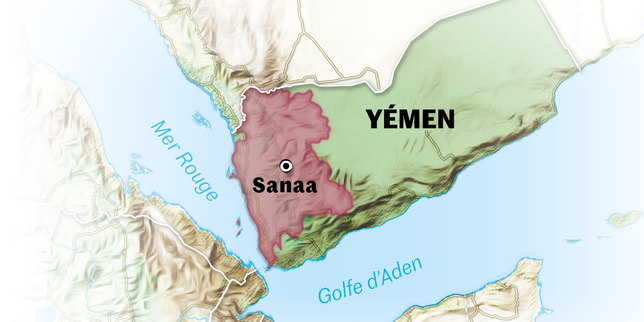
To understand how a marginal group from the northern mountains of Sa'dah transformed into a dominant regional power capable of reshaping Red Sea commerce, one must examine the mechanics of foreign overreach.
The Myth of the Monolithic Proxy
The conventional wisdom in Washington and Riyadh treats the Ansar Allah movement—popularly known as the Houthis—as an ideological carbon copy of Hezbollah. This comparison collapses under basic historical scrutiny.
The movement emerged in the early 1990s not as an export of the 1979 Iranian revolution, but as a local Zaydi revivalist project. The Believing Youth, the intellectual precursor to the modern Houthi movement, started as an educational and cultural association. Its initial goal was modest: to preserve Zaydi religious heritage, traditions, and literature in northern Yemen against what local communities perceived as an encroaching wave of foreign-funded Sunni fundamentalism.
For decades, northern Yemen operated on a delicate, decentralized tribal equilibrium. Power was diffused among local leaders, confederations, and ancient kinship networks.
External actors routinely misread this landscape. When Saudi Arabia began funneling millions of dollars into northern Yemen to establish Salafi educational institutions and missionary networks, they intended to counter ideological threats. Instead, they achieved the exact opposite. They radicalized the local religious ecosystem, forced communities to take defensive stances, and gave local preachers a powerful populist grievance: foreign cultural and religious invasion.
When the Yemeni government, egged on by its northern patron, attempted to forcibly suppress this cultural revival in 2004 by killing Hussein Badreddin al-Houthi, they did not crush a rebellion. They birthed a martyrdom narrative that transformed a localized grievance into an unyielding insurgent identity.
The Anatomy of State-Sponsored Blowback
Foreign interventions often create the exact monsters they claim they are trying to prevent. This is the core mechanism of structural blowback.
When the Arab Spring shook Yemen in 2011 and unseated long-serving president Ali Abdullah Saleh, the political transition plan brokered by the Gulf Cooperation Council attempted to engineer a tidy transfer of power in Sanaa. This process sidelined major segments of Yemeni society, particularly the northern populations who felt completely unrepresented by the new power-sharing arrangement.
Sensing an opportunity, the Houthi leadership moved out of their mountainous redoubts. They did not conquer Yemen solely through military force; they capitalized on deep public exhaustion with systemic corruption, elite capture, and economic collapse. Crucially, they even formed a tactical, opportunistic alliance with their former adversary, ex-President Saleh, allowing them to outmaneuver rival political factions and enter the capital in late 2014 virtually unopposed.
Then came the catastrophic miscalculation.
In March 2015, a Saudi-led military coalition launched Operation Decisive Storm. The core assumption in Riyadh was breathtakingly naive: the air campaign would take a matter of weeks, rout the insurgents, and restore the internationally recognized government to power.
Instead, the military intervention achieved what years of domestic political maneuvering could not. It nationalized the conflict.
How Total War Hardens Insurgencies
Air campaigns directed against complex tribal societies rarely achieve surgical precision. When critical infrastructure, hospitals, bridges, and markets are reduced to rubble by foreign warplanes, civilian populations adapt in predictable ways.
Under daily bombardment, populations rally around whoever promises protection against external aggression. The Houthis weaponized the Saudi intervention masterfully. They framed themselves as the sole defenders of Yemeni sovereignty against foreign imperial aggression. Every airstrike reinforced their propaganda. Every economic blockade drove desperate citizens deeper into reliance on the de facto administrative structures the movement was rapidly building.
Consider a hypothetical village cut off by fuel shortages and blockades. When central government salaries vanish and international aid fails to reach the front lines, communities turn to whichever administrative body can secure basic provisions, regulate local security, and maintain order. By default, total war forces civilian populations to integrate into the wartime economy of the dominant military actor on the ground.
By 2018, the coalition's strategy had achieved a grim paradox. It had isolated Yemen from the global economy, triggered one of the worst humanitarian disasters of the modern era, and utterly failed to dislodge the movement from the highlands. Meanwhile, years of continuous conflict forced the Houthis to professionalize their military capabilities. They evolved from a ragtag guerrilla militia into a formidable military organization equipped with domestic drone manufacturing, ballistic missile arsenals, and a sophisticated internal security apparatus.
The Cost of Ignoring Local Realities
The ongoing fallout in the Red Sea and international waterways is the direct downstream consequence of these historical blunders. Western naval patrols and punitive airstrikes continue to target launch sites, operating under the same persistent delusion that military pressure alone can alter local political dynamics.
History shows that insurgencies born of domestic marginalization and hardened by existential foreign wars cannot be bombed into submission. They adapt, decentralize, and embed deeper into the social fabric.
Foreign ministries that refuse to acknowledge their own role in generating these security crises are condemned to repeat them. Until policymakers abandon the comforting fiction of the simple proxy and reckon with the messy, indigenous roots of local resistance, regional stability will remain entirely out of reach. The adversary standing across the gulf today is not an alien force dropped from the sky; it is the Frankenstein monster built by decades of strategic incompetence.