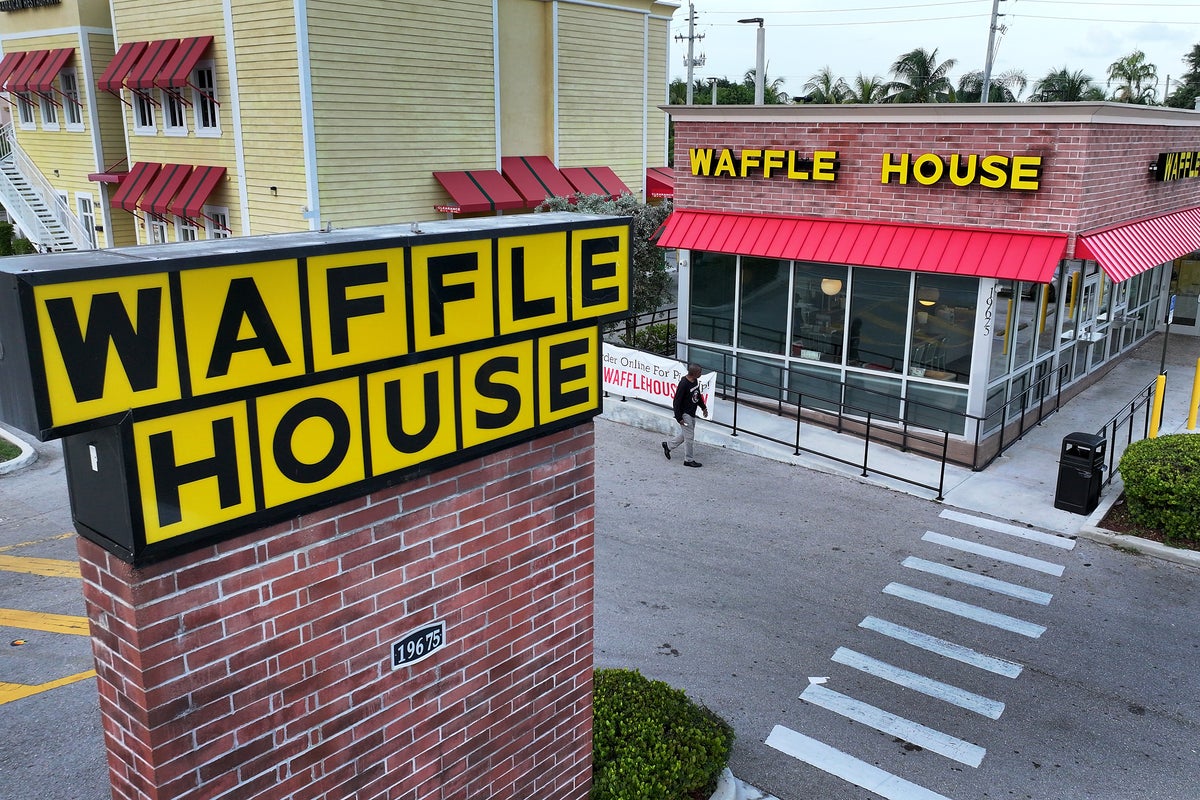
A broken toilet seat inside a twenty-four-hour roadside diner sounds like the setup for a late-night comedy monologue. But when a routine bathroom break ends in a debilitating spinal injury and a high-stakes corporate lawsuit, the laughter stops. A recent personal injury claim against Waffle House, where a customer alleges that a defective restroom fixture caused permanent physical damage and stripped away his ability to enjoy life, exposes a massive breakdown in commercial facility management. This case is not an isolated piece of tabloid weirdness. It is the predictable result of a systemic infrastructure crisis quietly plaguing the high-traffic retail and dining sectors.
For decades, the business model of round-the-clock dining has relied on thin profit margins and maximum asset utilization. Restaurants stay open every single hour of the year, weathering a relentless assault of foot traffic. While corporate executives focus heavily on supply chains, food safety protocols, and labor costs, the unglamorous reality of physical plant maintenance often gets pushed down the priority list. When a commercial fixture fails catastrophically under a patron, the resulting legal battle lays bare the hidden vulnerabilities of corporations that operate without a pause button.
The Legal Reality of Hedonic Damages
To understand the weight of this lawsuit, one must look past the initial salacious headlines and analyze the specific legal mechanisms at play. The plaintiff in this action did not just claim physical pain. He claimed a loss of the pleasures of life. In legal terms, this is known as hedonic damages.
Hedonic damages compensate an injured party for the loss of enjoyment of life, distinct from economic losses like medical bills or lost wages. They measure the intangible impact of an injury on a person’s ability to engage in hobbies, experience companionship, and find fulfillment in daily routines.
[Total Tort Damages] = [Economic Damages] + [Pain and Suffering] + [Hedonic Damages]
Proving these damages to a jury requires a meticulous reconstruction of the plaintiff's life before and after the incident. Defense attorneys routinely fight these claims with extreme aggression. They scan social media feeds, interview neighbors, and hire private investigators to catch the plaintiff engaging in any physical activity that contradicts their claim of total devastation.
The defense strategy usually relies on a simple premise. They try to show that the injury is an exaggeration of a pre-existing condition. For a corporate giant like Waffle House, settling these cases quickly is often preferred to avoid public embarrassment, but when a plaintiff demands a massive payout for permanent lifestyle destruction, the corporate legal machine digs in for a war of attrition.
The Friction of Twenty Four Hour Maintenance Operations
The underlying cause of these injuries is rarely an unpredictable act of god. It is almost always a failure of routine maintenance. For a standard restaurant that closes at ten o'clock at night, facility management is straightforward. Janitorial crews and maintenance technicians have a predictable, multi-hour window to inspect facilities, tighten bolts, replace worn parts, and apply heavy chemical cleaners without interrupting service.
A twenty-four-hour diner has no such luxury. The doors never lock. The lights never go out. This constant occupancy creates a hostile environment for physical infrastructure. Restrooms in these establishments experience a level of wear and tear that rivals public transit hubs, yet they are maintained by a rotating staff of hourly kitchen and service workers who are rarely trained in structural facility inspection.
Consider the physics of a commercial toilet installation. A standard commercial-grade seat is subjected to hundreds of cycles of uneven weight distribution every week. Over time, the heavy-duty plastic or composite material undergoes mechanical fatigue. The metal or plastic hinges that anchor the seat to the porcelain bowl are constantly exposed to moisture and highly corrosive commercial cleaning agents. These chemicals gradually degrade the integrity of the fastners.
Without a dedicated maintenance window, inspections become reactive rather than preventative. A line cook or a server tasked with a quick bathroom check during a shift change will wipe down the surfaces and empty the trash. They will not drop to their knees to check if the mounting bolts underneath the bowl are loosening. The fixture remains a hidden hazard until the exact moment the hardware shears off under the weight of an unsuspecting customer.
The Legal Burden of Constructive Notice
To win a premises liability lawsuit against a property owner, a plaintiff faces a steep legal hurdle. They must prove that the business owner had either actual notice or constructive notice of the dangerous condition.
- Actual notice means an employee explicitly knew the fixture was broken, perhaps because another customer reported it, but failed to fix it or cordoned off the area.
- Constructive notice is more complex. It requires proving that the hazard existed for such a length of time that the business owner should have discovered and corrected it through the exercise of reasonable care.
This is where the battle lines are drawn in corporate injury defense. Corporate attorneys will produce detailed logs showing that the restroom was inspected every two hours by a shift supervisor. They will argue that the seat must have been damaged by the immediate prior user, leaving the restaurant with zero opportunity to discover the defect.
Plaintiffs counter this defense by looking at the deep history of the property. Investigative journalists and forensic engineers look for patterns of neglect. They subpoena internal maintenance ticketing systems, past corporate safety audits, and local health department inspection reports. If a restaurant has a documented history of ignoring plumbing issues or delaying building repairs to save money, the defense's argument of a sudden, unpredictable failure falls apart completely.
The Calculus of Deferred Maintenance
Corporate finance departments often view facility maintenance as a cost center rather than a revenue protector. When quarterly earnings are tight, delaying a capital expenditure on building upkeep is an easy way to artificially boost the bottom line. This practice is known as deferred maintenance.
+------------------------------------+---------------------------------------+
| Immediate Financial Action         | Long Term Real World Consequence      |
+------------------------------------+---------------------------------------+
| Delaying $500 plumbing upgrades    | Accelerated structural degradation    |
| Cutting facility inspection hours   | Undetected equipment fatigue          |
| Purchasing cheaper asset variants  | Catastrophic premature failure        |
+------------------------------------+---------------------------------------+
| Short-term balance sheet relief   | Multi-million dollar tort litigation  |
+------------------------------------+---------------------------------------+
This math works perfectly on a spreadsheet right up until the moment it fails in the real world. The cost of purchasing premium, self-sustaining commercial fixtures and employing a dedicated, certified maintenance staff is incredibly high. However, it pales in comparison to the cost of a single major personal injury lawsuit. Between legal retainers, expert witness fees, forensic engineering analysis, and potential jury awards or settlements, a single broken fixture can wipe out the profitability of a specific restaurant location for several years.
Furthermore, the damage to a brand's reputation cannot be easily quantified. Waffle House has built a cult-like cultural status precisely because of its resilience. It is famous for staying open during hurricanes and severe natural disasters, a phenomenon so well-known that emergency management officials use the informal index to gauge the severity of a storm's impact. But when the brand becomes associated with internal infrastructure neglect that cripples its own paying customers, that hard-earned cultural capital begins to erode.
Corporate Liability Across the Franchise System
The corporate structure of major restaurant chains adds another layer of complexity to these injury claims. Many national brands operate on a franchise model, where individual locations are owned and operated by independent third-party entrepreneurs rather than the corporate parent company.
In a pure franchise model, the corporate parent often attempts to insulate itself from premises liability by arguing that the local franchisee is solely responsible for the daily maintenance and safe operation of the physical building. They point to the franchise agreement, which mandates that the local owner must maintain the premises according to specific guidelines but places the execution and liability firmly on the franchisee's shoulders.
Plaintiffs' attorneys fight this separation by invoking the doctrine of apparent agency. They argue that because the building carries the corporate logo, serves the corporate menu, and presents a uniform appearance to the public, a reasonable consumer has no way of knowing they are dealing with an independent entity. The consumer believes they are trusting their safety to a multi-billion dollar national brand, and therefore, the corporate parent must share the legal responsibility when that trust is broken.
If the location is corporate-owned, the path to liability is direct, but the bureaucratic inertia can be even worse. In a corporate-owned store, a local manager often lacks the financial authority to authorize immediate, expensive structural repairs. They must submit a request up a chain of command, waiting for regional approval while a known hazard remains accessible to the public. This bureaucratic delay is pure gold for a plaintiff’s legal team, as it demonstrates a structural disregard for immediate public safety.
The Blind Spot in Modern Corporate Risk Management
Modern corporate risk management strategies have become highly sophisticated in protecting against digital threats, financial fraud, and supply chain disruptions. Yet, this high-tech focus has created a massive blind spot regarding the primitive, physical realities of brick-and-mortar retail operations.
Executives sit in glass boardrooms analyzing data streams while the actual customer experience takes place on stained concrete floors and in neglected public restrooms. The physical assets of a company require the same continuous monitoring and iterative updates as their software platforms.
The lesson of this broken toilet seat lawsuit is that no detail of a physical operation is too small to ignore. A business can have the most efficient supply chain in the country, the most beloved product menu, and the most effective marketing campaign in existence. None of it matters if the physical environment provided to the customer is structurally unsafe. True operational excellence requires an unyielding commitment to the most mundane details of building preservation, because the alternative is a slow descent into legal vulnerability and institutional decay.