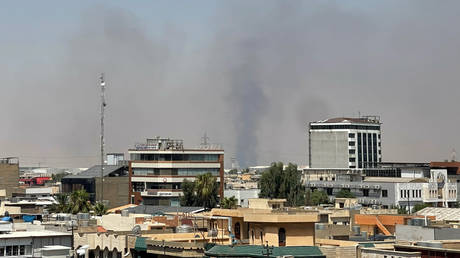
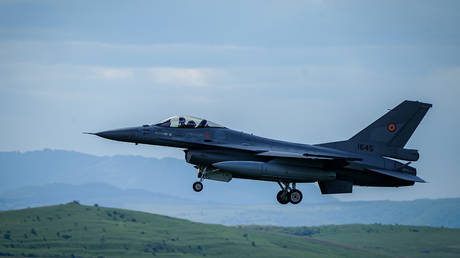
The Israeli military is shifting its operational focus toward large-scale, sustained incursions across the northern West Bank, following months of deadlier clashes and an increasing reliance on heavy weaponry in densely populated urban centers. What began as targeted night raids to arrest suspects has morphed into sustained military campaigns featuring armored bulldozers, drone strikes, and multi-day blockades of entire cities. The escalation reflects a fundamental shift in doctrine: Israeli defense leadership now views the territory not merely as a law-enforcement theater, but as an active front closely tied to broader regional conflicts.
For over two years, cities like Jenin, Tulkarem, and Nablus have seen a rapid proliferation of localized armed factions. These groups, often loosely affiliated with established political movements like Hamas, Palestinian Islamic Jihad, or breakaway elements of Fatah, operate with a high degree of autonomy. They do not rely on centralized command structures, making them difficult for both Israeli intelligence and the Palestinian Authority to dismantle.
The immediate trigger for the latest wave of major operations stems from a series of violent engagements where Israeli forces encountered sophisticated improvised explosive devices (IEDs) capable of disabling heavily armored vehicles. These ambushes, coupled with localized ambushes on Israeli security personnel and civilian settlements, convinced military commanders that surgical arrest operations were no longer sufficient to contain the security threat.
The Breakdown of Security Coordination
To understand why military operations have scaled up so drastically, one must look at the quiet collapse of the governance model established in the 1990s. The Palestinian Authority (PA) exercises administrative control over major urban hubs under the Oslo Accords, but its political legitimacy among the local population has eroded to historic lows.
Security coordination between Israeli forces and the PA security services—once considered the bedrock of West Bank stability—has become politically untenable for Palestinian leaders to maintain openly. As the PA retreats from refugee camps and peripheral towns, a power vacuum forms. Armed youth fill that void.
When the PA fails to enforce order or protect residents from rising settler violence, local populations turn to these newly formed battalions for protection and identity. Consequently, every Israeli operation aimed at neutralizing armed groups inadvertently deepens local hostility toward the PA, further weakening the very institution designed to manage internal security.
Heavy Armor and Changing Tactics in Urban Centers
The physical footprint of these military incursions reveals how significantly the tactical environment has changed. In early anti-terror operations, infantry units entered camps on foot or in light armored transport under cover of darkness, exiting within hours. Today, operations routinely span several days and involve major engineering equipment.
Israeli forces frequently deploy heavy armored bulldozers to clear roads leading into refugee camps like Jenin and Nur Shams. Military officials maintain this step is vital to detonate subsurface IEDs before foot soldiers advance. However, the collateral damage to civilian infrastructure is extensive. Water lines are severed, electrical grids are disrupted, and paved streets are stripped down to dirt trenches.
- Tactical drone strikes, once reserved strictly for targeted assassinations in Gaza, are now a routine feature of West Bank operations to clear pathways or strike armed squads on rooftops.
- Extended curfews are imposed across entire municipal zones, trapping tens of thousands of civilians inside their homes for days without access to basic services.
- Field interrogation centers are routinely established in commandeered residential buildings, blurring the line between combat zones and civilian neighborhoods.
This heavy-handed approach creates a vicious operational cycle. Destructive incursions radicalize a fresh cohort of young men, who then join local militias, triggering even larger military responses from the Israeli Defense Forces (IDF).
The Regional Connection and Smuggling Routes
The escalation inside the West Bank does not occur in a vacuum. Intelligence assessments point to a steady influx of weapons, money, and expertise flowing across regional borders, transforming local resistance from small-arms skirmishes into organized guerilla warfare.
A primary driver of this transformation is the porous border network running through Jordan. Despite efforts by Jordanian security forces to clamp down on illicit traffic, specialized smuggling networks utilize advanced drones and rugged desert routes to move military-grade explosive components and automatic rifles into the territory.
Funding from external actors, particularly Iran and its regional proxies, provides financial incentives to local fighters. Small groups of armed men can secure funding for weapons simply by demonstrating their willingness to engage Israeli forces on camera, fueling a social media ecosystem that glorifies resistance and recruits new members overnight.
Economic Strangling and Settler Friction
Military hardware represents only one half of the pressure cooker. Economic conditions across the West Bank have collapsed under the weight of movement restrictions, revoked work permits, and withheld tax revenues.
Following major security events, Israel routinely cancels the entry permits of over 100,000 Palestinian laborers who depend on jobs inside Israel and the settlements. Without this income, the local economy in cities like Hebron and Ramallah has stalled completely. Unemployed, frustrated young men with few future prospects become primary targets for recruitment by armed groups offering small stipends and a sense of purpose.
Simultaneously, violence between radical Israeli settlers and Palestinian villagers has reached unprecedented levels. Attacks on agricultural lands, olive groves, and isolated villages often occur in broad daylight, frequently under the watchful eye of nearby IDF units. When local residents feel that neither international law nor their own security services will protect their property, taking up arms becomes viewed as the only remaining alternative.
The strategy of relying purely on military force to manage a deep-seated political conflict has clear limits. Sweeping operations may temporarily disrupt specific militant cells and clear weapons caches, but they leave behind destroyed infrastructure, ruined local economies, and a population with nothing left to lose. Until the underlying structural causes—the collapse of local governance, unchecked extremist violence, and total political stagnation—are addressed directly, each major military operation merely sets the stage for a larger, more destructive confrontation tomorrow.