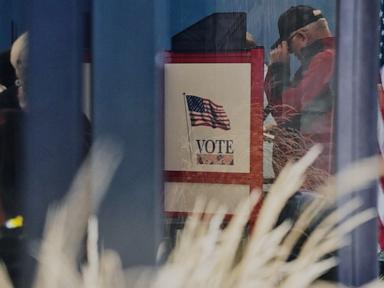
When the Cybersecurity and Infrastructure Security Agency rolled out its emergency defensive framework with barely forty days remaining until the midterm elections, official Washington treated it as standard administrative procedure. State and local election supervisors looked at the same document and reacted with open exasperation. Across more than three thousand counties, administrators who have spent months locking down voter registration databases and hardening physical polling place infrastructure did not see a protective shield. They saw a bureaucratic artifact arriving far too late to alter their operational reality.
The core vulnerability in American democratic architecture is not a sudden lack of technological capability. It is the widening chasm between federal ambition and decentralized execution. Elections in the United States are fundamentally local operations. A county clerk in rural Arizona or a municipal board in Michigan does not answer directly to a federal dashboard. When new directives, threat advisories, or software patches are introduced weeks before ballots go live, they collide with a rigid calendar of training sessions, equipment testing, and statutory deadlines.
To understand why this timing is catastrophic, one must examine how local election offices actually function under pressure. By early September, the machinery is already in motion. Voting machines have been certified, logic and accuracy testing is underway, and temporary staff are being trained on rigid, pre-approved workflows. Dropping a sweeping new federal cyber framework into this environment is akin to handing a pilot a redesigned flight manual while the aircraft is already accelerating down the runway.
Local officials are forced into an impossible operational triage. Do they ignore the new federal guidance and rely on the security protocols they spent the last year practicing, or do they attempt a frantic, ad-hoc implementation that risks introducing human error into systems that must remain infallible? Most choose the former, rendering the multi-million-dollar federal initiative an expensive exercise in bureaucratic compliance rather than an effective defensive barrier.
Compounding this structural failure is a severe degradation of the collaborative information-sharing networks that took shape over the preceding decade. Following past electoral cycles, federal agencies and state election offices built trusted channels for threat intelligence. If a malicious actor probed a voter database in one state, indicators of compromise were shared instantly across jurisdictional lines. Over the past year, however, political headwinds, budget fights, and administrative restructuring have gutted several of these joint intelligence hubs. The federal apparatus has increasingly retreated from its role as an active operational partner, leaving local jurisdictions to fend for themselves against sophisticated, state-sponsored cyber operations.
State-level officials note that while federal agencies issue broad public service announcements warning about foreign interference, credential harvesting, and phishing campaigns targeting campaign staff, these warnings rarely translate into tangible technical relief. A warning that hostile actors are targeting election personnel is useful for situational awareness, but without dedicated federal engineering support or rapid incident response teams deployed directly to state capitols, it amounts to telling a homeowner that a storm is coming while withholding the lumber.
Consider the reality of campaign infrastructure. Local party offices and individual candidate operations are frequently managed by transient, low-paid staffers and volunteers. These entities are the soft underbelly of the electoral ecosystem. Phishing attacks aimed at harvesting credentials for fundraising platforms or internal communications databases do not target high-security state mainframes; they target a nineteen-year-old field coordinator who has twenty unread emails and no formal security training. A federal cyber plan published forty days out does nothing to re-architect the decentralized, fragile web of third-party vendors and political committees that feed the broader election ecosystem.
Furthermore, the discourse surrounding election security remains stubbornly fixated on the wrong bogeymen. Public attention frequently centers on the cinematic fear of hackers altering vote tallies inside air-gapped tabulators. While maintaining the integrity of tabulation hardware is paramount, the actual vector of disruption is far more mundane and corrosive. It involves persistent spear-phishing, domain spoofing to deceive voters about polling locations, and targeted disinformation designed to overwhelm local election offices with fraudulent public records requests and manufactured administrative crises.
When local officials spend half their bandwidth fighting off coordinated denial-of-service attacks on their public websites or managing fallout from deepfake audio clips targeting county commissioners, their capacity to monitor network logs for genuine intrusions is severely compromised. The new federal strategy largely treats these challenges as distinct silos, separating physical threats, cyber intrusions, and influence operations into neat bureaucratic categories that bear little resemblance to the chaotic reality on the ground.
The institutional memory of election administration is also suffering. High rates of turnover among local election officials, driven largely by harassment, burnout, and political hostility, mean that many counties are running complex national elections with rookie staff. Experienced administrators who weathered previous threat cycles have been replaced by individuals who are learning crisis management on the fly. Introducing complex new federal security frameworks to an inexperienced workforce without intensive, hands-on, long-term technical assistance guarantees friction.
We have reached a dangerous equilibrium where the federal government measures its success by the volume of guidelines it publishes, while local jurisdictions measure their survival by the number of fires they manage to put out before the polls close. Publishing a comprehensive cyber strategy forty days before ballots are cast is not a proactive defense. It is an administrative alibi. It allows federal entities to point to a document and declare that action was taken, while the burden of execution falls entirely on underfunded, overstretched local workers who are already out of time.
As the final weeks tick down, the resilience of the upcoming election will not be preserved by last-minute federal manifestos. It will hold only because of the stubborn, quiet persistence of local workers who locked down their systems months ago, long before Washington decided to issue new instructions. Until federal policymakers understand that cybersecurity in a decentralized democracy requires sustained, multi-year capacity building rather than eleventh-hour paperwork, the system will remain structurally vulnerable to the next crisis.
[Top U.S. cyber agency lays out election security plan weeks before]
This video provides additional context regarding the timing and content of the federal election security rollout discussed in the article.