Six months into a grinding conflict that has paralyzed tanker traffic through the Strait of Hormuz, Washington has pivoted from kinetic strikes to financial asphyxiation. United States Treasury Secretary Scott Bessent unveiled what the White House grandly termed an economic D-Day, threatening secondary sanctions against any nation or institution maintaining commercial ties with Iran. The core objective is absolute isolation. The White House wants every foreign bank, shipping registry, and trading house to choose between the American dollar system or the Iranian market.
Yet this maximalist gambit misunderstands the structural resilience of an adversary that has spent decades perfecting the art of sanctions evasion. Washington is betting that financial isolation will force a regime collapse. History suggests otherwise. Also making waves recently: The Anatomy of Transboundary Haze Operational Friction and Resource Allocation Failure.
The Mechanics of the Financial Offensive
Bessent’s strategy relies on a weaponized financial architecture. Under the banner of Operation Economic Outcast, the Treasury Department has mapped the shadow networks, front companies, and maritime brokerages that keep the Iranian state afloat. Nearly sixty new targets, spanning digital assets, precious metals, aviation, and energy logistics, have been thrown onto the blacklist.
The ultimatum is blunt. Countries engaging in trade with Tehran face immediate expulsion from the dollar-backed global financial network. Additional information into this topic are explored by Al Jazeera.
[Washington Mandate] ---> [Secondary Sanctions Threat] ---> [Choice: Dollar System OR Tehran]
For major financial institutions in Europe and parts of Asia, compliance is mandatory because access to New York clearinghouses is non-negotiable. But applying this logic universally assumes a uniform global economic structure. It ignores the parallel financial tracks that have expanded precisely because of previous American pressure campaigns.
Why Maximum Pressure Meets Maximum Resistance
Decades of economic warfare have not starved the Iranian state; they have institutionalized its survival mechanisms. When Washington cuts off official financial corridors, state-backed networks simply adapt. They rely on decentralized cryptocurrency channels, barter arrangements, and a persistent shadow fleet of unregistered oil tankers navigating through Southeast Asian checkpoints.
Tehran’s leadership operates under a zero-sum survival calculus. To the Supreme National Security Council, yielding to American ultimatums translates to immediate political death. When cornered, authoritarian systems do not reform. They tighten domestic controls, ration resources, and externalize the pain.
Furthermore, the secondary sanctions threat faces structural resistance from major powers that view Washington's financial hegemony with growing suspicion. Beijing has already rejected the ultimatum. For nations heavily reliant on imported energy or seeking alternatives to Western financial dominance, compliance with American directives is viewed as an infringement on sovereignty rather than a regulatory necessity.
The Strait of Hormuz Counterweight
While Washington tightens financial nooses, Tehran holds a physical choke point. The disruption of traffic through the Strait of Hormuz has brought regional energy exports to a near standstill, keeping global fuel prices elevated and fueling political pressure inside the United States.
+-----------------------------------+-----------------------------------+
| Washington's Leverage             | Tehran's Counterweight            |
+-----------------------------------+-----------------------------------+
| Control over global dollar rails  | Control over physical oil transit |
| Secondary sanctions penalties     | Regional proxy and drone networks |
| Diplomatic pressure campaigns     | Deep sanctions-evasion networks   |
+-----------------------------------+-----------------------------------+
By keeping energy routes hostage, Iran ensures that the costs of the conflict are distributed globally. American voters feel the pinch at the fuel pump, and allied economies in Europe and Asia absorb the inflationary shocks.
Announcing an economic D-Day provides a dramatic headline for domestic political consumption, but it fails to address the fundamental military and logistical stalemate in the Persian Gulf. As long as tanker traffic remains choked and alternative trade partners keep purchasing discounted hydrocarbons through opaque channels, the financial offensive remains a blunt instrument swinging in an empty room.
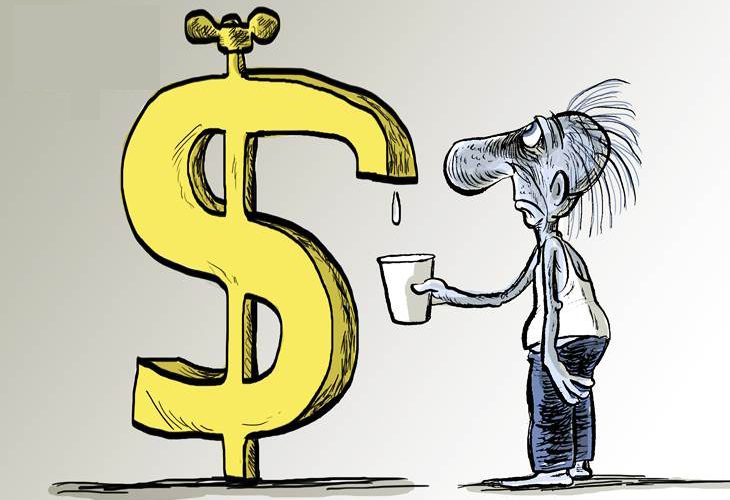
The architecture of global trade has evolved past the point where a single stroke of a Treasury pen can compel total compliance. Washington can decree isolation, but enforcement requires a degree of international consensus that no longer exists in a fragmented multipolar economy. Tehran knows this reality well, and its leaders are banking on the reality that the rest of the world cannot afford to completely turn off the taps.
The clock is ticking on a strategy built on wishful thinking while tankers sit idle and the cost of confrontation mounts on both sides of the water.