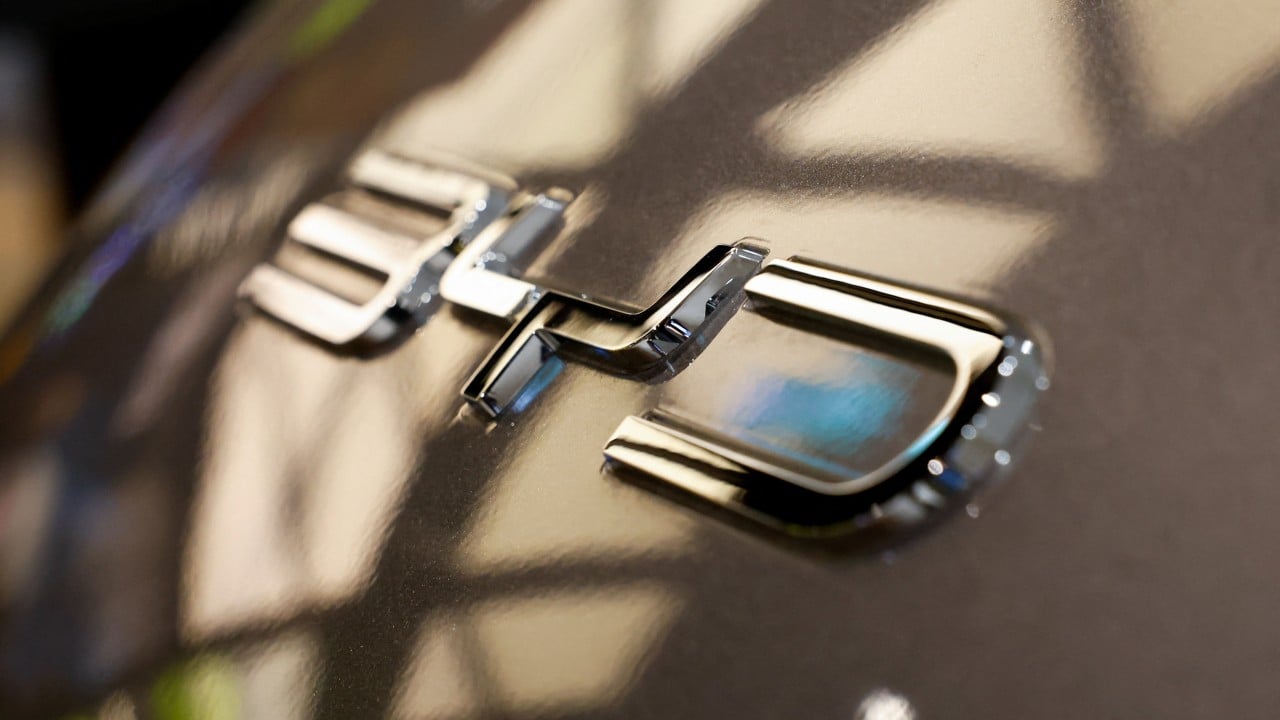
A Dutch court ordered Jaguar Land Rover (JLR) to permanently destroy confidential documents seized during an aggressive intellectual property raid against Chinese automaker BYD, delivering a sharp judicial rebuke to legacy automakers attempting to weaponize European evidence-seizure laws. The ruling stems from an ex-parte evidence seizure—known in the Netherlands as bewijsbeslag—executed by JLR in an attempt to prove patent or trade secret infringement involving BYD's electric vehicle architecture. Because JLR failed to meet the strict procedural and evidentiary thresholds required to justify holding a competitor's proprietary files, the court stripped the British automaker of the seized materials and mandated their immediate destruction.
The Anatomy of a European Evidence Raid
To understand why this ruling matters, you have to understand the weapon JLR tried to swing. In most jurisdictions, getting your hands on a rival's internal engineering blueprints requires months of grueling discovery, protective orders, and judicial oversight. Not in the Netherlands.
Dutch civil procedure offers a mechanism called bewijsbeslag, or evidentiary attachment. It allows a rights holder to petition a preliminary relief judge behind closed doors—without notifying the target—for permission to send a bailiff and IT forensics team directly into a competitor's offices, warehouses, or trade show booths. The goal is simple. Grab the hard drives, copy the servers, and seal the data before the alleged infringer can hit delete.
For years, Western manufacturers treated Dutch courts as a tactical staging ground for global IP wars. The Netherlands is a major logistics hub for European imports, making it an easy venue to intercept shipments or raid local subsidiaries. JLR used this exact playbook against BYD, targeting the Chinese manufacturer's European operations under the suspicion that BYD had improperly appropriated proprietary technology.
It is a high-wire act. When a court grants an ex-parte seizure, it operates entirely on the applicant's word. The judge has not heard a single syllable of defense from the targeted company. Consequently, Dutch law places an ironclad burden on the raiding party after the dust settles. The applicant must prove that their initial suspicions were grounded in concrete, verifiable evidence rather than a fishing expedition designed to peek inside a rival's R&D pipeline.
Where Jaguar Land Rover Overplayed Its Hand
JLR's strategy collapsed during the subsequent judicial review. When BYD challenged the validity of the seizure and JLR's right to inspect or retain the confiscated data, the court scrutinized the underlying justification for the raid.
The verdict was unambiguous. JLR had not established a sufficiently substantiated claim of infringement to justify retaining BYD's sensitive commercial and technical records. In the eyes of the Dutch judiciary, allowing a competitor to keep seized files without a rock-solid prima facie case turns a legal safeguard into state-sanctioned corporate espionage.
As a result, the court ordered the destruction of the seized documents. Under Dutch enforcement protocols, this is not an honor-system request. Bailiffs and independent IT custodians must purge the encrypted archives, wipe the forensic copies, and certify under penalty of severe financial sanctions that not a single byte of BYD's proprietary data remains in JLR's possession or the hands of its external legal counsel.
This outcome highlights a brutal reality for legacy automakers. Filing an aggressive IP action might generate intimidating headlines for a week, but European judges are increasingly intolerant of broad, speculative seizures targeting electric vehicle newcomers. If you kick down a competitor's door with a bailiff, you had better bring airtight technical proof to the follow-up hearing.
Why Legacy Automakers Are Reaching for the Legal Panic Button
Zoom out from the courtroom in the Netherlands, and the broader industrial panic becomes obvious. Traditional European and British automakers are losing ground in the global transition to electric vehicles, and the competitive pressure from Shenzhen is relentless.
BYD is no longer the budget battery maker that Western executives dismissed a decade ago. Through vertical integration—controlling everything from lithium mining and cell chemistry to semiconductor fabrication and final vehicle assembly—BYD has compressed development cycles and undercut European pricing across multiple segments. While legacy brands spent years debating platform architectures and managing bloated supplier networks, BYD scaled its Blade Battery technology and e-Platform 3.0 into global export juggernauts.
When engineering teams fall behind on cost and speed, corporate boards frequently turn to legal departments to buy time. We have seen this exact pattern play out across every major industrial disruption over the past four decades.
- Telecommunications in the 2000s: Incumbent hardware giants launched sprawling patent thickets to slow down Asian challengers entering European carrier networks.
- Consumer electronics in the 2010s: Smartphone pioneers burned billions in simultaneous global injunctions to stall rival hardware launches while trying to catch up on screen size and supply chain efficiency.
- Automotive electrification today: Legacy manufacturers are combing through every chassis joint, battery management algorithm, and thermal pump design looking for actionable IP overlap.
There is nothing inherently wrong with defending genuine patents. Intellectual property is the bedrock of industrial R&D. The problem arises when legal aggression substitutes for competitive parity. JLR, owned by India's Tata Motors, has invested heavily in its Reimagine strategy to pivot toward an all-electric luxury lineup. Delays in bringing those next-generation EVs to market have left the company exposed while competitors flood European showrooms.
The Structural Flaw in Anti-Chinese IP Litigation
Assuming that a Chinese automaker must have stolen Western technology to achieve superior economics is a dangerous strategic blind spot. Yet that assumption quietly underpins many of the boardroom decisions driving these lawsuits.
Consider a hypothetical example to illustrate how this miscalculation happens. Suppose a legacy European automaker spends five years developing a proprietary structural battery pack, securing dozens of narrow mechanical patents along the way. Meanwhile, a competitor designs a cell-to-body architecture from scratch using entirely different manufacturing tolerances, chemical compositions, and fastening methods. When the European firm tears down the rival vehicle, it sees a similar functional outcome—a battery integrated directly into the chassis—and assumes infringement. When the case reaches a technical judge, however, functional similarity is irrelevant. Patent law protects specific implementations, not broad concepts.
In BYD's case, the company holds tens of thousands of patents globally, particularly in lithium iron phosphate (LFP) chemistry and electric drivetrain integration. In several areas of battery packaging and thermal management, Chinese manufacturers are no longer copying Western blueprints; they are writing the new industry standard.
When a legacy automaker initiates an evidence raid based on suspicion rather than hard engineering proof, it runs headfirst into this reality. The seized files do not reveal stolen Western CAD drawings. Instead, they reveal an entirely independent, vertically integrated engineering ecosystem. At that point, the raiding company is left holding sensitive trade secrets it has no legal right to possess, and the courts will force them to burn it all down.
The Mechanics of Trade Secret Contamination
Beyond the immediate legal defeat, the Dutch court's destruction order underscores a severe operational risk that rarely makes the press releases. It is known among IP litigators as trade secret contamination.
When a company executes a raid and its technical experts or external consultants review a competitor's internal documents, those experts cannot simply unsee what they have read. Even if the documents are later destroyed by court order, the knowledge of a rival's pricing models, supplier contracts, or upcoming vehicle architectures lingers in the minds of the people who inspected the files.
To prevent this, Dutch courts impose strict "attorneys' eyes only" walls during bewijsbeslag proceedings. In-house engineers at the raiding company are strictly barred from viewing the seized data until a judge rules on the merits. If any information leaks across that wall before a destruction order is issued, the raiding company faces catastrophic liability. The target can sue for trade secret misappropriation, effectively flipping the entire lawsuit on its head and turning the aggressor into the defendant.
For JLR, getting ordered to destroy the documents early in the process is an embarrassment, certainly. Had their internal engineering teams prematurely accessed those files, however, the financial and reputational fallout would have been exponentially worse.
What the Ruling Signals for the European EV Market
The fallout from this decision extends far beyond the legal departments of JLR and BYD. Every automaker operating in the European Union is watching how national courts handle cross-border IP disputes involving Chinese entrants.
First, the bar for ex-parte seizures in the Netherlands just got noticeably higher for automotive claims. Preliminary relief judges are acutely aware that bewijsbeslag can be abused as an intelligence-gathering tool during intense market competition. Future applicants will face far tougher scrutiny before a bailiff ever steps foot inside a competitor's facility.
Second, this ruling demonstrates that European courts remain committed to procedural neutrality, regardless of geopolitical headwinds. Even as Brussels debates tariffs, anti-subsidy probes, and industrial protectionism to shield domestic carmakers from Chinese imports, the judiciary refuses to bend evidentiary standards to favor local or traditional brands. A weak IP claim is a weak IP claim, no matter who holds the patent.
Finally, the episode serves as a sobering reminder of where the real battle for automotive dominance will be won. Courtroom injunctions and dawn raids can temporarily disrupt a competitor's logistics or tie up executive bandwidth, yet they cannot fix an uncompetitive bill of materials.
Legacy automakers cannot litigate their way out of a manufacturing cost disadvantage. If Jaguar Land Rover and its European peers want to stop BYD's advance across the continent, they will have to beat them on battery density, software integration, and assembly line efficiency—because the Dutch courts just made it clear they will not hand over a shortcut.