Speed is the ultimate weapon of a filovirus. When filoviruses strike populations already fractured by systemic neglect and localized conflict, the transmission velocity defies standard epidemiological models. The Democratic Republic of Congo is once again confronting an outbreak moving with terrifying swiftness, outstripping the immediate response capacity of local health ministries and international bodies alike. This is not merely a medical emergency. It is a profound structural failure born of chronic underfunding, broken supply chains, and a deep-seated community mistrust that turns public health directives into flashpoints of resistance.
To understand why this transmission rate has shattered previous benchmarks, one must look past the aggregate infection numbers and examine the physical realities of the terrain. Eastern DR Congo is a zone of profound instability. Armed militias fragment the geography, creating impenetrable security corridors where international response teams cannot safely tread without extensive, delicate negotiations. When health workers are restricted to fortified urban hubs while the virus burns through agrarian settlements and displacement camps, surveillance collapses. Contact tracing becomes an exercise in guesswork. A single symptomatic individual boarding a motorized canoe on Lake Kivu or squeezing into a crowded minibus can seed half a dozen new transmission chains before public health officials even register the initial case index.
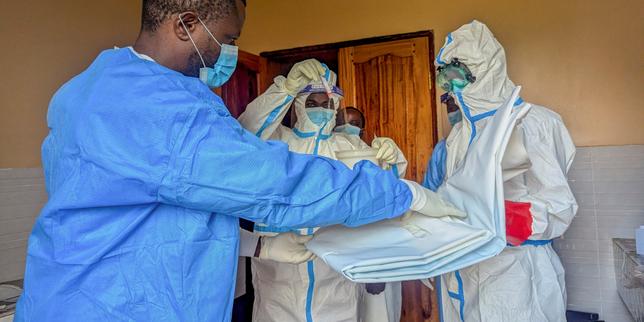
The biological mechanisms of the virus are compounded by human displacement. Populations fleeing active combat zones live in crowded, makeshift encampments with zero sanitation infrastructure. Clean water is a luxury. Soap is scarce. In these environments, traditional burial practices and caregiving roles—historically the primary drivers of localized viral amplification—are not acts of defiance against science, but acts of profound cultural necessity and survival grief. When families are told they cannot touch their dead, and when medical teams arrive in full hazmat gear resembling hostile combatants rather than healers, the psychological divide widens. Fear replaces cooperation. People hide their sick relatives in back rooms, inadvertently transforming private homes into intensive exposure vectors.
Diagnostic bottlenecks represent another invisible engine driving this unprecedented speed. Real-time reverse transcription polymerase chain reaction testing is the gold standard for confirmation, but laboratory infrastructure remains dangerously centralized. Samples collected in remote health zones must be transported across impassable roads, often relying on cold-chain transport that degrades rapidly in tropical heat. When results take days instead of hours, isolation wards fill with individuals who may or may not be infected, creating terrifying environments where uninfected patients can contract the pathogen simply by seeking help. Rapid diagnostic antigen tests exist, but their sensitivity profiles in early-stage infection leave critical margins of error that epidemiologists cannot afford when racing against a doubling time measured in days.
International financing structures add another layer of systemic vulnerability. Global outbreak responses routinely suffer from a protracted funding cycle. Bureaucrats debate budgets while nurses reuse single-use syringes out of sheer desperation. The inertia of multilateral organizations means that by the time funds are released and emergency supplies are procured, the virus has already outpaced the intervention. Vaccines such as the rVSV-ZEBOV candidate have transformed outbreak management in past decades, but ring vaccination strategies require exhaustive, precise contact tracing. When security conditions prevent vaccinators from accessing high-risk zones, the protective shield collapses, leaving entire communities exposed to the exponential curve of contagion.
The clinical profile of the current wave reveals a brutal efficiency. Incubation periods can span up to three weeks, but the median window is much tighter, meaning symptoms appear rapidly after exposure. Early clinical signs mimic malaria, typhoid, and other endemic febrile illnesses common to the region. Healthcare workers, operating under immense psychological strain and physical exhaustion, often misdiagnose the initial presentations. By the time characteristic hemorrhagic manifestations or severe gastrointestinal distress emerge, nosocomial transmission within local clinics has already occurred. Clinics lacking running water or functional incinerators for medical waste become vector amplification sites, striking down the very personnel required to stem the tide.
Local governance structures bear an enormous burden that international agencies routinely mismanage or ignore. Traditional chiefs and local women’s associations hold the actual social capital required to change behavior on the ground. When outsiders bypass these indigenous networks and attempt to impose top-down containment measures through military or police enforcement, the backlash is instantaneous and violent. Roadblocks are erected. Treatment centers are vandalized. Epidemiologists become targets of community rage. True containment requires relinquishing control to local actors who understand how to communicate risk without provoking panic, yet institutional arrogance continually repeats the same tactical errors.
The economic fallout of containment measures compounds the crisis. Quarantines and travel restrictions devastate subsistence economies where families live day-to-day on informal market trade. When checkpoints shut down regional commerce, food insecurity spikes immediately. People are forced to choose between starving in lockdown or evading health authorities to find food. This dynamic turns public health enforcement into an economic death sentence for marginalized populations, guaranteeing that evasion becomes a rational survival strategy against structural oppression.
Regional authorities face an impossible calculus. Closing borders stops economic lifeblood while failing to seal porous frontiers defined by dense jungle canopy and unmonitored footpaths. Smuggling networks and informal trade routes bypass official ports of entry entirely. If a trader can cross an international boundary undetected with bales of cloth or crates of produce, a pathogen does so with equal ease. Neighboring countries remain on high alert, frantically ramping up thermal screenings at border posts that lack the capacity to catch asymptomatic carriers during the incubation window.
The pharmaceutical landscape offers no silver bullet for the immediate crisis. While experimental therapeutics monoclonal antibodies and antiviral compounds have dramatically lowered case fatality rates when administered early, their distribution depends entirely on functional cold chains and advanced clinical care units. Delivering these sophisticated treatments to remote jungle clinics is a logistical nightmare. When a patient presents in extremis after days of traditional remedies, even the most advanced monoclonal treatment cannot reverse multi-organ failure. Therapeutics mitigate mortality, but they do not stop transmission. Only aggressive, community-led prevention breaks the chain of infection.
We are witnessing the predictable result of decades of neglect directed at public health infrastructure in fragile states. Viruses do not respect geopolitical boundaries, nor do they care about the bureaucratic inertia of global health bureaucracies. Until the international community shifts its financial and operational model from reactive crisis management to sustained, local capacity building, every subsequent outbreak will shatter the speed records of the last, leaving a trail of preventable devastation in the heart of Africa.