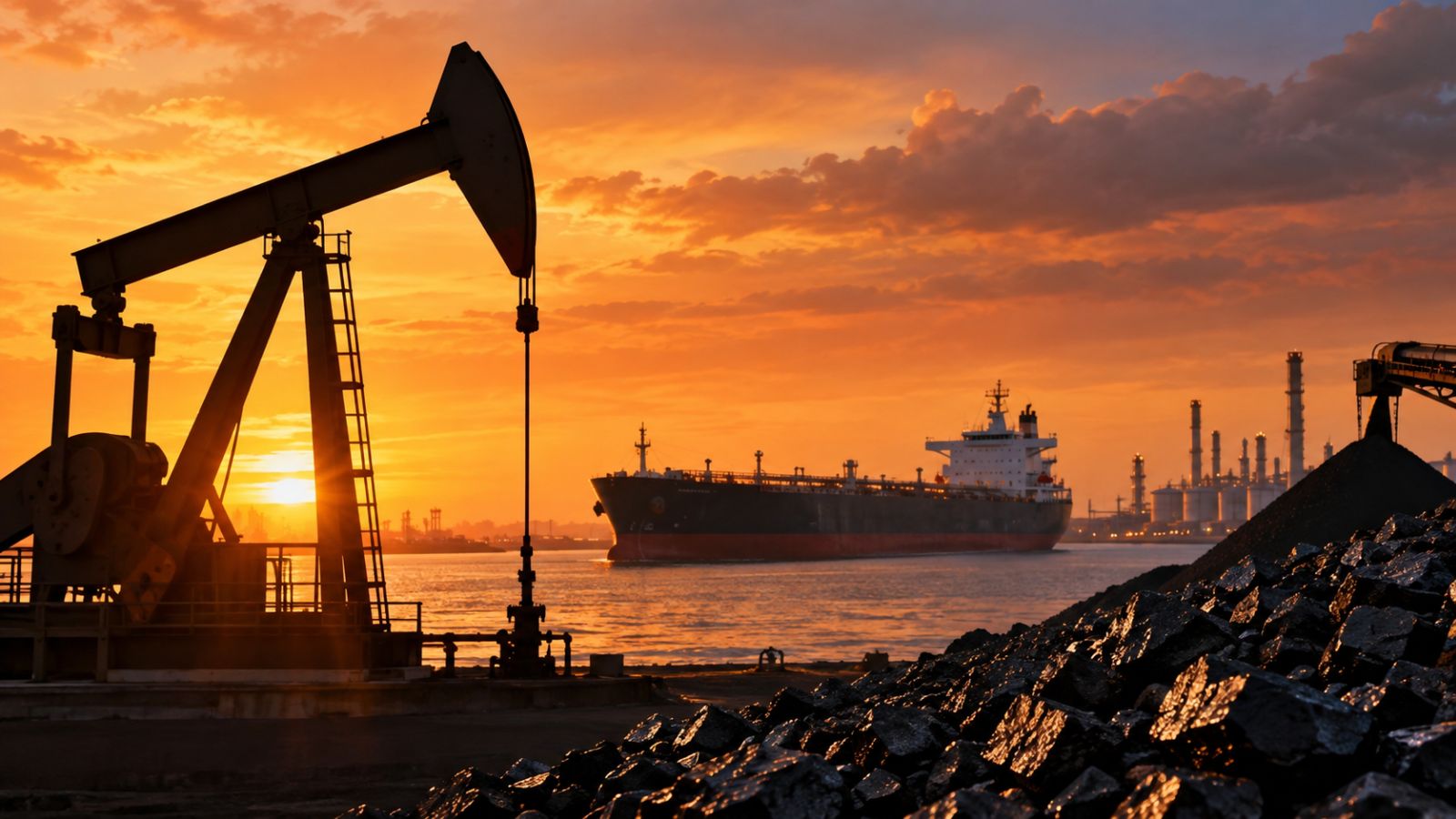
Iraq is moving crude oil across Syria by road again because its northern pipeline infrastructure remains paralyzed by legal disputes and regional security risks. Faced with shuttered export terminals and mounting budget pressures, Baghdad and regional operators have turned back to heavy tanker convoys rolling through desert highways toward Mediterranean ports. It is an expensive, hazardous workaround born of geopolitical gridlock. When pipelines fail, asphalt takes over.
The mechanics of this revival are straightforward, even if the politics surrounding them are anything but. For decades, Iraq has relied on fixed steel arteries to push its crude to global buyers, primarily through southern terminals on the Persian Gulf and the northern Iraq-Turkey Pipeline running to the port of Ceyhan. When the northern route halted following international arbitration rulings and protracted disputes between Baghdad, Ankara, and the Kurdistan Regional Government, hundreds of thousands of barrels per day were suddenly stranded. Tanker trucks stepped into the vacuum. Instead of pressurized flow through buried steel, crude is now loaded into articulated road tankers in northern Iraq, driven across border crossings into Syrian territory, and hauled west toward coastal refineries or export jetties.
The Economics of Asphalt Over Steel
Moving oil by truck is the energy sector's equivalent of carrying water in a thimble. It works in an emergency, and it fails at scale.
A single large crude carrier can hold roughly two million barrels of oil. A standard heavy road tanker carries between 200 and 250 barrels. To replace the capacity of even a modest regional pipeline moving 300,000 barrels a day, you would need more than 1,200 trucks crossing international borders every twenty-four hours, operating in a continuous, unbroken loop. The logistics alone are punishing. Drivers need fuel, maintenance depots, security escorts, and customs clearance at checkpoints controlled by overlapping factions.
Consider a hypothetical breakdown of the unit economics to see why this model strains balance sheets. In a functioning pipeline system, transit fees typically cost a few dollars per barrel. Once that crude shifts onto rubber tires, transport costs multiply rapidly. Fuel consumption for the return journey, driver wages, vehicle wear on degraded desert roads, and informal transit tolls paid along fractured corridors can easily push overland trucking costs to fifteen or twenty dollars per barrel—and sometimes higher depending on the distance to the coast. When global crude prices hover in a moderate band, those transport expenses eat directly into the netback revenue Baghdad or local producers actually pocket.
Yet the math still makes sense to desperate sellers. Unsold oil sitting in storage tanks generates zero cash flow, and shutting in mature oilfields risks permanent reservoir damage that costs millions to repair. Discounted crude moved at a thin margin beats capped wells every time.
Why the Northern Pipeline Remains Frozen
To understand why convoys are rumbling through Syria, you have to look at the long-running paralysis of the Iraq-Turkey Pipeline.
For years, the Kurdistan Regional Government exported crude independently through Turkey, bypassing Baghdad's State Organization for Marketing of Oil, known as SOMO. Baghdad challenged that arrangement at the International Chamber of Commerce in Paris, arguing that bilateral treaties required federal approval for all Iraqi crude exports. When the arbitration tribunal ruled largely in Baghdad's favor and ordered Turkey to pay damages for unauthorized exports, Ankara shut the valves at Ceyhan.
Reopening that line proved far harder than closing it. Technical inspections were only the opening excuse. Beneath the surface sat a tangle of unpaid debt to international oil companies operating in northern Iraq, disagreements over production-sharing contracts versus federal service agreements, and Ankara's demands to waive or renegotiate the arbitration penalties. Every month the pipeline stayed dry, the financial bleed worsened for both Erbil and Baghdad.
With no diplomatic breakthrough on the horizon and maritime chokepoints in the Persian Gulf facing periodic security scares, overland routes through neighboring states stopped looking like relics of the 1990s and started looking like necessary insurance policies.
Historical Echoes of Sanctions-Era Smuggling
Veteran energy traders watching these convoys cross the Syrian frontier recognize the playbook immediately. During the United Nations sanctions regime against Saddam Hussein in the 1990s, Iraq survived financially by running massive fleets of modified tanker trucks across borders into Jordan, Turkey, and Syria.
Those operations created entire shadow economies. Border towns swelled into logistics hubs overnight, repair shops lined desert highways, and trucking syndicates accumulated immense political influence. The routes were slow, leaky, and notoriously difficult to audit. Once established, however, overland trucking networks proved remarkably resilient against diplomatic pressure because too many local actors depended on the transit fees to keep the peace.
Today's overland revival operates under vastly different geopolitical conditions, yet the structural incentives remain identical. Where formal infrastructure is blocked by law or conflict, informal transport fills the void.
Navigating a Fractured Syrian Corridor
Moving high-value cargo across Syria is not a standard commercial haul. The country remains carved into distinct zones of military and administrative control, turning a single transit route into a gauntlet of shifting jurisdictions.
A convoy departing northern Iraq must navigate border crossings where authority is split between federal Iraqi forces, Kurdish security units, Syrian government checkpoints, and various local militias. Each boundary requires negotiation. In some stretches, shipments rely on tacit understandings between Damascus and Baghdad, both of whom share an interest in boosting state revenues and sidestepping Western financial isolation. In other areas, local commanders extract transit fees simply because they hold the road.
The physical infrastructure adds another layer of risk. Over a decade of civil war devastated Syria's highway network, leaving bridges damaged and asphalt rutted. Heavy tankers loaded with tens of tons of volatile crude move slowly over compromised roads, making them vulnerable to mechanical breakdowns, accidents, and hijacking. Insurance coverage from mainstream international underwriters is virtually nonexistent for these runs. Operators self-insure, absorbing the risk of lost cargo or destroyed vehicles as a cost of doing business.
Sanctions Enforcement and the Paperwork Maze
The moment Iraqi crude crosses into Syria, it enters a regulatory minefield. Both Damascus and key entities within the Syrian energy sector remain subject to sweeping United States and European sanctions.
International buyers, shipping companies, and marine insurers go to extreme lengths to avoid touching oil tainted by sanctioned jurisdictions. If a barrel of Iraqi crude enters Syria by truck, gets blended into local storage tanks at a coastal terminal like Baniyas or Tartus, and is subsequently loaded onto a vessel, its origin becomes obscured. In the physical oil market, this is known as origin laundering or blending.
To bypass compliance triggers, traders rely on complex webs of intermediaries, ship-to-ship transfers in international waters, and altered bills of lading. Once crude is mixed inside a shore tank, chemical fingerprinting can still often identify its geological source, as Iraqi Kirkuk or Basra grades carry distinct sulfur and metal profiles compared to Syrian blends. However, proving the exact transit path in a court of law is difficult. Regulators in Washington and Brussels monitor satellite imagery of border crossings and port terminals closely, watching for spikes in truck traffic and unscheduled tanker arrivals, yet interdicting overland trade across remote desert borders remains nearly impossible without direct intervention on the ground.
What Baghdad Gains and What It Loses
For the Iraqi government, tolerating or facilitating overland exports through Syria represents a calculated trade-off between immediate liquidity and long-term strategic credibility.
Iraq's federal budget is overwhelmingly dependent on oil revenues to pay public sector salaries and fund state subsidies. Any sustained disruption to export capacity threatens domestic stability. By allowing crude to flow west by road, Baghdad relieves pressure on northern storage facilities and generates hard currency outside the rigid scrutiny of international payment mechanisms. It also sends a subtle message to Ankara that Iraq is not entirely captive to Turkish transit infrastructure.
The downsides, however, are substantial. OPEC+ compliance becomes murky when barrels leave the country via unmonitored border crossings rather than metered export terminals. Iraq has repeatedly faced pressure from fellow cartel members over exceeding its production quotas, and unrecorded overland shipments only fuel suspicion among allies in Riyadh and Abu Dhabi. Furthermore, relying on trucking entrenchs middlemen and border networks that erode state authority, diverting public wealth into private pockets along the highway.
The Structural Vulnerability of Regional Energy Transit
The return of the Syrian truck route exposes a deeper vulnerability across the Middle East's energy architecture. Despite sitting atop some of the world's cheapest and most accessible crude reserves, Iraq remains chronically short of reliable export outlets.
Over 80 percent of Iraq's exports still pass through its narrow southern coastline on the Persian Gulf, a geographic bottleneck vulnerable to weather disruptions, aging loading buoys, and regional military tensions around the Strait of Hormuz. Projects to build new southern pipelines or revive the long-defunct Iraq-Syria pipeline—a massive conduit damaged and abandoned decades ago—require billions of dollars in foreign investment and years of political stability that neither country currently possesses.
Rebuilding a major cross-border pipeline across Syria would demand security guarantees from multiple armed factions, relief from international sanctions, and financing from global banks that will not touch the region. Until those conditions materialize, the steel pipes stay buried and useless.
So the engines keep idling at the border crossings. Every morning, drivers check their tire pressures, secure their manifests, and pull out onto the desert tarmac, hauling Iraq's most valuable resource one tank at a time through a war-scarred neighbor because the modern energy market still has no safer way to move it.