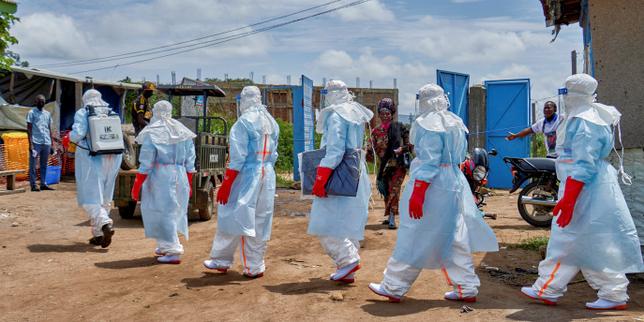
As the current Ebola epidemic in the Democratic Republic of Congo crosses the grim milestone of one hundred days since its declaration, the frontline of public health has devolved into a zone of active hostility. Six Red Cross volunteers were physically assaulted and injured during a single week across the eastern and northeastern provinces, pushing the cumulative total of injured humanitarian workers to twelve amid eleven separate violent incidents. Ambulances have been vandalized, a vehicle was recently torched, and life-saving containment operations have been forced into a defensive posture. Transmission rates are actively outpacing control efforts, and the friction between local communities and epidemic responders threatens to undo months of epidemiological work.
To understand why humanitarian workers are treated as targets rather than saviors, one must look past the immediate headlines of violence and examine the structural fractures governing public health interventions in conflict zones.
The Anatomy of Local Suspicion
Epidemics do not occur in a vacuum. In regions like North Kivu, Ituri, and Haut-Uélé, decades of state abandonment, militia violence, and economic marginalization have forged a deep-seated distrust of outsiders, government officials, and international organizations. When response teams arrive in full protective gear, carrying protocols that override centuries-old cultural practices, they frequently encounter a populace already convinced that external actors harbor malicious intentions.
Rumors thrive in the absence of transparent communication. In past outbreaks, malicious actors weaponized misinformation, convincing vulnerable communities that treatment centers were vectors of infection rather than places of healing.
Safe and dignified burials serve as a primary flashpoint for this friction. The biological reality of Ebola dictates that the bodies of the deceased remain intensely infectious. Traditional funeral rites, which involve washing, touching, and close familial mourning, represent a severe biological risk during an active outbreak.
When Red Cross teams intervene to enforce regulated burials, they inadvertently strip grieving families of vital cultural closures.
"We understand that current procedures pose a challenge for communities wishing to maintain their funeral rites," noted a joint operational statement from the International Red Cross and Red Crescent Movement.
Yet, acknowledging the emotional cost of these measures has rarely translated into effective on-the-ground mediation. The enforcement mechanism often feels clinical and authoritarian to a population already suffering under the weight of chronic insecurity from armed groups operating with impunity.
The Operational Toll of Hostility
Violence against medical personnel carries a compounding penalty. Every time an ambulance is stoned or set on fire, the logistical capacity of the entire response network shrinks.
- Response delays: Teams must wait for armed escorts or suspend operations entirely, allowing the virus valuable days to spread undetected.
- Attrition of volunteers: Local volunteers, who form the essential bridge between international agencies and suspicious neighborhoods, face immense familial pressure to quit.
- Medical deserts: Health centers damaged in raids are abandoned, leaving ordinary citizens without access to basic maternal care, vaccinations, or routine treatments.
The World Health Organization has repeatedly warned that the virus is moving faster than containment operations. This velocity is largely driven by community resistance. If people hide symptomatic relatives out of fear of isolation units or hostility toward response teams, contact tracing breaks down completely. The disease finds new vectors, expanding its footprint across provinces that previously maintained clean containment perimeters.
Rethinking Community Engagement
For decades, international health responses relied on a top-down model. Experts designed protocols in Geneva or Kinshasa, and local populations were expected to comply unquestioningly. That model is broken.
True containment requires shifting from enforcement to genuine integration. Volunteers who are native to the affected villages must be empowered not merely as compliance enforcers, but as primary architects of the communication strategy. When communities have a direct voice in how safe burials are conducted—balancing the non-negotiable laws of virology with respect for local dignity—resistance drops measurably.
Financial security for local medical staff is another unaddressed vulnerability. In several treatment centers across Ituri, workers have staged protests over delayed hazard pay, highlighting a system where frontline staff risk their lives daily without reliable institutional backing. If international donors fail to secure the basic welfare of local health workers, the moral authority of the entire response collapses.
The current outbreak has already surpassed previous historical thresholds in scale and geographic dispersion. Halting its progression demands more than vaccines and treatment tents. It requires dismantling the wall of alienation that separates desperate populations from the people sent to save them. Until security is built on trust rather than escorts, the frontline will remain a battlefield.