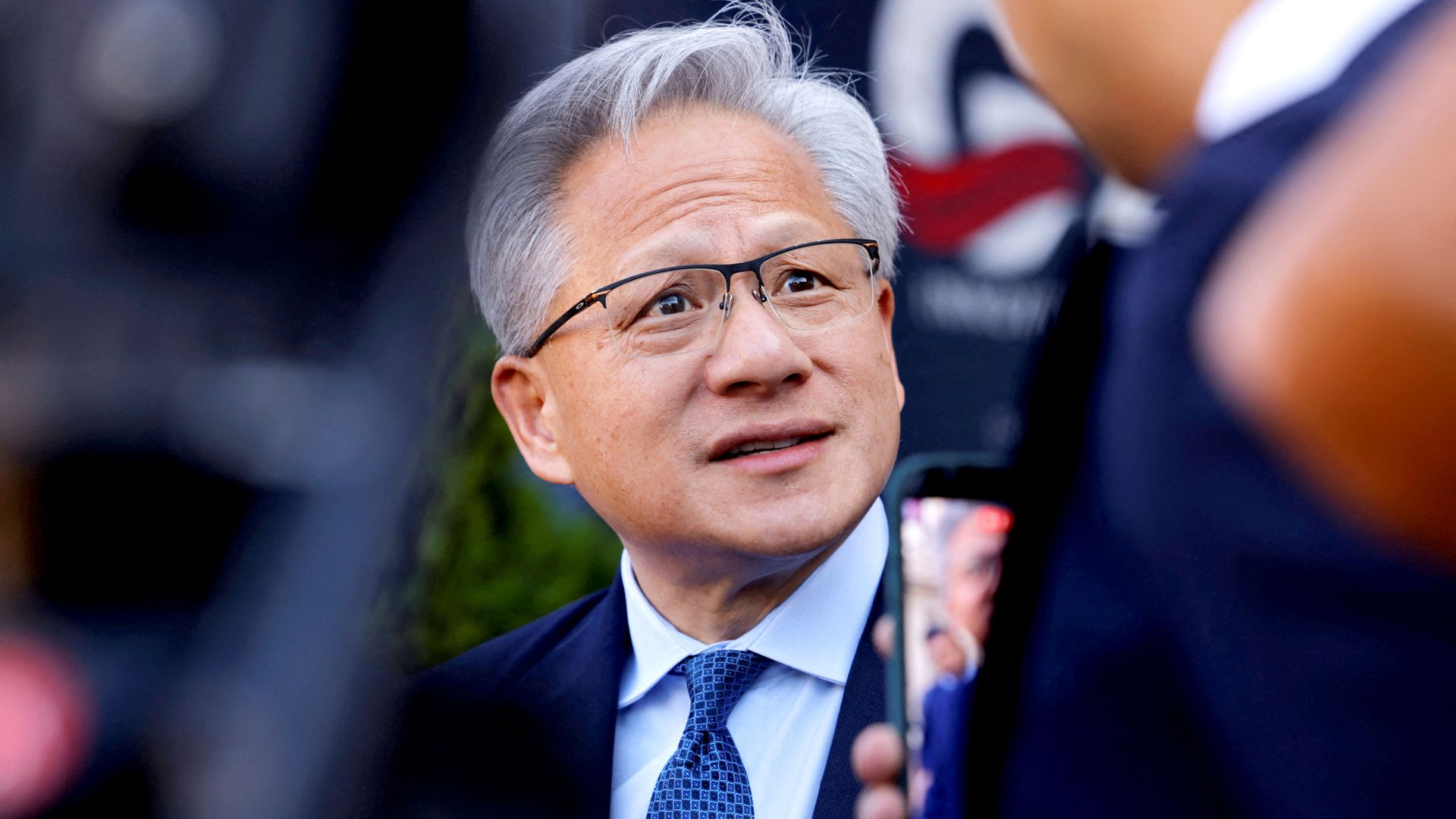
When a company sitting at the center of the global artificial intelligence supply chain creates a board-level national security committee, Wall Street pays attention. When that move follows reports linking executive departures to personal misconduct, the story shifts from routine corporate housekeeping to an urgent question of geopolitical risk management. In the semiconductor sector, personal vulnerabilities at the top are no longer treated as private HR matters—they are treated as direct threats to national security.
The premise behind the headline "Nvidia creates national security committee after CEO's abrupt exit over alleged affairs" points directly to a growing collision between Silicon Valley executive culture and Washington's tightening oversight of critical technology. While corporate boards have historically handled executive misconduct through quiet settlements and nondisclosure agreements, companies holding the keys to advanced AI compute face a vastly different reality. Every major chipmaker operates under intense scrutiny from defense agencies, export control regulators, and intelligence officials who view compromised leadership as an open door for foreign espionage. For another look, see: this related article.
To understand why a governance committee dedicated to national security becomes necessary in the wake of executive scandal, you have to look at how modern defense contractors and dual-use technology firms are regulated.
The Anatomy of a Dual-Use Vulnerability
Semiconductors are no longer mere commercial components for gaming rigs and consumer laptops. They are the foundational hardware for sovereign AI infrastructure, military logistics, cryptographic breaking, and autonomous weapons systems. Because of this dual-use nature, companies designing high-end graphics processing units and data center interconnects occupy a space traditionally reserved for aerospace and defense giants like Lockheed Martin or Northrop Grumman. Further reporting on this trend has been shared by Business Insider.
In the defense sector, the concept of personnel security is absolute. An executive with access to classified roadmaps, government contracts, or restricted export architectures undergoes continuous vetting. Any undisclosed personal entanglement—whether financial distress, addiction, or an extramarital affair—creates what intelligence professionals call compromise leverage.
Consider a hypothetical example to see how this plays out in practice. Suppose a senior executive at a leading chip designer maintains an undisclosed relationship with an individual connected to a foreign venture capital fund. Even if no proprietary code is ever shared, the mere existence of the secret gives an outside actor potential blackmail material. Foreign intelligence services rarely start by asking for classified blueprints; they start by exploiting personal secrets to apply subtle pressure on supply chain decisions, licensing terms, or hiring practices.
When allegations of personal misconduct surface at the highest levels of a tech giant, the board of directors faces an immediate, dual-track crisis:
- Fiduciary duty to shareholders, which demands swift containment of reputational damage and stock volatility.
- Regulatory compliance with national security mandates, which requires proving to government stakeholders that internal controls remain intact and uncompromised.
A standard audit committee or nominating and governance committee is not built for the second track. Those bodies are staffed by financial experts and corporate attorneys focused on Sarbanes-Oxley compliance, executive compensation, and shareholder activism. They lack the security clearances, intelligence backgrounds, and geopolitical fluency required to assess whether an executive's personal life has created a breach in national defense protocols.
Why Standard Corporate Governance Fails Under Geopolitical Pressure
For decades, Silicon Valley operated on a model of founder-led or CEO-centric authority. Boards were often deferential, viewing their primary job as staying out of the way while visionary leaders scaled market capitalization. That model breaks down completely when a company's product line becomes an instrument of statecraft.
Look at the historical precedent in the telecommunications and aerospace sectors. When foreign espionage scandals or executive misconduct rocked major defense suppliers in the 1990s and 2000s, the Pentagon did not simply accept a press release announcing a leadership change. Federal agencies demanded structural insulation. They required dedicated board committees staffed by former intelligence officials, retired military brass, and seasoned diplomats who held top-secret clearances and possessed independent authority to audit internal security.
In the semiconductor industry, this shift has been accelerated by strict export controls—specifically the sweeping restrictions on advanced AI chips destined for geopolitical rivals. Compliance with these rules is not optional, and violations carry existential penalties, including the revocation of export licenses and exclusion from federal procurement contracts.
If an executive exits abruptly amid rumors of personal impropriety, federal regulators immediately ask a series of uncomfortable questions:
- Did the behavior violate internal ethics codes, or did it compromise operational security?
- Were any non-public technical specifications, customer lists, or government contract details exposed during the course of the relationship?
- Why did existing internal controls fail to detect the risk before it became a public or board-level crisis?
Creating a dedicated national security committee is the board's structural answer to those questions. It signals to Washington, Brussels, and allied governments in Taipei and Tokyo that the company recognizes its obligations extend beyond quarterly earnings per share.
Factual Integrity and the Rumor Mill
Separating confirmed corporate actions from market rumors requires discipline. In high-stakes tech journalism, the line between verified governance filings and unconfirmed executive gossip is frequently blurred, especially when headlines circulate on social media without primary source documentation.
Fact-checking any claim about a sudden C-suite departure and subsequent board restructuring starts with SEC filings—specifically Form 8-K disclosures. Under federal securities law, publicly traded companies must file a Form 8-K within four business days of a principal officer's departure or the creation of a significant new board committee. These filings strip away sensationalism and reveal the exact legal mechanics: whether a departure was framed as a resignation, a termination for cause, or a retirement, and what charter powers a new committee actually holds.
As of verified public records through recent corporate governance cycles, Nvidia's leadership under co-founder and CEO Jensen Huang has been defined by extraordinary stability rather than abrupt exits. Any circulating narrative claiming an abrupt CEO exit over alleged affairs must be weighed strictly against official SEC disclosures and verified corporate announcements. When unverified or synthetic headlines surface online, they often mash together real industry anxieties—such as the very real trend of tech boards forming geopolitical and national security committees—with fabricated or misattributed executive scandals.
This distinction matters enormously for investors and industry analysts. Treating a fabricated or misattributed rumor as fact leads to catastrophic misreads of a company's operational stability. At the same time, ignoring the underlying structural trend—that major AI hardware firms are actively building national security oversight into their boards—leaves observers blind to how the semiconductor business is fundamentally changing.
How National Security Committees Actually Operate
Whether triggered by a specific compliance scare or established proactively to satisfy federal regulators, a board-level national security committee changes how a technology company runs day to day. It is not a ceremonial advisory board. When structured properly, it wields hard oversight powers that cut across engineering, sales, and human resources.
Vetting and Continuous Monitoring
Unlike traditional HR departments, which focus on workplace harassment and cultural fit, a national security committee oversees counterintelligence protocols for senior leadership and key research personnel. This includes monitoring foreign travel, reviewing external board seats or advisory roles, and auditing financial disclosures for undisclosed foreign ties. If a vice president of chip architecture takes an unapproved trip or accepts speaking fees from a state-backed entity, the committee has the mandate to intervene before the situation escalates.
Export Control and Supply Chain Auditing
Advanced AI hardware relies on a fragile, hyper-globalized supply chain spanning design tools in the United States, lithography equipment in the Netherlands, wafer fabrication in Taiwan, and packaging facilities across Southeast Asia. A national security committee works directly with the chief compliance officer to stress-test Know Your Customer (KYC) protocols. The goal is to prevent shell companies from routing restricted chips to embargoed destinations—a persistent headache for every major GPU vendor.
Government Liaison and Crisis Response
When a geopolitical flare-up occurs—such as new tariff announcements, export blacklist additions, or cybersecurity breaches—the committee serves as the direct bridge to the Department of Commerce, the Department of Defense, and the intelligence community. Having former senior government officials sitting on the board ensures the company speaks the same institutional language as the regulators holding its fate in their hands.
The Counter-Argument The Cost of Securitization
While Washington applauds the creation of national security committees inside Silicon Valley boardrooms, veteran industry observers recognize a serious trade-off. Hardening a commercial tech company against geopolitical risk introduces friction that can dull its competitive edge.
Innovation in semiconductors moves at a relentless pace, driven by open collaboration among global engineers, rapid iteration, and aggressive commercial risk-taking. When a board elevates national security compliance to a co-equal priority with product development, several unintended consequences follow:
- Talent acquisition bottlenecks: Restricting hiring based on nationality or heightened background checks shrinks the available pool of specialized PhD researchers in physics, materials science, and machine learning.
- Decision-making drag: Requiring security reviews for international partnerships, joint ventures, and cloud data center deployments slows down go-to-market timelines, giving less regulated competitors room to maneuver.
- Internal cultural friction: Engineers accustomed to transparent, meritocratic workflows often chafe under compartmentalized, need-to-know security protocols borrowed from defense contractors.
A board that overcorrects in response to a scandal—real or perceived—risks turning an agile commercial powerhouse into a slow-moving bureaucratic utility. The hardest job for any modern tech director is calibrating that balance: locking down genuine national security vulnerabilities without suffocating the engineering velocity that made the company valuable in the first place.
What Institutional Investors Watch Next
When evaluating corporate governance at the intersection of AI and national defense, institutional investors look past dramatic headlines and focus on concrete structural indicators.
First, they examine the committee charter. Does the national security committee have the authority to retain independent outside counsel and forensic investigators without management approval? Without independent budget and subpoena-like internal powers, a board committee is little more than window dressing designed to appease regulators after a crisis.
Second, they scrutinize board composition. Real oversight requires directors with genuine operational experience in intelligence, defense acquisition, or export law—not career corporate directors collecting board seats.
Third, they track insider disclosure policies. Transparent, strictly enforced rules governing executive relationships, conflicts of interest, and personal conduct protect shareholders from sudden leadership vacuums. In an industry where a single company's hardware roadmap dictates global market valuations, personal discipline at the top is a core fiduciary requirement.
Check the Form 8-K filings before reacting to viral governance headlines, and watch the board charters—that is where the real power shifts happen.