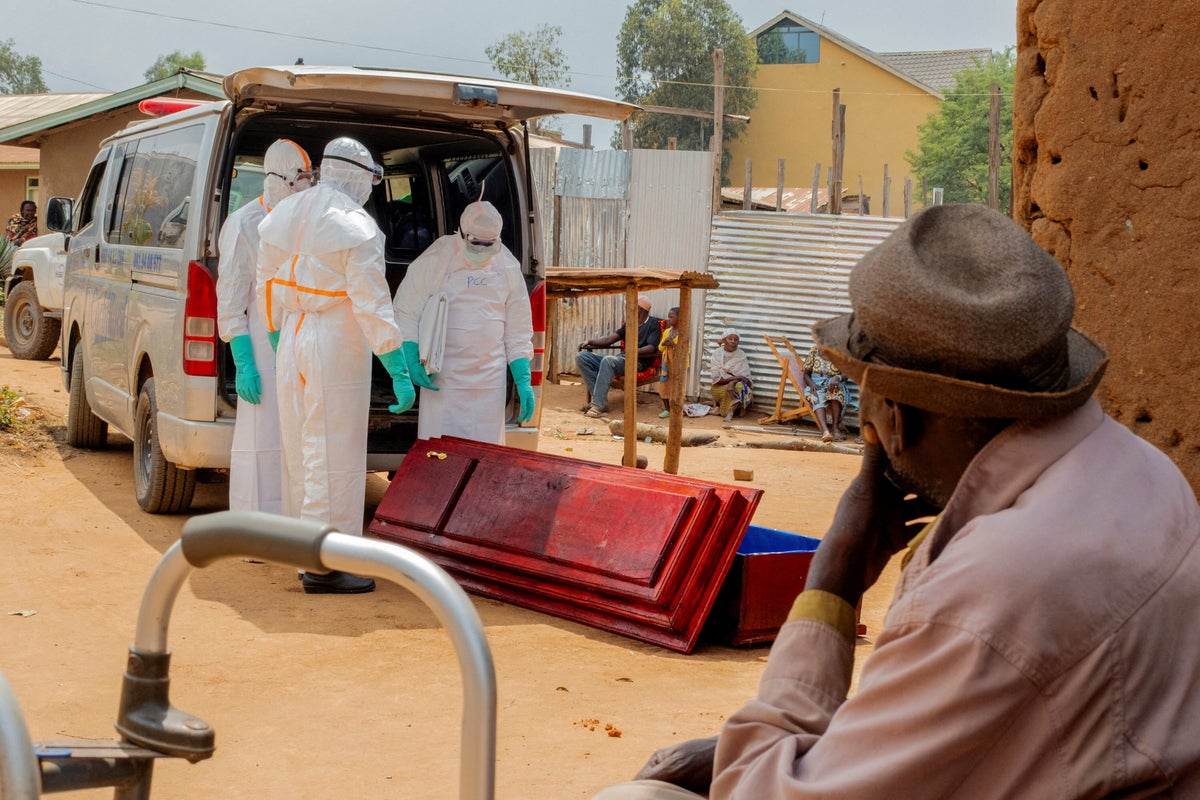
The ground in eastern Congo does not shake when a pathogen takes hold. It moves in silence, riding on the backs of unpaved supply chains, historical grievances, and institutional blind spots that decades of international aid have failed to smooth over. When viral flare-ups strike the dense hills of Kivu and Ituri, the world reacts with a predictable choreography of panic, emergency funding appeals, and temporary field clinics. Then the cameras leave. The underlying machinery of transmission keeps humming, fueled by structural fractures that no single vaccine batch can patch.
The Anatomy of an Unseen Vector
To understand why eastern Congo remains an epicenter for filovirus resurgence, one must look past the medical charts and examine the ecological and economic pressures forcing rural populations into deeper contact with wildlife reservoirs. Fruit bats of the family Pteropodidae carry the filovirus asymptomatically, shedding viral particles into forest canopies via saliva and half-eaten fruit. As logging, agricultural encroachment, and population displacement compress the distance between human settlements and undisturbed tropical forest, the interface where zoonotic spillover happens expands dramatically.
This is not a freak accident of nature. It is a predictable consequence of a strained rural economy where bushmeat remains a critical source of protein and income for families living below subsistence lines. When external shocks disrupt local markets, reliance on forest hunting increases. A single unsterilized interaction with an infected duiker or chimpanzee carcass introduces the pathogen into a human network.
Once inside a community, the virus relies on human behavior and social structures to propagate. Traditional burial rites, which involve washing and touching the body of the deceased, represent a high-risk transmission window because viral loads peak at the time of death. In many communities, telling grieving families they cannot bury their dead according to ancestral customs is perceived not as a public health intervention, but as a hostile imposition by distant authorities.
The Trust Deficit and the Failure of Top-Down Protocols
International response teams often operate under the assumption that science speaks for itself. Decades of field experience in Central Africa prove otherwise. Decades of political instability, civil conflict, and broken promises by state actors have left rural populations deeply suspicious of central government initiatives and foreign medical missions.
When armed groups control vast swathes of territory, health workers cannot simply drive into a village with mobile testing units and expect cooperation. Armed actors, roadblocks, and localized violence create absolute no-go zones where surveillance is blind. If a community believes that clinics are vectors for infection rather than places of healing, sick individuals stay home. They are cared for by family members without personal protective equipment, turning modest households into secondary epicenters.
Misinformation fills the vacuum left by communication failures. During previous major flare-ups in the region, rumors circulated that treatment centers were harvesting organs or that the foreign vaccines themselves were vectors of illness. These narratives do not emerge from a vacuum. They are born from a historical reality where marginalized populations have been exploited, neglected, or treated as experimental subjects by external powers.
Logistics and the Diagnostic Bottleneck
Fighting a fast-moving outbreak requires real-time data, yet eastern Congo’s physical geography poses a brutal logistical challenge. Paved roads are rare. During the rainy season, dirt tracks turn into impassable mud trenches, cutting off health zones for days at a time. Transporting biological samples from a remote clinic to a certified laboratory often means relying on motorbikes, precarious river crossings, or even foot couriers.
Every hour a blood sample spends in transit is an hour the virus gains ground in the community. Centralized testing models create a dangerous lag between symptom onset, laboratory confirmation, and isolation protocols. By the time a positive result returns from a regional hub, the patient may have already interacted with dozens of market vendors, family members, and traditional healers.
Deploying decentralized, rapid diagnostic testing units directly to frontline health zones is the only way to compress this timeline. Yet, supply chains for cold-chain storage, single-use syringes, and incinerators for biohazardous waste are notoriously fragile. A clinic that runs out of bleach or gloves for twenty-four hours loses its infection prevention capability entirely, exposing doctors and nurses to fatal risks.
The Hidden Cost of Collateral Neglect
When emergency response efforts pour resources into containing a high-profile pathogen, routine healthcare systems in the region buckle under the strain. Hospitals and primary care clinics are forced to pivot entirely toward outbreak management, pulling doctors and nurses away from maternal care, malaria treatment, and pediatric vaccination campaigns.
The collateral damage is severe. Maternal mortality rates spike during active outbreaks because pregnant women avoid healthcare facilities out of fear of contracting the virus inside under-resourced maternity wards. Chronic conditions go unmanaged. Preventable childhood diseases surge because vaccination outreach grinds to a halt. The emergency response saves lives on one front while inadvertently compromising community health on another.
True resilience requires shifting away from the cyclical pattern of reactive crisis management. Funding must be channeled into permanent, community-owned primary healthcare infrastructure rather than parachute interventions that disband the moment infection numbers drop. Local health workers who speak the regional dialects, understand cultural nuances, and have earned the trust of elders must lead the surveillance network from day one.
Until the structural drivers of vulnerability—poverty, ecological displacement, and the deep institutional divide between rural populations and central governance—are addressed with sustained, patient investment, the cycle will repeat. The pathogen is merely exploiting the cracks that have been allowed to widen for generations.