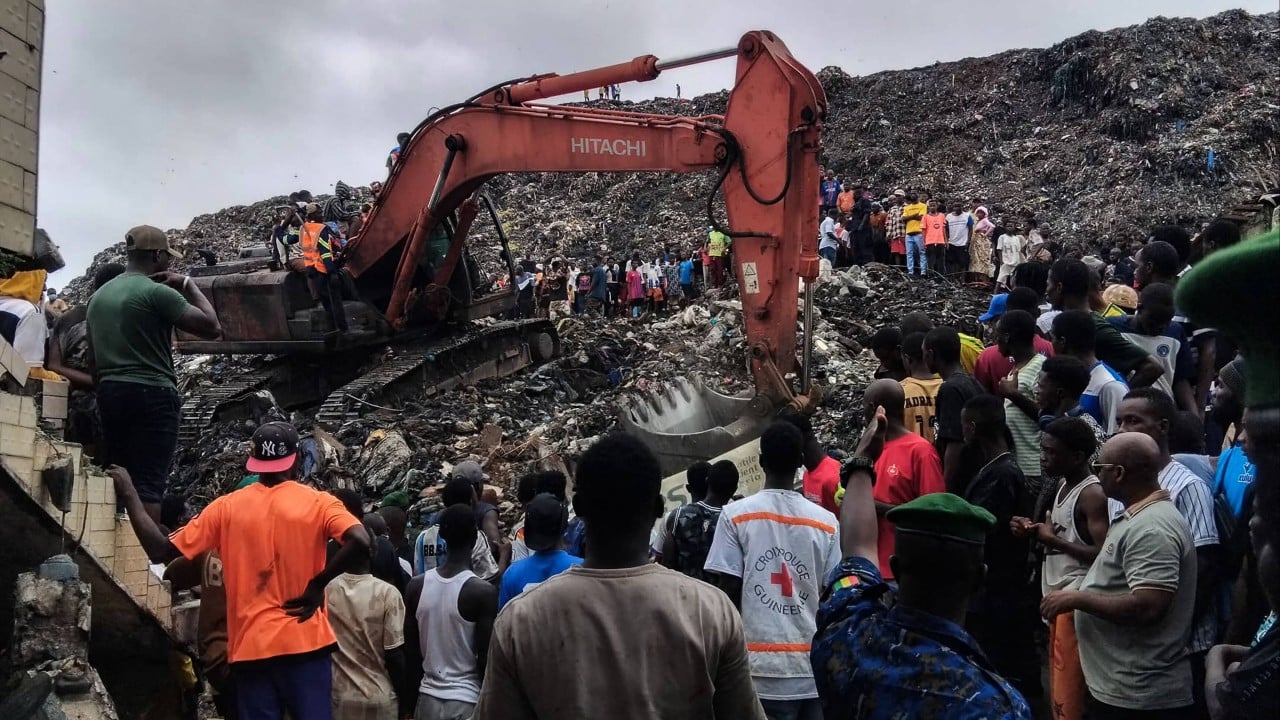
Thirty human beings woke up in the pitch dark of a Sunday morning only to be buried alive by the very refuse of a capital city that failed them. At roughly two o'clock in the morning, under the punishing lash of heavy seasonal downpours, the massive garbage mountain at the Dar Es Salam dump in Conakry, Guinea, let go. A wall of wet, compacted refuse slid down the embankment, wiping out nearby shacks and tents before anyone inside could draw a second breath.
Official counts place the death toll at 30, with dozens more nursing injuries or searching frantically through the gray sludge for missing relatives. This catastrophe is frequently framed in breaking news briefs as a tragic act of weather-driven fate. It is nothing of the sort. It is the predictable, systemic outcome of municipal abandonment, housing desperation, and infrastructural neglect that has festered on the edge of West Africa's Atlantic coast for decades.
The Anatomy of an Avoidable Collapse
Garbage mountains do not liquefy and slide without provocation. They require specific, dangerous conditions to become subterranean avalanches. Dar Es Salam is an open-air dump that has ballooned unchecked over the years, rising into towering peaks of unsorted municipal waste. When torrential wet-season rains batter these unstable geometric structures, water percolates through the porous layers, dramatically increasing the weight of the debris while reducing friction between particles.
Pore water pressure builds internally until the structural integrity of the refuse pile gives way entirely. Engineering principles dictate that unengineered, steep-sloped waste masses steeper than critical angle thresholds will fail under heavy saturation. The physics are elementary. Yet, urban planners allowed the heap to grow vertically rather than horizontally, creating a towering geotechnical hazard directly adjacent to vulnerable human settlements.
Official notices had posted closure warnings for the site, noting that the final shuttering was scheduled precisely for the day the tragedy struck. Eviction notices had been circulated. Some families had managed to pack up their meager belongings and leave. Many others stayed. Understanding why requires looking closely at the cruel economic gravity that binds the urban poor to municipal dumping grounds across the Global South.
The Economy of the Rubbish Heap
Poverty leaves people with terrible choices. In Conakry, where a significant portion of the population subsists on meager daily means, proximity to the Dar Es Salam landfill is not an accident of geography. It is an economic strategy. Thousands of informal workers survive by scavenging the dump for scrap metal, plastic containers, and anything else that can be traded for cash.
To live far away from the waste site is to forfeit the daily income required to buy food. When authorities issue eviction orders without providing viable, income-generating alternatives or subsidized housing, they present a harrowing dilemma. Residents must choose between the immediate starvation of unemployment or the slow, creeping hazard of a toxic mountain looming over their tin roofs.
This tension turns landfills into densely populated informal townships. Shacks multiply at the very base of unstable slopes because every square meter of unoccupied urban land is fiercely contested or financially out of reach. When the government designated the site for closure, the administrative decree treated the symptom while ignoring the structural disease. Moving a dump does not automatically create housing, and closing a site does not instantly give scavenging families a new livelihood.
A History Repeated
Memory is short in bureaucratic corridors, but the earth remembers. This is not the first time Dar Es Salam has exacted a lethal toll. Years prior, a similar structural collapse at the same location buried homes and claimed lives, serving as a glaring warning flare that municipal authorities failed to translate into permanent preventative action. Across Guinea, the pattern repeats. Landslides in surrounding prefectures routinely swallow precarious settlements during the heavy rains, pointing to a broader environmental vulnerability tied to deforested hillsides, rapid urbanization, and a total lack of zoning enforcement.
Contrast this vulnerability with Guinea's macroeconomic reality. The nation holds some of the world's richest untapped mineral deposits, including massive bauxite reserves and the monumental iron ore wealth locked inside the Simandou mountain range. Billions of dollars in industrial extraction projects intersect with the country's borders. Yet, basic municipal engineering—such as lining, terracing, gas venting, and leachate management for urban waste—remains critically underfunded.
Heavy excavators now claw through the dark muck at Dar Es Salam, lifting twisted iron and searching for survivors while government ministers promise thorough relocations. Makeshift morgues fill up with children and parents whose names will briefly trend in international news feeds before fading back into statistical obscurity. The rains will continue to fall on the West African coast, and the displaced families will still need a place to sleep tomorrow.


