On the evening of October 17, 2026, Father Patricio Alfredo Sánchez Molinari, a 53-year-old parish priest at Nuestra Señora del Perpetuo Socorro Church in Guayaquil, Ecuador, died after a heavy crucifix detached from a wall and struck him during a livestreamed Mass. Seconds earlier, he had been standing near the altar leading a service broadcast online to viewers far beyond the sanctuary. Within moments, horrified parishioners called for an ambulance as the camera kept rolling, capturing an instant that turned a routine Saturday evening service into a public shockwave.
A heavy wall fixture should never become a lethal projectile above an altar. Yet across older religious buildings worldwide, monumental wood, plaster, and metal ornaments frequently hang from aging anchors, exposed to decades of humidity, thermal expansion, and subtle structural shifts without routine engineering inspections.
Wire dispatches and short broadcast clips tend to treat stories like this as pure freak accidents or grim curiosities for social media feeds. That framing misses the harder operational reality. When a heavy object drops in a public assembly space, the story is never just the split-second impact. It is about building maintenance, institutional accountability, municipal enforcement, and what happens when private devotion collides with public broadcast spectacle.
What Happened Inside Perpetuo Socorro Church
Public reporting from the Archdiocese of Guayaquil and local outlets confirmed that Father Sánchez Molinari, a member of the Congregation of the Most Holy Redeemer, died following the strike during the evening service in southern Guayaquil. Footage from the livestream showed the large crucifix coming loose above or near the altar area and hitting him while he was turned toward the congregation or conducting the rite, unable to see the danger descending from above.
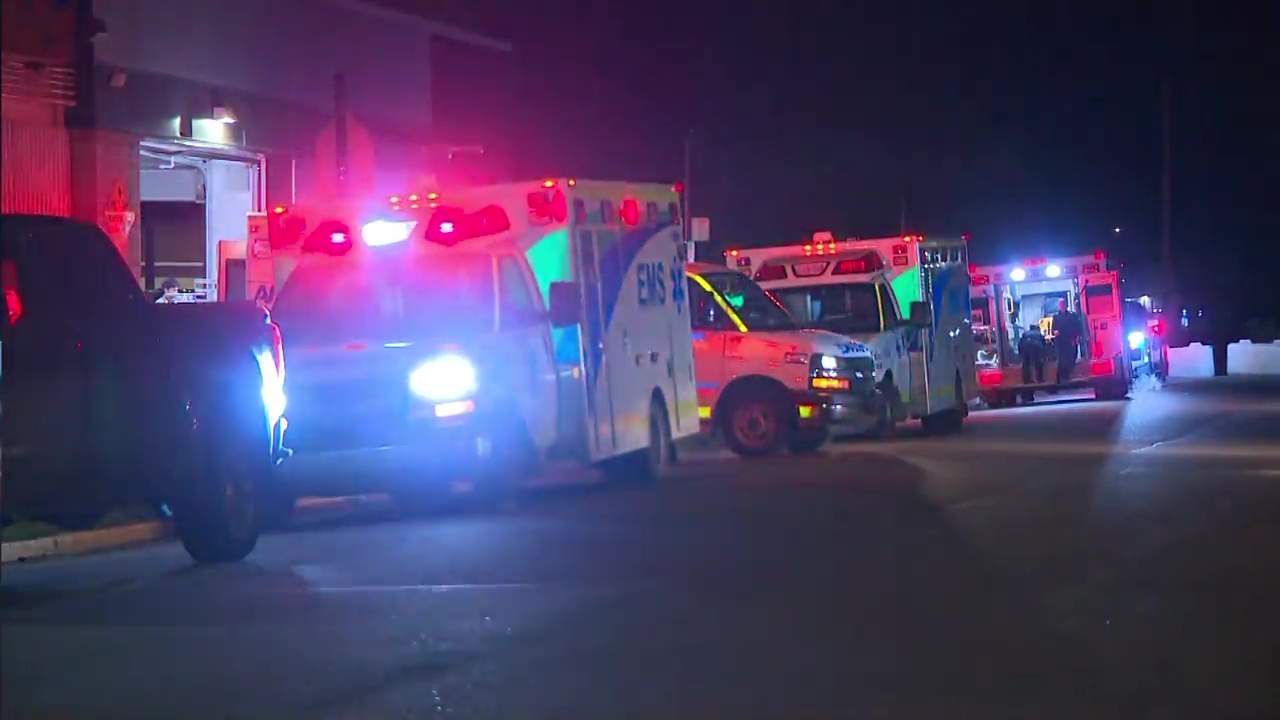
Witnesses reacted immediately. Shouts to call an ambulance echoed on the audio feed as congregants moved toward the altar to help. Emergency responders arrived, yet first aid could not save him, and the archdiocese later released a traditional Latin prayer of commendation mourning his passing.
What remained unanswered in early reporting was almost as striking as the tragedy itself. Initial reports noted that local authorities had not immediately issued public findings on what caused the detachment, and the archdiocese had not publicly detailed mechanical failure mechanisms or formal inspection results. In high-stress incidents where a community is grieving a beloved pastor, silence often fills the vacuum left by missing technical facts.
Why Heavy Sanctuary Fixtures Fail Over Time
To understand how a crucifix or sanctuary ornament falls, look past dramatic coincidence and examine gravity and material fatigue. A large wooden cross with a carved corpus or metal backing is not a lightweight picture frame. Depending on dimensions, timber density, and mounting hardware, it concentrates significant dead weight on a small set of anchor points high off the floor.
Walls lie. A painted plaster or masonry surface can look solid from twenty paces away while hiding deteriorated wooden plugs, corroded steel bolts, pulled expansion anchors, or moisture-weakened mortar behind the trim.
Coastal cities like Guayaquil experience persistent heat and high humidity year-round. Moisture cycles gradually weaken organic materials and accelerate corrosion on unsealed fasteners, while vibrations from traffic, sound systems, air conditioning, or minor seismic activity slowly work loose connections that were never engineered with redundant safety tethers. Even a well-installed fixture can reach failure if nobody checks the load path over decades of continuous service.
- Concealed anchor wear: Fasteners hidden behind decorative molding or heavy frames rarely receive hands-on torque or pull-out checks.
- Lack of secondary restraints: Many overhead or high-wall installations rely on a single primary mounting method rather than a concealed steel cable or secondary bracket that catches the load if the main anchor gives way.
- Unlogged renovations: Repainting, replastering, or electrical work near sanctuary walls can disturb mounts without triggering a structural sign-off.
- Ad hoc maintenance budgets: Parishes often prioritize urgent roof leaks or visible plaster damage over preventative load testing of stationary liturgical fittings.
Consider a hypothetical parish inspection where a facility manager taps a large wall cross and sees no wobble. Visual stability and surface stillness do not prove internal anchor integrity; only a close inspection of the mounting hardware and wall substrate reveals whether corrosion or substrate fatigue has eaten away the safety margin.
Falling Church Elements Beyond One City
Tragedies involving falling architectural or decorative elements on church property are rare in statistical terms, yet they recur often enough to expose a blind spot in public safety oversight. Reporting around the Guayaquil death also noted another fatal incident the same year in Chicago, where a stone gargoyle fell three stories from an older church and struck a pedestrian walking with her fiancé.
Different continents. Different materials. Same underlying vulnerability.
| Incident Context | Struck Element | Key Operational Takeaway |
|---|---|---|
| Guayaquil parish Mass (October 2026) | Large crucifix detaching near altar | Interior heavy fittings carry serious kinetic energy when mounted high without verified load paths. |
| Chicago street outside church (2026) | Stone gargoyle falling from upper facade | Exterior masonry and ornament can shed dangerous loads onto public sidewalks during weather or age degradation. |
| Typical aging place of worship | Unverified brackets, lighting rigs, or heavy trim | Infrequent specialized inspections leave hidden mechanical risks unaddressed until a failure occurs. |
Historic and older religious structures occupy a tricky middle ground between sacred heritage, private property, and public gathering spaces. Municipal code enforcement in many jurisdictions focuses heavily on commercial venues, factories, or new construction, leaving older institutional interiors with uneven inspection cadence unless a formal complaint or major structural warning occurs. Even when building rules exist on paper, enforcement capacity and clear responsibility between diocesan offices, local parishes, and municipal inspectors can be murky.
The Livestream Lens and Public Shock
Part of why the Guayaquil case traveled so rapidly across borders was the livestream. Since the early 2020s, streaming religious services has become standard practice for parishes reaching homebound members, relatives abroad, and regular followers. A smartphone or fixed camera turned a local parish evening Mass into a shared digital window.
When a sudden fatal accident happens live on camera, the technology acts as an amplifier. Viewers do not just read a headline the next morning; they witness the ordinary rhythm of liturgy snap into chaos and hear real cries for help before the feed cuts off.
That immediacy brings a sharp ethical and editorial tension. Sharing unedited footage of a person's fatal injury feeds shock value and grief tourism, whereas stripping out all context reduces a human life and a community's trauma to a viral clip. Responsible reporting has to balance transparency about what occurred with basic restraint toward the victim, the congregation, and the family.
Livestreaming also exposes a practical reality for institutions. Once a camera is live, there is no editing room between the sanctuary and the public feed. Church volunteers or staff managing a stream suddenly find themselves holding live evidence of a tragedy while trying to help an injured priest and calm frightened people in the pews.
What Accountability Looks Like After a Sanctuary Tragedy
When a fatal accident strikes a house of worship, sympathy arrives quickly, while hard technical answers often lag behind. Grief and institutional caution both push leaders toward prayerful statements and quiet handling, yet families, parishioners, and public safety officials need clear facts about why a fixture fell and how similar hazards are being prevented elsewhere.
There are real gray areas here. Not every fall stems from obvious negligence; hidden material defects or sudden structural shifts can defeat even conscientious caretakers. Still, treating every failure as an inscrutable act of fate is a cop-out that leaves the next parish exposed.
Practical prevention does not require turning a church into a sterile construction site. It requires disciplined basics: auditing heavy wall and ceiling fixtures, upgrading suspect anchors to rated hardware, adding concealed secondary safety cables where feasible, and keeping written maintenance records that outlast staff or clergy transitions. Until routine physical safety checks become as automatic as preparing the altar linens before evening Mass, avoidable tragedies will keep catching congregations off guard.
Father Patricio Sánchez dies after cross falls during Mass
This video report shows the local mourning and community reaction in Guayaquil following the fatal accident during the evening service.