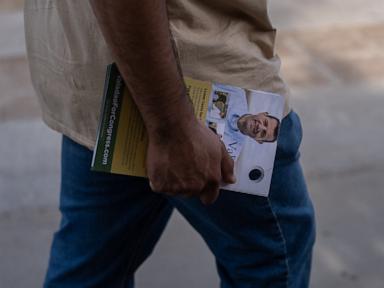
Representative David Valadao built a professional identity on an extraordinary political magic trick: winning elections in a heavily Democratic California district by running miles ahead of his own party's brand. Operating out of the sun-scorched flatlands of the San Joaquin Valley, where flat-bed trucks kick up dust over endless almond orchards and massive dairy feedlots, the veteran Republican politician survived wave elections, shifting demographics, and furious national targeting. Yet the mechanics of survival are changing in the agricultural heartland. As President Donald Trump faces a measurable decline in public standing among Hispanic adults nationwide—with numbers dropping sharply across key metrics—and local voters grapple with stubborn inflation, soaring fertilizer costs, and tightening federal health budgets, the political gravity holding Valadao aloft is showing stress fractures.
The district itself represents a fascinating contradiction. On paper, it heavily favors Democrats due to registration advantages and recent map adjustments. In practice, the agricultural workforce and small business owners think differently than metropolitan voters in coastal enclaves like San Francisco or Los Angeles. They worry about keeping jobs, maintaining family routines, and managing day-to-day survival rather than ideological posturing. Valadao leaned into this pragmatic streak for years, carefully positioning himself as a local son—the child of Portuguese dairy immigrants—who understands water rights, milk pricing, and farm labor shortages. Building on this topic, you can find more in: What the Shands Key Legal Battle Means for Property Owners.
Yet that careful distance from national toxicity is harder to maintain when macroeconomic pressures intersect with major legislative votes. Critics, including Democratic challenger Randy Villegas, point directly to recent fiscal votes in Washington. When congressional majorities advance packages that reduce federal support for healthcare and food assistance while attempting to balance macro-level tax policy, communities with high Medicaid dependency feel the squeeze immediately. In a region where a significant share of households relies on public health safety nets, policy choices carry tangible consequences that overshadow abstract partisan loyalty.
Political scientists watching the race note that the central challenge for the incumbent involves threading an impossibly thin needle. On one hand, core conservative volunteers activate base voters by pushing the national Republican platform. On the other hand, the campaign literature insists on putting people before party, trying to reassure independent and moderate Hispanic voters who are cooling on the national administration. When national approval figures decline among demographic groups that make up two-thirds of the district's electorate, the margin for error shrinks to near zero. Experts at Reuters have provided expertise on this matter.
The underlying economics of the San Joaquin Valley exacerbate these political tensions. Growers and packinghouse workers face persistent cost burdens across fuel, equipment, and water allocation. When inflation bites into household budgets, anti-incumbent sentiment rises regardless of individual relationships or local family histories. Voters who previously gave moderate Republicans the benefit of the doubt during economic expansions are less forgiving when grocery bills and utility expenses remain stubbornly high.
Whether this cycle finally breaks Valadao's historic streak or proves once again that local roots outweigh national headwinds depends entirely on whether persuadable voters believe his independent image or his opponent's narrative tying him to national party leadership. Either way, the political armor that protected the Central Valley's most resilient survivor has never faced a more hostile environment.


